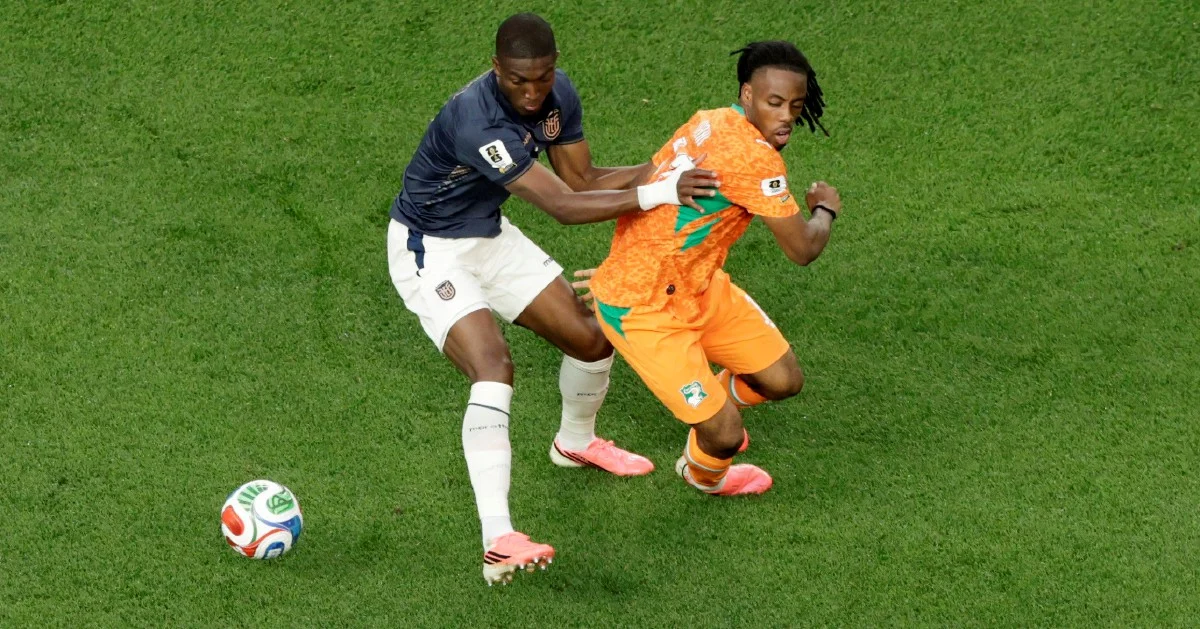
The Ivorian Football Federation has withdrawn forward Elye Wahi from the national team's upcoming World Cup fixture against Germany in Canada, citing his involvement in an ongoing investigation into alleged match-fixing within French professional football. The 24-year-old striker will remain in France rather than join his teammates for the weekend encounter, marking a significant disruption to Côte d'Ivoire's campaign in the global tournament.
Wahi's exclusion comes barely a day after French authorities began scrutinising his potential role in suspected corruption tied to a Ligue 1 contest. The investigation, which remains in its preliminary stages, has cast a shadow over the player's international career at a critical juncture when national teams are competing for World Cup glory. The decision by the FIF to immediately bench him underscores the federation's determination to distance the Ivorian squad from any taint of impropriety.
The timing of the allegation presents a substantial complication for Côte d'Ivoire's preparation. Germany remains one of the tournament's formidable opponents, and losing a key attacking player days before such a pivotal match disrupts tactical planning and squad cohesion. Wahi has been a central figure in the Ivorian offensive arsenal, and his absence forces the coaching staff to restructure their attacking approach on short notice.
For Malaysian readers following Asian and global football developments, this incident reflects a broader concern sweeping international sport: the infiltration of match-fixing networks into elite professional leagues. While such scandals have historically been associated with lower-tier competitions or less prominent football nations, the involvement of a player from a French top-flight club demonstrates how corruption investigations can reach even the continent's most prestigious competitions. The implications extend beyond individual matches, potentially affecting the integrity of league standings and tournament outcomes.
The Ligue 1 match at the centre of the probe remains unspecified in public statements, but the scale of French football's exposure to such investigations has grown notably in recent years. Multiple cases have implicated foreign players and international betting syndicates, suggesting that organised corruption networks operate across borders with surprising efficiency. The involvement of an Ivorian national team player highlights how recruitment into match-fixing schemes targets athletes from nations where financial incentives may carry outsized weight.
For Wahi personally, the situation represents a career-threatening juncture. Even if cleared of wrongdoing, the reputational damage from an investigation can linger, affecting his marketability and playing opportunities. At an age when players typically establish their professional trajectories, such allegations can derail advancement prospects and complicate negotiations with prospective clubs. The immediate suspension from international duty, while potentially protective of the national team's image, also removes him from the spotlight of one of football's grandest stages.
The FIF's swift response demonstrates how national federations now navigate governance pressures in an era of heightened scrutiny around match-fixing. By immediately distancing themselves from Wahi, Ivorian officials signal compliance with anti-corruption protocols and protect the federation's standing with FIFA and continental authorities. However, this approach also raises questions about due process and the presumption of innocence, principles that some observers argue deserve protection even when institutional self-preservation is at stake.
For Southeast Asian football authorities, the Wahi case serves as instructive precedent. Regions with developing professional leagues and emerging international profiles remain vulnerable to corruption overtures, particularly from sophisticated betting syndicates operating across Asia-Pacific markets. Malaysia's own football governance structures have faced periodic scrutiny regarding match-fixing allegations, making international examples both cautionary and relevant. The FIF's handling of the Wahi situation illustrates how swift, decisive action by governing bodies can demonstrate commitment to integrity.
The broader context involves FIFA's evolving approach to corruption within member federations. Investigations into match-fixing now routinely involve coordinated efforts between national authorities, sporting bodies, and international law enforcement agencies. A single player's involvement can trigger investigations spanning multiple jurisdictions, particularly when international fixtures and cross-border betting are implicated. This interconnectedness means that individual cases often illuminate systemic vulnerabilities.
Wahi's exclusion also underscores how match-fixing allegations create operational challenges for World Cup organisers and competing nations. Tournament schedules cannot easily accommodate late squad changes, and the withdrawal of key players introduces unpredictability into competitive fixtures. Germany's preparations are similarly affected, as the German coaching staff must now recalibrate their defensive strategy against a restructured Ivorian attacking formation. These cascading operational effects demonstrate how corruption investigations ripple outward, affecting not merely the accused but entire tournament ecosystems.
Looking ahead, the investigation's outcome remains uncertain, but Wahi's temporary exclusion establishes a clear precedent: involvement in match-fixing allegations warrants immediate international suspension pending resolution. This approach prioritises sport's integrity over individual career considerations, though it also risks penalising players later exonerated of wrongdoing. For international football, the underlying tension between protecting competitive fairness and ensuring procedural justice remains unresolved, with each new case sharpening focus on these competing imperatives.