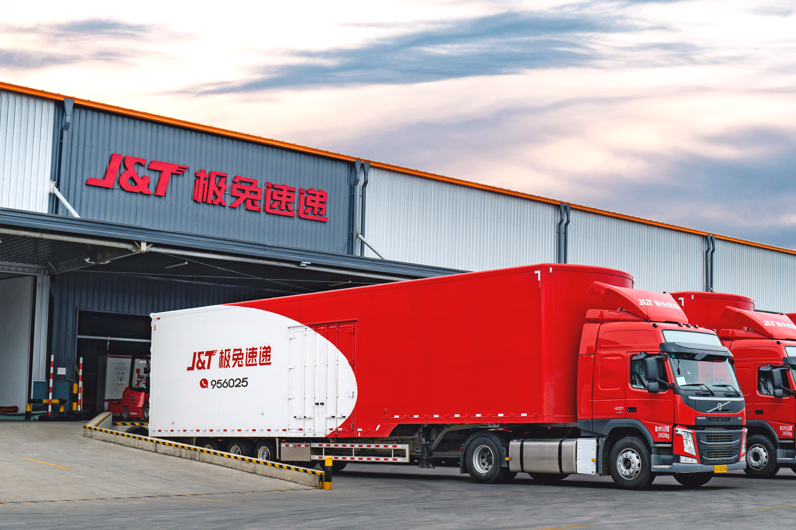
Hong Kong-listed logistics operator J&T Global Express Ltd achieved a watershed moment in its operational history during the second quarter, crossing the 100-million-parcel-per-day threshold as it continues to establish itself as a formidable regional force in Southeast Asian e-commerce logistics. The milestone reflects the company's accelerating international expansion strategy and the underlying structural growth of digital commerce across developing Asian markets, territories where traditional logistics infrastructure remains fragmented and competition presents significant opportunities for well-capitalised operators.
The company's total parcel throughput during the April-to-June period reached 9.18 billion units, representing growth of 24.2 percent compared with the same quarter in 2025. More significantly, parcels handled outside China expanded dramatically by 66.9 percent to 2.97 billion, indicating that international markets now account for approximately one-third of J&T's global volume. This rebalancing of the company's geographic footprint carries strategic importance for investors and regional stakeholders alike, as it demonstrates successful penetration into markets beyond the saturated Chinese domestic sector and positions the company to benefit from longer-term Southeast Asian e-commerce expansion.
Southeast Asia emerged as the standout performer during the quarter, with parcel volume reaching 2.76 billion units, a year-on-year increase of 63.2 percent. The region's average daily volume climbed to 30.3 million parcels, representing the fastest regional growth rate across J&T's operational territories. For context, this regional growth rate substantially outpaces China's 10.6 percent expansion, signalling both the maturity of the Chinese market and the comparative youth and dynamism of Southeast Asian e-commerce adoption. Over the first half of 2026, Southeast Asian parcel volume totalled 5.52 billion units, climbing 71.2 percent annually, a trajectory that positions the region as increasingly central to the company's medium-term revenue generation and profit margin expansion.
J&T's physical and technological infrastructure expansion in Southeast Asia reflects confidence in the region's sustainability as a growth engine. As of June 30, 2026, the company operated 127 sorting centres across the region, an increase of six facilities since the end of 2025, while deploying 75 automated sorting lines, up by eleven units during the same period. This capital investment directly addresses the operational bottlenecks that traditionally constrain logistics providers in developing Southeast Asian markets: inadequate handling capacity, inconsistent quality standards, and extended delivery timeframes. By contrast to smaller competitors reliant on manual sorting and informal distribution networks, J&T's mechanisation strategy positions it to absorb volume growth without proportional cost increases, a competitive advantage that matters acutely in price-sensitive regional markets.
Within China itself, J&T navigated persistently challenging domestic conditions through operational optimisation rather than aggressive volume chasing. Chinese parcel volume reached 6.21 billion units in Q2, growing 10.6 percent year-on-year, with daily volume reaching 68.2 million parcels. The company deliberately restructured its customer base and network topology to improve profitability per parcel in a market characterised by fierce price competition and lower margins than its international operations. Domestic automation advanced modestly, with the company adding eight automated sorting lines in the first half to reach a total of 346, a measured expansion befitting the market's maturity. For Malaysian operators and those tracking regional competitive dynamics, this bifurcation of J&T's strategy—aggressive expansion abroad coupled with selective optimisation domestically—illustrates the contrasting growth phases across Asian markets.
The company's ventures into tertiary markets, including Latin America and the Middle East, generated outsized percentage gains that warrant careful interpretation. Second-quarter parcel volume in these regions totalled 211 million units, representing year-on-year growth of 136.5 percent, yet this figure remains modest in absolute terms relative to Southeast Asian or Chinese volumes. Nevertheless, this performance reflects J&T's deliberate diversification into cross-border logistics and deepening partnerships with major global e-commerce platforms seeking reliable last-mile delivery partners in underserved regions. For Malaysian traders and enterprises conducting cross-border commerce, J&T's expansion into these markets expands their potential reach and offers additional logistics pathways for goods destined for non-Asian consumers.
Investment bank Morgan Stanley's recent upgrade of J&T Express to overweight status underscores institutional recognition of the company's strategic positioning. The bank identified superior growth prospects relative to peer operators, citing J&T's geographic exposure to high-potential e-commerce markets in Southeast Asia and South America. This analyst validation carries implications for regional technology and logistics investors evaluating exposure to the broader Asian supply-chain modernisation theme, as J&T's performance increasingly benchmarks the viability of operators betting on emerging market logistics consolidation. The Morgan Stanley thesis also implicitly suggests that mature-market investors continue undervaluing emerging-market logistics infrastructure plays, a perception that could shift as quarterly results accumulate and the Southeast Asian e-commerce narrative strengthens.
For Malaysia specifically, J&T Express's accelerating regional dominance carries both opportunities and considerations. The country represents a significant node within the company's Southeast Asian network, benefiting from improved parcel handling capacity, reduced delivery timeframes, and service standardisation that J&T's investment brings. However, the company's growth inevitably increases competitive intensity within Malaysia's logistics sector, placing pressure on smaller domestic operators and potentially spurring consolidation among mid-sized providers. Furthermore, as J&T continues to expand distribution infrastructure, regulatory discussions surrounding labour standards, environmental practices, and fair competition may intensify, particularly as the company's market share grows more conspicuous to policymakers.
The company's trajectory reflects a broader structural trend reshaping Southeast Asian commerce: the emergence of logistics as a core competitive and strategic asset rather than a peripheral service function. E-commerce penetration in Malaysia and peer countries remains substantially lower than in developed markets, suggesting that parcel volumes, operational capacity, and service expectations will continue expanding for years ahead. J&T's early positioning as a leading regional operator, sustained by access to capital and operational expertise, positions it advantageously to capture share from fragmented traditional competitors and to establish brand recognition among merchants and consumers before market consolidation intensifies. The 100-million-parcel milestone, whilst striking, likely represents an inflection point rather than a ceiling in J&T's expansion narrative.

