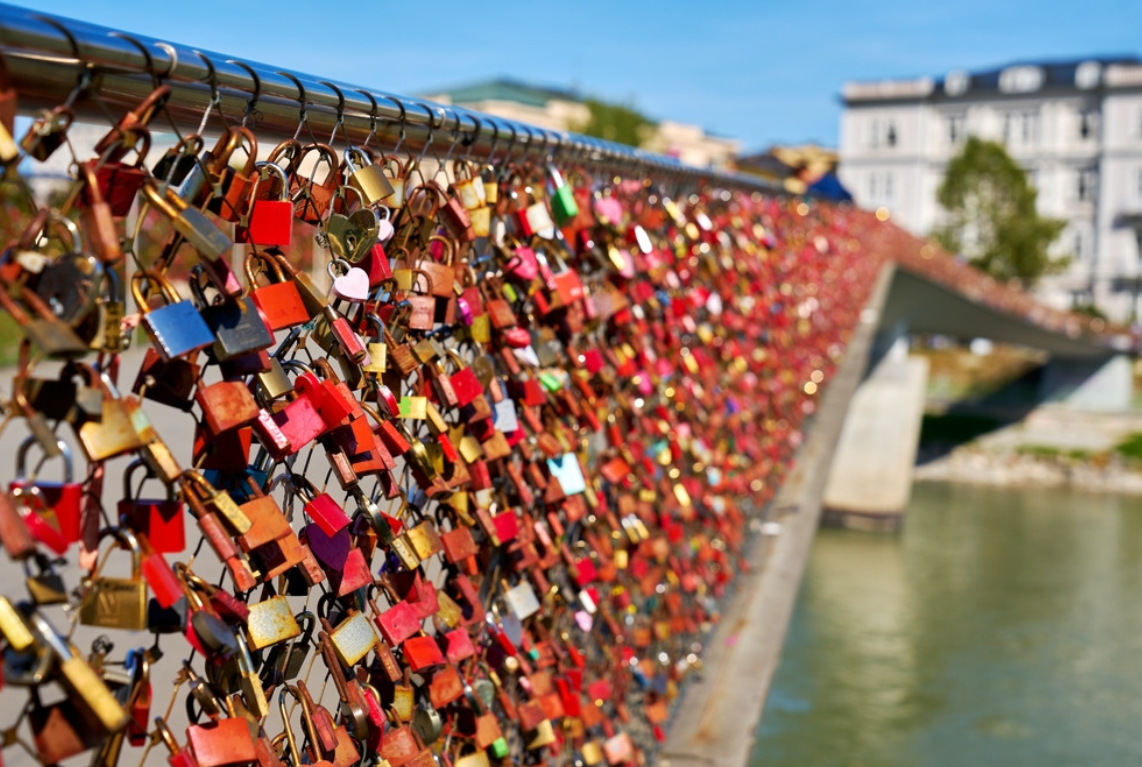
Jakarta officials are facing mounting scrutiny over plans to construct several picturesque love lock bridges along one of the capital's busiest thoroughfares, with critics arguing the Rp 91 billion (US$5 million) project represents misplaced priorities in a city grappling with serious infrastructure deficiencies. Governor Pramono Anung championed the initiative as a romantic destination inspired by similar installations in Paris and Seoul, envisioning spaces where young couples could attach personalised padlocks and transform the bridges into colourful public artworks. The proposed structures would span the Cideng River alongside Jl. Rasuna Said, creating connections to Jl. Kuningan Persada near the Corruption Eradication Commission headquarters.
Pramono outlined an ambitious vision for three to four bridges that would serve as gathering points for self-expression among younger demographics. The administration's special gubernatorial staffer Cyril Raoul Hakim reinforced this framing, characterising the project as part of broader efforts to develop what he termed a "romantic public space" while maintaining contemporary design sensibilities. The bridge designs reportedly balance modern aesthetics with practical pedestrian access, though detailed engineering specifications remain incomplete as the project progresses through budgeting phases.
The revitalisation initiative encompasses far more than romantic installations. The city administration's comprehensive plan allocates resources toward upgrading the 3.8-kilometre thoroughfare through sidewalk renovations and removal of derelict concrete structures—remnants of an abandoned early-2000s monorail scheme that has long since become an eyesore. This broader context suggests officials view the love lock bridges as components within larger urban beautification efforts rather than standalone vanity projects, though the framing has done little to mollify critics questioning resource allocation.
Scepticism among Jakarta residents reflects practical concerns about how such amenities serve daily urban life. Karlina, a 27-year-old office worker in the Mega Kuningan district near the proposed site, acknowledged the installations might attract some visitors but questioned whether businesspeople and commuters in this heavily commercial zone would deliberately visit during leisure time. She instead advocated for free public gathering spaces accessible via comfortable public transport systems, recognising that younger demographics prioritise functional accessibility over symbolic attractions. Her perspective captures a broader disconnect between administrative vision and ground-level urban realities.
Urban planning specialist Trubus Rahadiansyah levelled more pointed criticism, characterising the love lock bridges as a "gimmick" that emphasises symbolism while neglecting substantive mobility improvements. He highlighted the area's fundamental character as vehicle-dominated rather than pedestrian-oriented, arguing this mismatch makes it an unsuitable location for infrastructure designed to attract foot traffic. Rahadiansyah's assessment extends beyond aesthetic concerns to challenge the strategic logic underlying the investment decision itself.
More significantly, Rahadiansyah drew connections between misallocated resources and concrete safety deficiencies. He referenced the catastrophic April collision between a Commuter Line train and the Argo Bromo Anggrek intercity service in Bekasi, West Java, which resulted in 16 fatalities and injured more than 91 people. That tragedy emerged partly from inadequate level crossing infrastructure when a commuter train struck an electric vehicle marooned on railway tracks. Such incidents underscore how many Jakarta railway crossings lack elementary safety installations such as proper gates and barriers, representing far more pressing infrastructure needs than recreational installations.
Rahadiansyah's argument reflects a broader infrastructure governance challenge facing major Southeast Asian cities: competition between high-visibility projects with aesthetic appeal and less glamorous but critically necessary safety and accessibility improvements. Railway crossing safety specifically has emerged as a recurring vulnerability across Indonesia's rail network, claiming lives and injuries that might be prevented through relatively straightforward engineering interventions. From this perspective, prioritising love lock bridges over comprehensive railway safety retrofitting appears strategically indefensible.
Councillor Kevin Wu from the Indonesian Solidarity Party has similarly challenged the project's framing, calling for transparent public review and reorienting budget allocations toward fundamental resident needs. Wu's intervention highlights how infrastructure spending decisions carry political implications regarding equitable development across Jakarta's diverse districts. By concentrating investment in prestige projects within wealthy business zones, authorities risk reinforcing perceptions of uneven resource distribution that leaves residents in western, eastern, and northern Jakarta with inadequate pedestrian infrastructure and green spaces.
Wu's emphasis on accessible sidewalks and safer pedestrian bridges reflects infrastructure fundamentals that remain unmet across many Jakarta neighbourhoods. Beyond the romantic appeal of love lock installations lies a practical crisis: pedestrian infrastructure across the capital remains fragmented and often hazardous, with unmarked crossings, inadequate lighting, and poorly maintained pathways continuing to generate traffic accidents. These ongoing deficiencies disproportionately affect lower-income residents and daily commuters who lack personal vehicle access.
The controversy surrounding the love lock bridges speaks to broader governance tensions within rapidly urbanising Southeast Asian megacities. As Jakarta and comparable regional centres pursue world-city status through signature attractions and international benchmarking, pressures mount to showcase cosmopolitan amenities reminiscent of established global metropolitan areas. Yet this aspirational trajectory can obscure fundamental service delivery failures affecting ordinary residents. The Paris and Seoul comparisons that inspired Pramono's vision overlook that those cities developed love lock culture atop already-robust pedestrian infrastructure and comprehensive public transit systems.
For Malaysian observers, the Jakarta case offers instructive parallels. Kuala Lumpur and other Malaysian cities have wrestled with similar tensions between development prestige projects and basic infrastructure adequacy. The love lock bridge debate illustrates how infrastructure spending decisions embed philosophical choices about urban priorities, reflecting whether authorities emphasise experiential placemaking or functional accessibility. Both dimensions matter for liveable cities, yet resource constraints force difficult prioritisation decisions that inevitably reveal underlying value systems.
Moving forward, Jakarta officials face mounting pressure to justify the love lock investment within comprehensive infrastructure strategies addressing documented safety and accessibility gaps. The controversy reflects not merely aesthetic disagreement but fundamental questions about how major Southeast Asian cities allocate limited resources when confronted with competing needs. Whether Jakarta proceeds, modifies, or abandons the love lock project will signal broader governmental priorities regarding infrastructure governance in a megacity increasingly defined by stark contrasts between world-class aspirations and ground-level service deficiencies.

