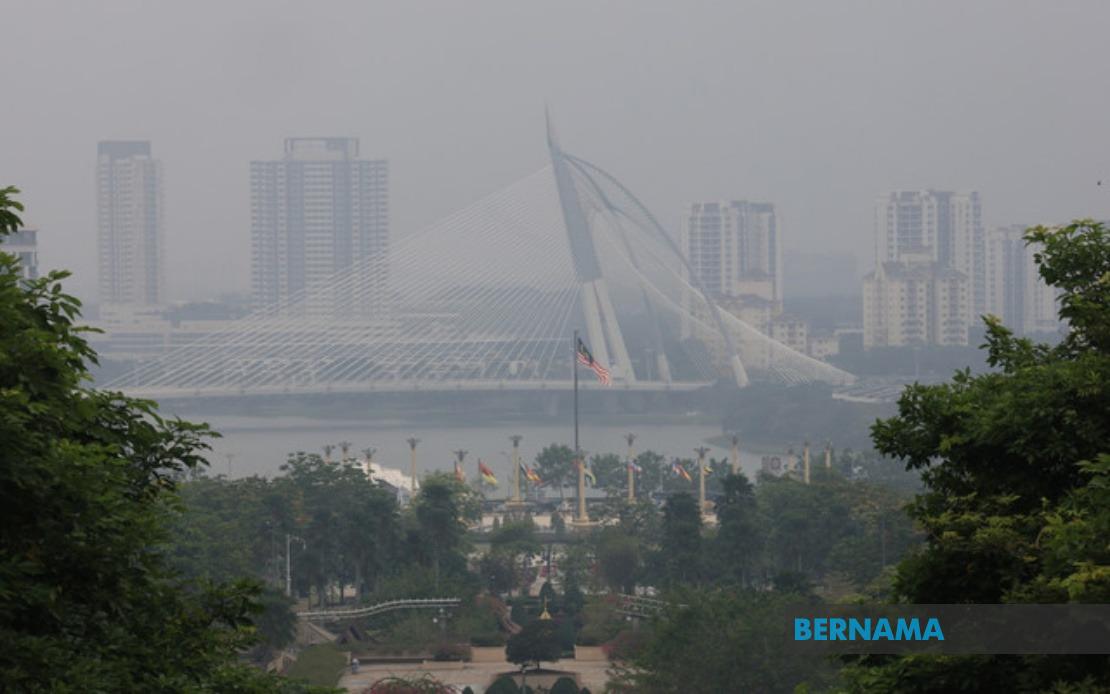
The Department of Islamic Development Malaysia (JAKIM) is mobilising the nation's faith communities in response to the escalating haze crisis, organising a coordinated Solat Hajat across three prominent mosques this evening. The special prayer sessions, held under JAKIM's administration, will take place following the Maghrib prayers at the National Mosque in Kuala Lumpur, alongside simultaneous gatherings at Putra Mosque and Tuanku Mizan Zainal Abidin Mosque in the federal territory of Putrajaya. This coordinated spiritual initiative reflects the growing concern within religious leadership circles regarding the environmental and public health dimensions of the recurring transboundary haze phenomenon affecting the Malaysian peninsula.
JAKIM's director-general Datuk Dr Sirajuddin Suhaimee framed the prayer initiative as an urgent collective appeal for divine protection, emphasising the need for Muslims to unite in supplication during what he characterised as a national trial. His statement underscores the spiritual dimension that religious authorities are bringing to bear on an environmental challenge that has traditionally been addressed through diplomatic, regulatory, and enforcement mechanisms. The appeal resonates with a broader Islamic approach to environmental stewardship and community resilience in the face of transnational atmospheric pollution.
The timing of this religious response reflects higher-order directives from the nation's political and spiritual leadership. The initiative follows an explicit royal decree issued by Al-Sultan Abdullah Ri'ayatuddin Al-Mustafa Billah Shah, the Sultan of Pahang, who called upon all Malaysians to engage in prayer and seek Allah's assistance for the welfare of those suffering from haze-related health impacts. This royal intervention carries particular weight in Malaysia's constitutional framework, where the Malay sultans hold ceremonial authority on Islamic matters within their respective jurisdictions. Additionally, Dr Zulkifli Hasan, the Minister in the Prime Minister's Department responsible for Religious Affairs, had separately urged the faith community to undertake concerted prayer efforts, creating a unified signal from both traditional and modern sources of authority.
The haze situation has deteriorated sufficiently to warrant this escalation to the spiritual realm. As of the morning of August 26, air quality monitoring had identified unhealthy Air Pollutant Index readings across a geographically dispersed pattern spanning six states plus both federal territories. Sarawak, Selangor, Negeri Sembilan, Johor, Melaka, and Perak all reported affected areas, with Kuala Lumpur and Putrajaya recording concerning pollution levels. This distribution suggests the haze is not confined to a single source region but reflects the transboundary nature of the pollution, likely originating from Indonesian peatland and agricultural fires that push particulates across maritime boundaries during southwest monsoon wind patterns.
The seventeen specific areas registering unhealthy API classifications represent concentrated pollution hotspots where residents face genuine respiratory and cardiovascular risks. Urban centres such as Kuala Lumpur and the Putrajaya administrative zone are experiencing air quality degradation that affects both the general population and those with pre-existing respiratory conditions. The geographic spread across Peninsular Malaysia underscores how haze episodes represent a shared crisis cutting across state boundaries and demographic groups, necessitating responses that operate at the national rather than localised level.
JAKIM's invocation of Solat Hajat carries specific theological significance within Islamic practice. This form of supplication represents a structured, community-led petition to Allah for divine intervention in times of collective hardship or crisis. By institutionalising this prayer session across three nationally significant mosques under JAKIM's direct supervision, the religious administration is channelling individual spiritual anxiety into organised collective action. The choice of three venues—the National Mosque symbolising the nation's Islamic identity, and two Putrajaya mosques representing the administrative heartland—creates a symbolic geography of prayer spanning the capital and its satellite federal territory.
For Malaysian Muslims, the initiative provides a structured mechanism through which faith communities can articulate their concerns about environmental degradation and public health threats. The prayer request specifically asks for protection from harm, safeguarding of health and safety, and restoration of environmental conditions in affected zones. This formulation bridges spiritual and pragmatic dimensions, treating divine intervention and material environmental recovery as interconnected rather than mutually exclusive phenomena. The invitation for Muslims to participate collectively transforms the haze from an abstract environmental problem into an immediate, personally relevant matter of communal concern.
The timing and scope of JAKIM's response also reflects evolving awareness within religious establishments across Southeast Asia regarding environmental stewardship as a religious obligation. Islamic jurisprudence increasingly recognises environmental protection as an essential component of Islamic duties, derived from concepts of khalifah (stewardship) and maqasid al-shariah (objectives of Islamic law). By responding to the haze crisis through prayer mobilisation, JAKIM is implicitly positioning environmental protection as a matter requiring both material action and spiritual commitment, appealing to Muslims' faith motivations as a lever for behavioural and political change.
The haze phenomenon itself demands attention as a persistent regional challenge rather than a temporary aberration. Malaysia has experienced recurring transboundary haze episodes for decades, driven by agricultural land conversion and peatland drainage in Indonesia. The recurrence suggests that despite diplomatic engagement, bilateral agreements, and enforcement efforts, underlying incentive structures and governance capacity in source regions continue generating pollution episodes during particular seasonal windows. JAKIM's prayer initiative, while spiritually significant, implicitly acknowledges that conventional environmental diplomacy and national regulatory frameworks have not yet achieved comprehensive prevention.
The convergence of royal decree, ministerial directive, and JAKIM implementation creates a unified national response that mobilises religious authority to address an environmental-health crisis. This configuration suggests that when environmental problems reach sufficient severity to affect public health visibly across multiple states, Malaysia's leadership pyramid—from sultans through ministers to religious departments—recognises the need for comprehensive societal mobilisation. Prayer sessions represent one vector within a broader policy response that likely encompasses diplomatic negotiations, air quality monitoring, public health advisories, and potentially economic incentives for Indonesian authorities to intensify fire prevention efforts.
For regional observers, Malaysia's religious mobilisation around the haze issue carries implications for how Southeast Asian societies integrate spiritual resources with environmental governance. The approach neither ignores material causation nor treats environmental problems as purely technical matters amenable to expert solution. Instead, it positions faith communities as legitimate participants in environmental crisis response, leveraging spiritual motivations to reinforce collective action and individual behavioural adaptation. As transboundary environmental challenges proliferate across Southeast Asia, this model of engaging religious authority may offer insights for other nations seeking to strengthen social cohesion around shared environmental threats.

