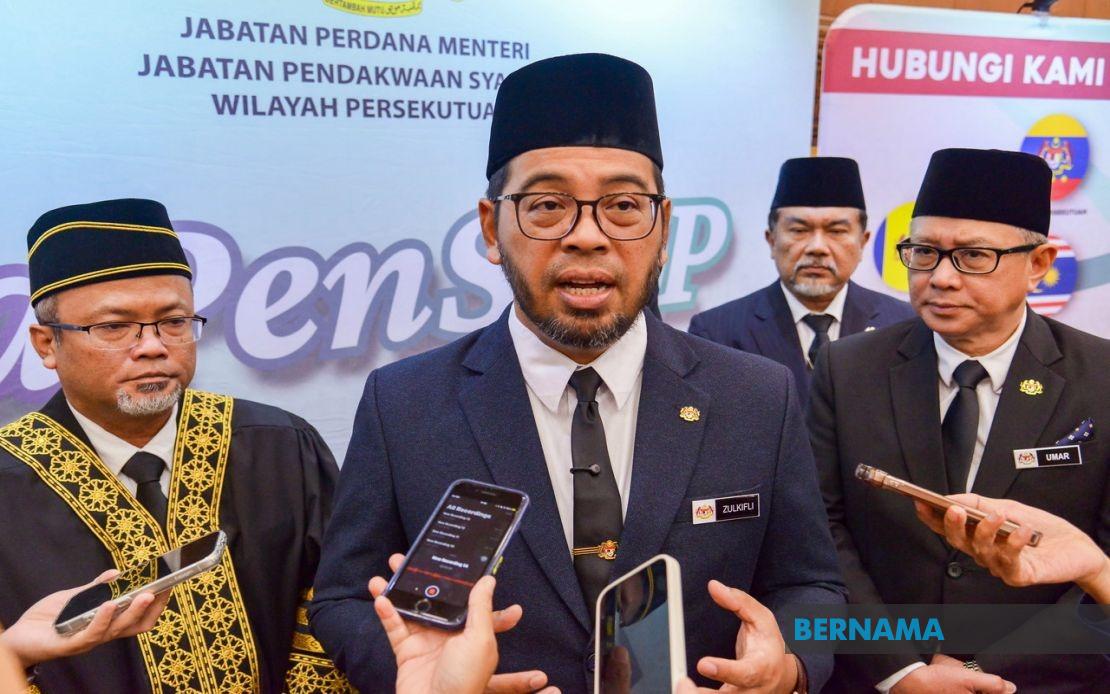
The Prime Minister's Department's Religious Affairs division has initiated an investigation into allegations that a Department of Islamic Development Malaysia (JAKIM) reference number was improperly used to validate a marriage declaration letter circulated by the Malaysia Rohingya Ulama Council. Minister Dr Zulkifli Hasan announced the inquiry on July 15 in Putrajaya, acknowledging that details about the matter remain incomplete and pending comprehensive review.
The controversy erupted when a marriage declaration document bearing the reference number "JAKIM.PERH/LN.800-7(5)" circulated widely across social media platforms, generating immediate concern about its legitimacy and connection to JAKIM's official operations. The viral spread of the document prompted questions from religious authorities and the public regarding whether the reference number had been legitimately assigned or fraudulently referenced to lend false credibility to the letter.
State-level religious authorities have already weighed in on the matter. The Perak Islamic Religious Department (JAIPk) explicitly stated that it does not recognize the marriage declaration letter as a valid or legally binding document. This position reflects broader challenges facing Malaysia's religious governance framework, particularly concerning the registration and recognition of marriages involving marginalized communities such as the Rohingya, whose status in Malaysia remains complex and politically sensitive.
The Perak department clarified that marriages involving Rohingya individuals cannot be registered through standard channels because the matter falls under policy considerations being actively reviewed by state-level religious authorities. This situation highlights the administrative gaps and jurisdictional tensions that exist between federal religious bodies like JAKIM and state Islamic departments, which retain significant autonomy over religious affairs including marriage registration and recognition. For the Rohingya community, many of whom lack formal citizenship or legal status in Malaysia, such regulatory barriers create practical difficulties in formalizing family relationships through official channels.
Dr Zulkifli's announcement also touched on a related but distinct concern facing Malaysia's religious landscape: the proliferation of unaccredited religious lectures and teachings distributed via social media platforms. The minister acknowledged that this issue requires careful attention, yet emphasized that responsibility for regulating religious instruction accreditation fundamentally rests with state governments rather than federal authorities. The structure of Malaysia's Islamic governance system, wherein states retain considerable power over religious affairs, creates coordination challenges when addressing issues that transcend geographical boundaries through digital platforms.
Regulatory enforcement presents a significant obstacle, as religious enforcement officers (PPA) struggle to effectively monitor and curb unauthorized religious teaching in the digital sphere. Dr Zulkifli indicated that his department is studying approaches to address this problem, though he stressed that any solution must carefully navigate complex legal considerations. At the departmental level, JAKIM and affiliated bodies maintain internal protocols requiring that individuals invited to speak on official platforms possess proper accreditation, yet extending such requirements to broader social media ecosystems remains legally and practically complicated.
The marriage document controversy and accreditation concerns reflect a broader pattern of challenges confronting Malaysia's Syariah legal and governance institutions as they confront contemporary problems amplified by digital technology. During his address at the second Malaysian Syariah Prosecutors Conference (PePSSM) 2026, Dr Zulkifli emphasized that the government remains committed to modernizing Syariah laws to address emerging challenges, particularly those connected to cybercrime and digital-era offenses. The rapid evolution of technology has outpaced regulatory frameworks designed for traditional contexts, necessitating significant institutional adaptation.
Enhancing institutional capacity across multiple agencies appears central to the government's strategy. Dr Zulkifli stressed the necessity of strengthening collaboration between JAKIM, the Malaysian Communications and Multimedia Commission (MCMC), the Royal Malaysia Police (PDRM), and the Attorney General's Chambers to ensure robust Syariah enforcement and prosecution. Integrated coordination across these bodies becomes increasingly vital when dealing with cyber-related religious offenses, fraudulent document claims, and unauthorized online religious instruction that span jurisdictional boundaries.
Syariah prosecutors face mounting pressure to upgrade their professional competencies in specialized areas including digital forensics, data analysis, and technology proficiency. These enhanced capabilities are essential for effectively investigating and prosecuting crimes that increasingly operate within digital environments, from fraudulent document circulation to cybercrimes with religious implications. The evolution toward a more technologically sophisticated prosecutorial system reflects recognition that traditional investigative methods prove insufficient when addressing twenty-first-century violations.
For Malaysia's Rohingya population, estimated at over 180,000 individuals largely concentrated in camps and informal settlements, the complications surrounding marriage registration exemplify broader vulnerabilities in accessing formal legal protections and recognition. The inability to register marriages through official channels creates uncertainty regarding spousal rights, inheritance claims, and protection of children born to unregistered unions. These practical consequences underscore how regulatory gaps and policy ambiguities at the intersection of religious law and immigration status create genuine hardships for vulnerable populations.
The investigation into the JAKIM reference number misuse also raises broader questions about document verification procedures and how certification numbers can be validated or challenged. As religious and legal institutions increasingly grapple with fraudulent documentation in the digital age, establishing robust systems for confirming the authenticity of official reference numbers becomes essential. The case illustrates vulnerabilities in current verification mechanisms and the potential for official numbering systems to be exploited to lend false credibility to documents that lack genuine authorization.
Moving forward, the outcome of this investigation will likely influence how JAKIM and state religious departments establish clearer protocols regarding document authentication and reference number usage. Such developments could have implications for how Malaysian religious authorities manage interactions with informal religious organizations serving marginalized communities. For the broader Southeast Asian region, where refugee and displaced communities often navigate complex legal and religious frameworks, Malaysia's approach to these challenges may offer instructive lessons about balancing community recognition with regulatory integrity.

