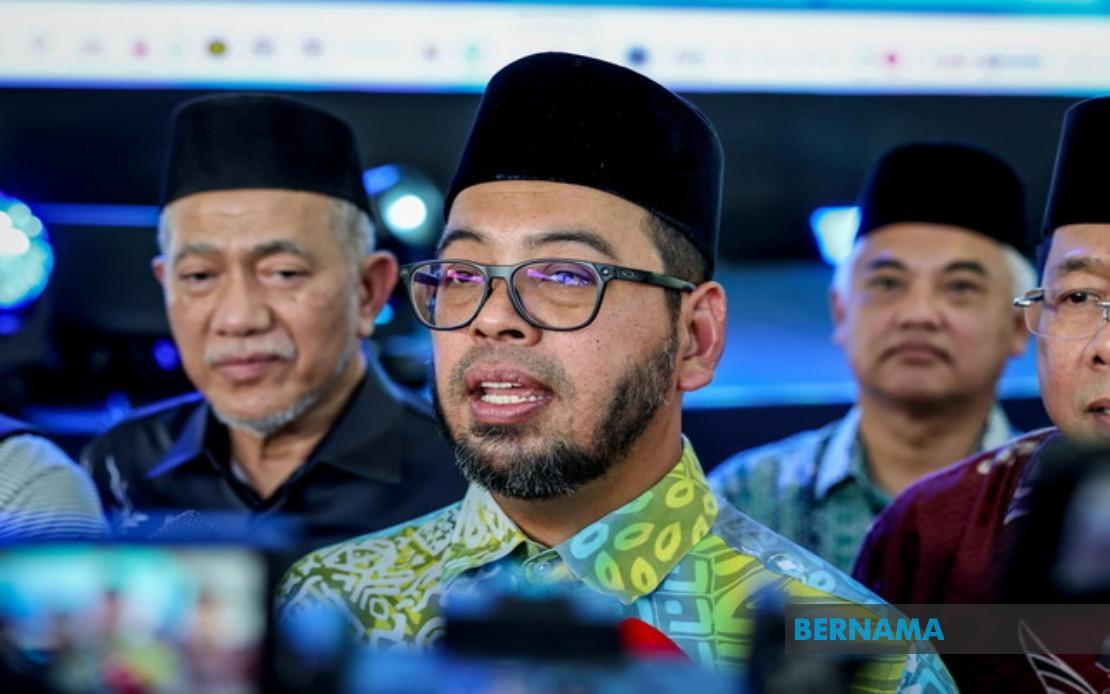
The Department of Islamic Development Malaysia (JAKIM) is moving to establish unified funeral management protocols that will serve as a benchmark across the country, following a recent controversy that gained significant social media traction. Minister in the Prime Minister's Department (Religious Affairs) Dr Zulkifli Hasan announced the initiative while addressing media at the Multaqa MADANI Ulama and Umara Programme for the Northern Zone at Masjid Timah in Permatang Pauh on Friday.
The standardisation effort represents a recognition that funeral management—a deeply sensitive matter in Islamic practice and Malaysian Muslim communities—requires consistent, transparent procedures. While several Malaysian states have already developed their own guidelines, JAKIM has identified gaps and inconsistencies that warrant a more coordinated approach. The department's move acknowledges that funeral arrangements involve multiple stakeholders, including grieving families, mosque management, religious councils, and cemetery operators, all of whom benefit from clear, uniform procedures.
Zulkifli stressed that the refined guidelines will be developed with careful attention to both contemporary challenges and the existing legal frameworks that govern religious affairs in each state. This approach reflects the reality of Malaysia's federal structure, where Islamic administration remains predominantly a state matter under the purview of individual sultans and state Islamic religious departments. Rather than imposing a top-down mandate, JAKIM aims to create a comprehensive reference document that states can adapt to their local circumstances while maintaining consistency in core principles.
The timeline for completion remains flexible but urgent. According to Zulkifli, the process should not require extensive delays since foundational guidelines already exist and only require refinement and enhancement. The department intends to expedite the finalisation process while ensuring that the resulting standards comply fully with existing state legislation and do not override the authority of state religious bodies. This careful balance between centralised guidance and state autonomy represents a nuanced approach to religious governance in Malaysia.
The immediate trigger for this initiative was a funeral management incident in Selangor that generated widespread public discussion online. Allegations emerged regarding delays in the burial of a deceased individual at the Ukay Perdana Muslim Cemetery in Hulu Kelang, with disputes reportedly involving the next of kin, mosque management at Masjid Nurul Hidayah in Kampung Pandan Dalam, the welfare organisation Badan Kebajikan Salatulrahim (BKS), and state authorities. Such delays can cause considerable distress to Muslim families, as Islamic practice generally emphasises prompt burial as a matter of respect and religious obligation.
In response to the controversy, the Selangor Islamic Religious Council (MAIS) convened an immediate meeting bringing together all parties involved in the dispute. MAIS chairman Datuk Salehuddin Saidin characterised the intervention as an effort to identify workable solutions that address the concerns of each stakeholder while preventing recurrence of similar problems. This proactive engagement signals recognition that funeral management disputes, if not handled transparently and compassionately, can erode public confidence in religious institutions and create unnecessary family hardship.
For Malaysian Muslim communities, clear funeral guidelines offer significant practical value. Families facing bereavement often experience confusion about procedures, costs, timelines, and their rights when engaging with cemetery and mosque management. Standardised guidelines can help demystify these processes, reduce opportunities for exploitation or misunderstanding, and establish benchmarks for service quality. Additionally, transparent procedures protect mosque and cemetery administrators by defining their responsibilities and limitations, thereby reducing disputes arising from unclear expectations.
The standardisation project also reflects broader challenges in Malaysian Islamic administration. As urbanisation accelerates and Muslim populations grow, funeral services have increasingly become commercialised or institutionalised, sometimes creating tensions between traditional practices and modern management requirements. Guidelines that address contemporary realities—such as the involvement of private cemetery operators, welfare organisations, and multiple family members with potentially divergent interests—can help navigate these complexities while preserving Islamic principles.
Zulkifli's public appeal for calm and unity carries significance beyond the immediate Selangor incident. Funeral management controversies can easily become politicised or divisive if competing narratives dominate public discourse. By emphasising collaborative problem-solving and inviting all stakeholders to work together, religious leadership attempts to reframe the issue as a shared challenge requiring institutional improvement rather than blame-seeking. This approach acknowledges that the goal is systemic reform that benefits all Muslims rather than partisan advantage.
The implications for Southeast Asia are noteworthy, given that funeral management standards vary considerably across Muslim-majority jurisdictions in the region. Malaysia's experience of developing national guidance while respecting state autonomy could offer lessons for neighbouring countries wrestling with similar questions about centralised versus decentralised religious governance. The initiative also demonstrates how social media attention to specific grievances can catalyse institutional reform, a pattern increasingly visible in Asian governance more broadly.
Implementing these guidelines will require more than bureaucratic refinement. Success depends on building genuine consensus among state religious authorities, cemetery operators, mosque leaders, and community organisations. Training programmes, public communication campaigns, and regular review mechanisms will likely prove necessary to ensure that standardised guidelines translate into improved ground-level practice. The test of this initiative will come when families facing bereavement experience demonstrably clearer procedures, shorter processing times, and greater confidence in the fairness of funeral arrangements.

