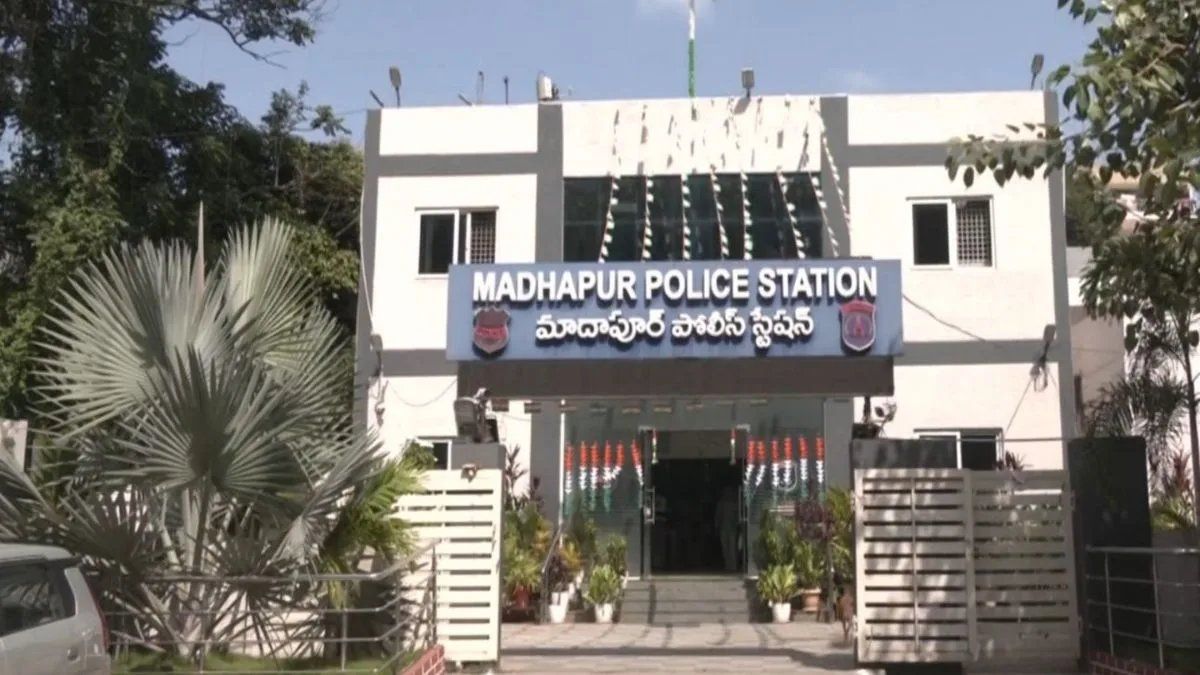
A tragic road accident outside a major shopping complex in Hyderabad has escalated into a political controversy, with questions being raised about the handling of a case involving the son of a Jana Sena Party parliamentarian. Lingamaneni Sanjush, aged 21, was granted station bail after an Aston Martin he was allegedly driving collided with Bharati Mukhi, a 26-year-old retail employee, on August 16 near Inorbit Mall in the Madhapur area. The fatality has since drawn accusations of preferential treatment and a media blackout, with opposition politicians questioning the pace and transparency of the investigation.
According to authorities investigating the incident, the collision occurred around 3 in the afternoon when Bharati was crossing the road after returning from collecting lunch with a colleague, Pooja Ashok. The two women had ventured to a nearby ITC hotel restaurant to fetch meals during their break from work at a Lifestyle store located within the shopping complex. Police accounts suggest that the vehicle was travelling at considerable speed in a manner described as both rash and negligent, striking Bharati as she crossed the roadway. The impact caused severe head trauma, and she was rushed to Apollo Hospital in Jubilee Hills, where she was pronounced dead shortly after arrival.
The police investigation proceeded with standard protocols for serious traffic fatalities. Officers from Madhapur Police Station registered a formal case under Section 106(1) of the Bharatiya Nyaya Sanhita, which addresses causing death through act endangering life or personal safety. Sanjush was apprehended on the same day and subjected to standard tests for alcohol and drug consumption. Blood samples were collected and submitted to the Forensic Science Laboratory for detailed analysis. The luxury vehicle involved in the collision has been impounded as evidence, with investigators continuing to compile witness statements and technical reports to reconstruct the sequence of events.
Notably, Sanjush was served with a notice under Section 35(3) of the Bharatiya Nagarik Suraksha Sanhita as part of investigative procedures before being released on station bail. This administrative measure permits police to conduct further enquiries while allowing the accused to remain outside custody pending formal charges. A spokesperson from the Madhapur police confirmed both the notice and bail decision, indicating that the procedural steps were being taken as the investigation progressed. The forensic examination of blood samples and compilation of the post-mortem examination report remain pending, with these findings likely to inform whether additional charges will be pursued.
The incident has triggered political fallout, particularly from the opposition YSRCP, which has seized upon the case to allege systemic bias in the criminal justice system. YSRCP national spokesperson Karthik Yellapragada claimed that the accident scene and subsequent investigation had been deliberately downplayed in public discourse, with minimal media attention during the first five days after the fatal collision. He raised questions about whether the political affiliation of the accused—being the son of a sitting MP from a ruling coalition party—had influenced the handling of the case. His remarks implicitly suggested coordination between state government leadership, specifically pointing to relationships between Chief Minister Revanth Reddy and other political figures.
Yellapragada's assertions represent an unsubstantiated allegation at this stage, as neither police nor investigating authorities have made public statements suggesting any deviation from standard procedures in traffic fatality cases. However, his intervention highlights a broader concern in Indian politics regarding equal application of law regardless of the social or political status of those involved in criminal incidents. The fact that the accused is the son of a national political representative rather than an ordinary citizen has undoubtedly contributed to heightened scrutiny, reflecting public sensitivity about privilege and judicial equality.
For Malaysian readers following this story, the incident presents several relevant dimensions. First, it underscores how wealth and political connections can become flashpoints in road safety discussions across South Asia, mirroring occasionally contentious debates in Malaysia about whether influential individuals receive differential treatment in traffic cases. The use of luxury vehicles like Aston Martins, relatively rare in both countries compared to mass-market automobiles, also tends to attract media attention and public resentment when accidents occur. Additionally, the political dimensions of the case—with opposition parties attempting to weaponise a tragedy for electoral advantage—reflect broader patterns observable in Malaysian politics, where criminal cases involving political figures frequently become contested between ruling and opposition coalitions.
The investigation's continuation indicates that authorities are gathering evidence before determining whether enhanced charges should be filed. The pending forensic results, particularly blood alcohol and toxicology findings, will prove critical in establishing whether the accident resulted solely from rash driving or whether substance impairment contributed to the collision. The collection of comprehensive witness statements and technical accident reconstruction data will also factor into decisions about charging protocols. These investigative elements typically require weeks to complete properly, meaning the case will likely remain in public attention for some time.
The broader context of road safety in Indian cities has become increasingly fraught, with traffic fatalities remaining a persistent public health challenge across urban centres including Hyderabad. The collision outside a major retail destination during daylight hours raises questions about pedestrian safety infrastructure and vehicle speed enforcement in commercial areas. Whether the vehicle was travelling without appropriate speed restraint due to driver negligence or impairment remains a central investigative question. The mall location suggests pedestrian traffic would ordinarily be substantial, potentially making high-speed driving particularly hazardous.
The political controversy surrounding Sanjush's bail decision, though premature given the investigative status, reflects legitimate concerns about unequal justice that resonate across South Asian democracies. Opposition parties have legitimate roles in scrutinising police conduct and judicial processes, yet such scrutiny should be grounded in evidence rather than speculation. The investigation into Bharati's death will ultimately be judged by whether procedures were conducted comprehensively and impartially, regardless of the accused's political connections. Transparency in releasing investigative findings and charging decisions will be critical in either validating or substantiating the opposition's allegations of bias.
For now, the case remains under investigation with several critical evidentiary steps still pending. The judicial and investigative systems will bear responsibility for ensuring that Bharati's death receives appropriate legal redress based on evidence rather than political calculation. How authorities handle the remainder of this case—from completion of forensic analysis through to final charging decisions and trial—will signal whether India's criminal justice system can deliver equal treatment regardless of the accused's social standing, a question that carries significance well beyond Hyderabad's boundaries.

