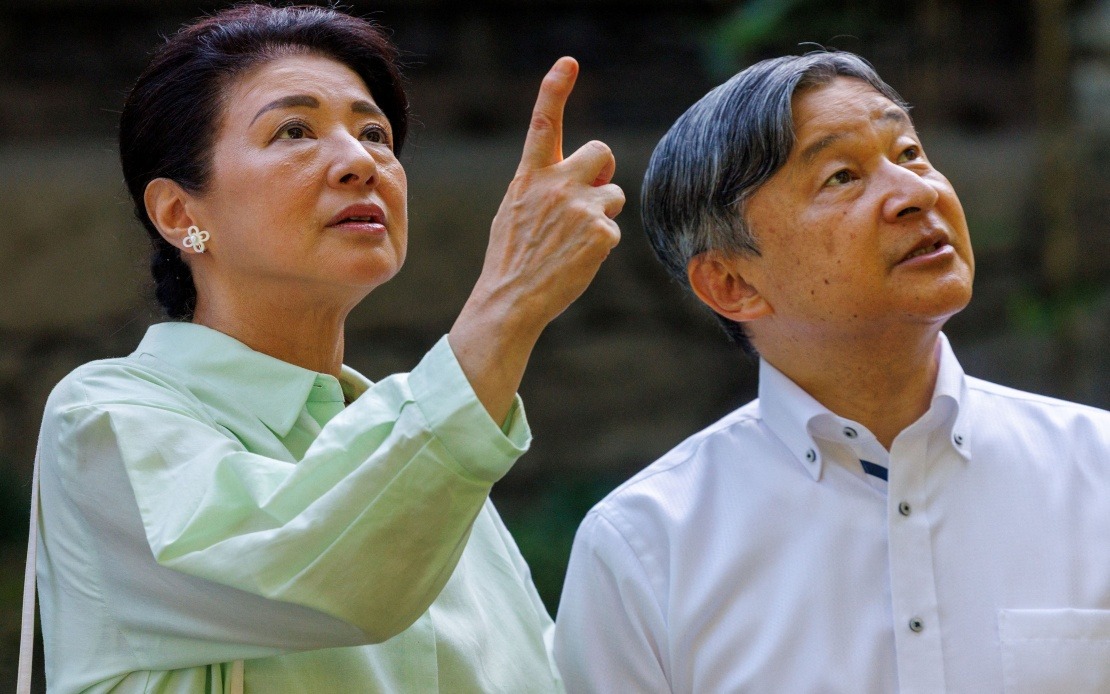
Japan's Cabinet has given its backing to sweeping reforms of the Imperial House Law, a move designed to shore up the imperial institution as it confronts an increasingly precarious succession picture. Prime Minister Sanae Takaichi's government, supported by its coalition partner the Japan Innovation Party, hopes to push the revised legislation through parliament before the current session concludes on July 17, addressing longstanding concerns about the viability of the world's oldest continuing monarchy.
The demographic challenge facing Japan's imperial system has become acute in recent years. Currently, only three individuals stand in the direct line of succession to Emperor Naruhito, who is 66 years old: his younger brother Crown Prince Fumihito, aged 60; his nephew Prince Hisahito, a 19-year-old; and his uncle Prince Hitachi, who at 90 is well beyond the typical age for ascending the throne. This razor-thin succession chain underscores why the government felt compelled to act, and why the legislation has become a matter of constitutional and national significance rather than mere procedural adjustment.
The proposed reforms rest on two central pillars. The first permits the imperial family to recruit heirs from eleven former branch families, accepting males aged 15 or older who trace their descent through the paternal line to imperial ancestors. The second allows women currently serving as members of the imperial family to retain their status and imperial privileges should they choose to marry outside the imperial circle. These measures represent a pragmatic recalibration of rules dating back to 1947, the year Japan's postwar constitution took effect.
Crucially, the legislation maintains the conservative principle that the male imperial line remains paramount. While the bill creates an avenue to adopt eligible males from collateral branches, those adopted members themselves would remain ineligible for the throne. However, their male descendants would gain eligibility, a mechanism intended to preserve the appearance of patrilineal continuity while practically expanding the pool of potential emperors. This compromise reflects the Liberal Democratic Party's traditional stance on imperial matters, balancing practical necessity against ideological conviction.
The eleven branch families at the centre of this legislation carry remarkable historical weight. They share a common imperial ancestor from approximately 600 years ago, making them genuinely connected to the throne's bloodline. Yet in 1947, during the American occupation that reshaped postwar Japan, all 51 members of these eleven families were formally divested of royal status. The imperial family shrank dramatically at that moment, a decision taken partly to simplify governance and partly to modernise the institution. Three families descended from Emperor Showa's brothers maintained their status, but that concession hardly offset the broader loss. Today's proposal effectively reverses that 1947 deprivation, restoring an institutional option that had been sealed away for three-quarters of a century.
The legislative pathway forward, however, appears contentious. The bill emerged from cross-party consultations where representatives of thirteen political parties and groups presented their views to the speakers and vice speakers of both parliamentary chambers. Yet this consensus-building process noticeably avoided several explosive questions. Most significantly, the draft fails to address whether the imperial throne should be opened to women, whether those descended from emperors through the female line might ascend, or how to handle the practical and constitutional implications of female succession. These omissions reflect genuine political sensitivity and ideological fractures within Japanese society.
Public opinion, notably, has diverged sharply from the government's cautious approach. A Kyodo News poll conducted in May found that 83 per cent of respondents supported the concept of a female emperor, a striking majority that suggests ordinary Japanese citizens may be more willing to adapt traditional institutions than their political leaders. This gap between public sentiment and legislative caution hints at future tensions, particularly if the succession crisis deepens and women's participation becomes unavoidable.
The historical precedent for female rule exists within Japan's imperial tradition, though dimly remembered. Eight female emperors reigned before the modern era, the last during the eighteenth century, demonstrating that female succession was neither unprecedented nor theologically incompatible with Shinto concepts of imperial legitimacy. Yet contemporary conservative ideology, particularly within the Liberal Democratic Party establishment, views such precedent as antiquated and unsuitable for modern monarchical governance. This tension between historical example and contemporary conservatism will likely intensify if the current reforms prove insufficient to solve the succession problem.
For Malaysia and other Southeast Asian observers, Japan's imperial reform carries broader implications. The region contains several constitutional monarchies—Malaysia itself, Thailand, Cambodia, and Brunei—each grappling with succession questions and the role of tradition in modern governance. Japan's legislative wrestling with how to preserve an ancient institution while accommodating contemporary realities offers a case study in the difficulties of incremental reform. The Japanese approach suggests that modest, compromise measures addressing obvious problems may ultimately delay more fundamental reckonings rather than prevent them.
The Japanese government appears conscious of the need for measured movement. By expanding the pool of eligible male heirs without immediately challenging patrilineal succession, the Cabinet offers what it frames as a stabilising measure that respects tradition while solving immediate demographic problems. Whether this proves sufficient hinges on whether Prince Hisahito, currently the sole young heir, produces male children in due course, a matter beyond government control and the reason why even cautious reformers acknowledge that female succession may eventually become unavoidable.
The Diet's deliberation of this bill will reveal the true depth of political consensus on imperial matters. Opposition forces may press harder on the female succession question, arguing that public opinion demands bolder action. The outcome will determine whether Japan has genuinely repositioned itself for long-term imperial stability or merely postponed difficult decisions into the future. What seems certain is that the imperial succession question will remain central to Japanese constitutional debate for years to come, making this month's legislative action merely an opening move in a longer strategic game.

