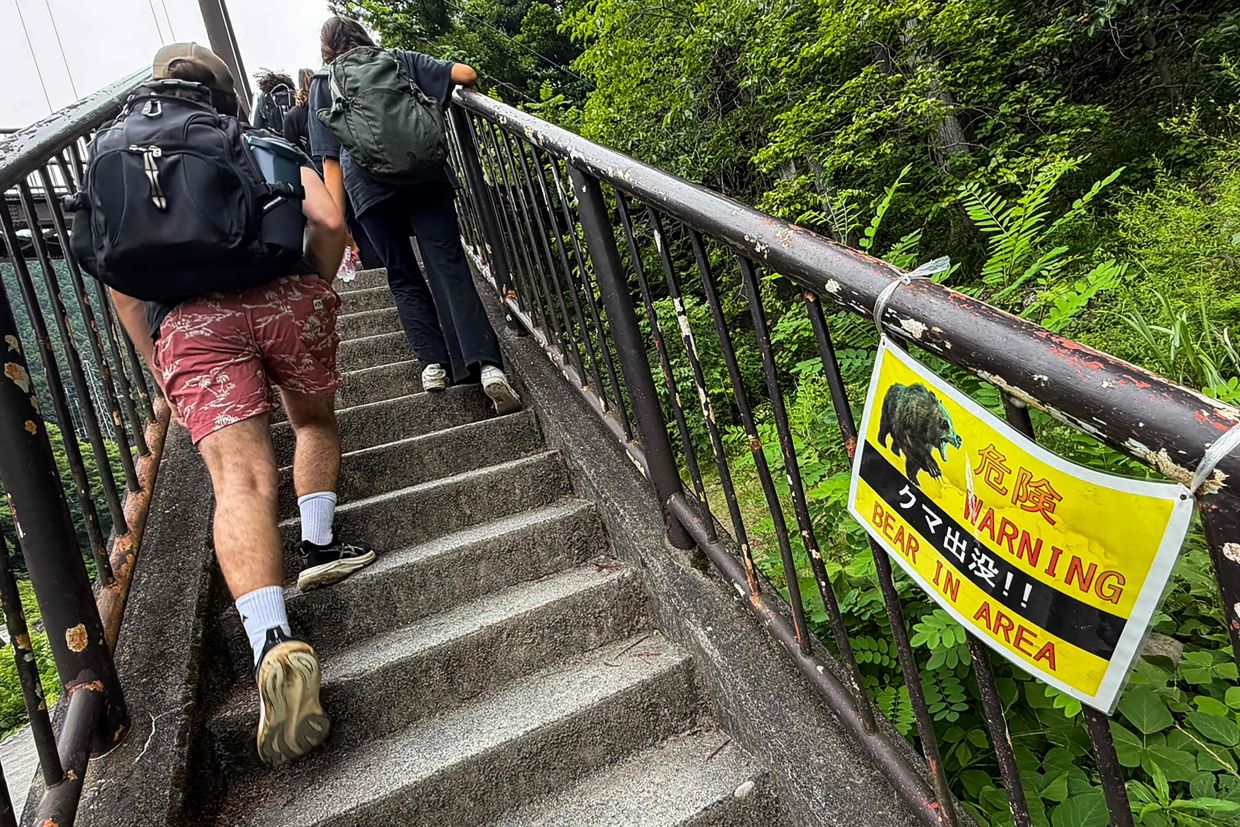
Japan's environment ministry has launched an ambitious camera-based surveillance programme across its northern mountains to track bear movements and population trends, responding to an alarming spike in fatal wildlife encounters that has gripped the nation's rural communities with growing anxiety. The deployment of more than 800 monitoring devices marks a significant escalation in the government's approach to managing human-wildlife conflict, with authorities beginning the technical rollout this week following repeated tragic incidents in the Tohoku region.
The scale of the problem has become undeniable. At least five people have lost their lives to bear attacks since the beginning of April, all occurring within Tohoku, Japan's northernmost inhabited region. More troublingly, these recent deaths represent only the continuation of a deteriorating trend—the previous fiscal year witnessed 13 fatal maulings across the entire country, setting a grim national record. This trajectory suggests the situation is not stabilising but rather accelerating, transforming what was once regarded as an occasional hazard of mountain living into a persistent public safety crisis that demands urgent intervention.
The underlying causes of this surge extend beyond simple animal behaviour. Ecologists have identified a combination of factors driving bears out of their natural habitats and into human settlements. Chief among these is the fundamental shift in Japan's rural demographics; as younger generations migrate to cities and towns in search of employment and modern amenities, vast swathes of countryside have been depopulated. This demographic hollowing has reduced human presence in forests that previously served as buffer zones between wild bears and populated areas. Simultaneously, Japan's bear population itself has been growing, a consequence of successful earlier conservation efforts and improving forest conditions that provide abundant food sources. The collision between expanding wildlife populations and shrinking rural human populations has created an increasingly volatile equation.
The psychological impact on residents cannot be overstated. In Tohoku, a sense of vulnerability pervades daily life as national media outlets deliver relentless coverage of bear sightings—creatures casually wandering through shopping districts, parks, and school grounds. These are not distant forest incidents but intrusions into the mundane spaces of ordinary life, generating a pervasive unease that has fundamentally altered how people navigate their communities. Parents fear allowing children outside without supervision; elderly residents have become more isolated as they retreat indoors; and the simple act of shopping or walking to school now carries an element of danger that characterises the region.
The government's response centres on the comprehensive camera network that Yu Takahashi, an official from the environment ministry, described to international media. The initial phase will focus on six major bear populations within Tohoku, with data collection anticipated to expand progressively across the entire nation over a four-year timeline. This methodical approach represents a departure from previous fragmented efforts, where individual local governments conducted surveys independently using inconsistent protocols and timing. The new system promises standardised, scientifically rigorous data collection that will enable authorities to understand population dynamics with far greater precision.
The technical mechanism is ingeniously designed to minimise human interference while maximising effectiveness. Authorities position containers of honey mixed with wine at approximately head height along bear frequenting routes, using the sweet aroma as an irresistible lure. When bears stand upright on their hind legs to investigate the scent, the strategically positioned cameras capture distinctive white chest markings unique to each individual animal. This biometric approach transforms the survey from a crude population estimate into a genuine identification system capable of tracking specific bears over time. Such granular data will enable wildlife managers to distinguish between resident populations and seasonal migrants, identify problem individuals, and measure intervention effectiveness more accurately than ever before.
An incident this week inadvertently illustrated the heightened tension surrounding bear-related safety measures. A 22-year-old Vietnamese national, Huynh Nhat Duy, was arrested for obstruction of business after accidentally discharging anti-bear pepper spray inside a post office in Nagoya. The accidental release sent five people to hospital treatment, demonstrating how widely these defensive aerosols—containing capsaicin derived from chili peppers—have become distributed throughout Japanese society. While the arrest may appear harsh given the genuinely accidental nature of the discharge, it reflects the zero-tolerance approach authorities are adopting toward anything bear-related as public concern intensifies.
The current season has proven particularly treacherous. Bears emerging from winter hibernation have demonstrated an alarming propensity for venturing into human-dominated landscapes, with multiple incursions into towns and cities reported across the region. In June alone, authorities needed four days and mobilised dozens of police, hunters, and city officials to capture a single bear roaming through Utsunomiya, a city north of Tokyo, forcing widespread school closures and generating genuine public alarm. Earlier, another bear in Fukushima garnered national media attention for its apparent intelligence—the animal opened windows and activated water taps while attacking workers at two separate factory facilities before evading capture for days.
Government health authorities have responded by issuing public guidance designed to reduce human vulnerability in bear country. Citizens are advised to avoid solo mountain excursions, particularly in regions where the 80 percent of Japan that consists of mountainous terrain provides extensive bear habitat. Practical defensive measures include attaching bells to bags, creating noise that alerts bears to human presence and allows the animals to retreat voluntarily before dangerous encounters occur. Bear spray represents the more aggressive deterrent, though as the Nagoya incident demonstrated, these devices carry risks of accidental discharge that can affect unintended targets.
The challenge facing Japanese policymakers remains fundamentally structural. The camera programme and defensive measures address symptoms rather than root causes—the demographic decline of rural areas and the consequent transformation of mountain ecosystems. While technology can improve wildlife management, it cannot reverse the decades-long migration of Japanese people toward urban centres. Authorities must therefore develop parallel strategies that simultaneously improve real-time bear tracking, increase public safety measures, and explore longer-term solutions involving potential habitat management and, in some cases, controlled population reduction of dangerous individuals. The coming four years of expanded camera deployment will generate unprecedented data, but converting that information into effective policy will require sustained commitment and resources extending far beyond the current crisis response.

