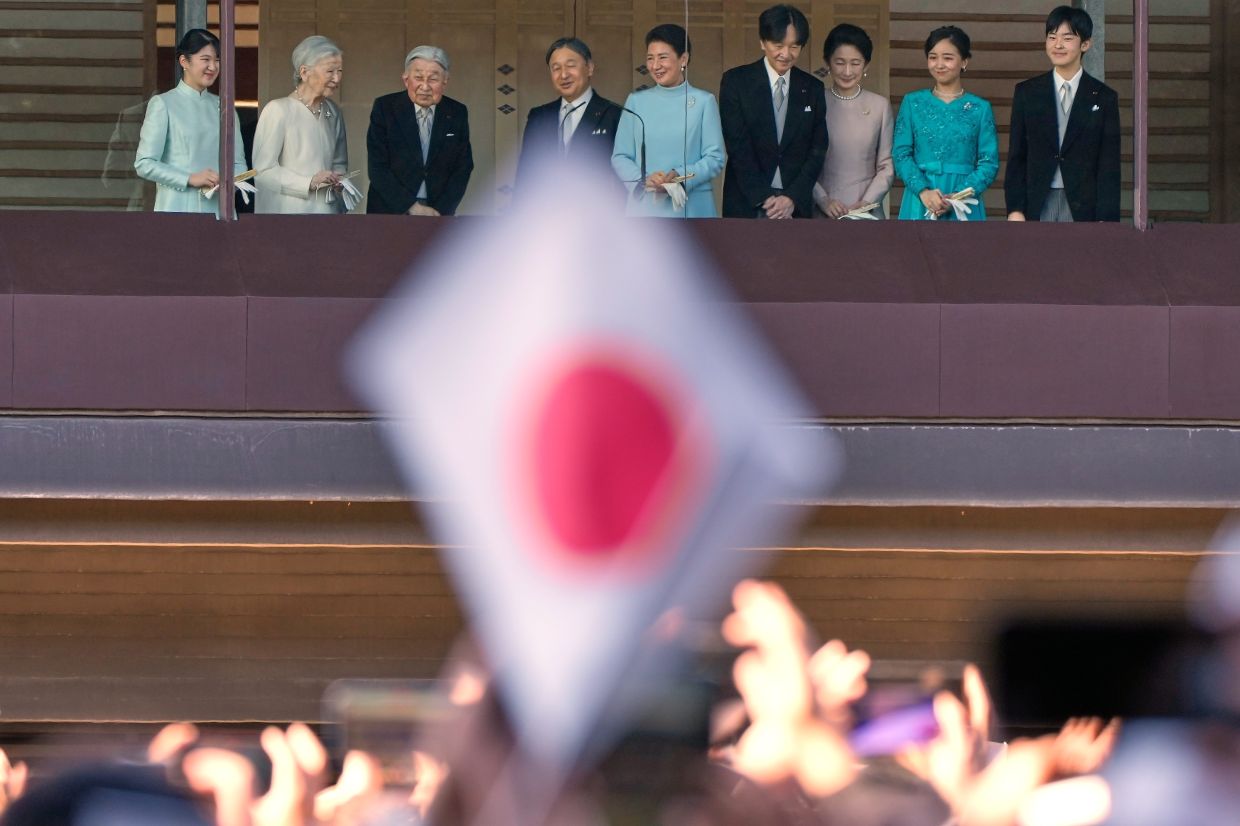
Japan's parliament passed significant reforms to its imperial succession framework on Friday, yet the sweeping changes deliberately preserve the ancient prohibition against women becoming emperor, a decision that contradicts overwhelming public sentiment and highlights the tension between modernisation pressures and conservative institutional traditions in the world's oldest continuous monarchy.
The upper house approved the legislation by a substantial majority, marking a rare legislative moment for Japan's imperial system, which has remained largely static since the 1947 Imperial Household Law was codified in the post-war period. However, the carefully calibrated reforms skirt the most contentious issue: whether the Chrysanthemum Throne should be open to female succession, an idea that surveys indicate commands support among nearly three-quarters of ordinary Japanese citizens. The divergence between public opinion and parliamentary action exposes deep divisions within Japan's power structures regarding what role tradition should play in addressing genuine institutional vulnerabilities.
At the heart of the succession question lies Prince Hisahito, a 19-year-old still navigating his university years whilst studying biology and insects. As the nephew of the reigning Emperor Naruhito, aged 66, Hisahito represents the slimmest of lifelines for the imperial male line. The young prince remains unmarried with no children, and should he fail to produce a son, the direct male succession would terminate entirely under current law. This precarious situation has prompted the legislative response, though observers argue it addresses only the symptoms rather than the underlying structural problem that has plagued the imperial household for decades.
The enacted reforms permit the adoption of distant male relatives aged 15 and older back into the imperial family, provided they remain unmarried at the time of their formal inclusion. This provision seeks to broaden the shallow pool of eligible male heirs by reaching back into the 11 imperial branch families that were severed from the official register following World War II. Additionally, the legislation now permits women who marry commoners to retain their imperial status, bringing their legal standing into alignment with male family members who have long enjoyed such privileges. These incremental steps represent genuine expansion of women's formal position within the imperial institution, yet they studiously avoid granting women access to the supreme position itself.
The stubborn resistance to female succession stems partly from the ideological commitments of conservative figures within Japan's ruling establishment. Sanae Takaichi, the nation's first female prime minister, has emerged as a vocal opponent of allowing women to ascend the throne, her own prominent position in government seemingly paradoxical given her stance on imperial succession. Within the ruling Liberal Democratic Party, which has dominated Japanese politics for decades, considerable internal wrangling accompanied the passage of this compromise legislation, suggesting that even these modest reforms required significant negotiation among competing factions.
Not all within the political establishment have remained silent on what they view as an unjustifiable exclusion. Seiichiro Murakami, a veteran member of the Liberal Democratic Party, characterised the decision to categorically rule out Princess Aiko as emperor as nothing short of "utterly outrageous" when speaking to colleagues after the lower house approved the bill on July 10. Princess Aiko, now 24 years old and daughter of the current emperor, represents the most obvious and popular alternative to male succession, yet the new law explicitly closes that door. Her two elder sisters, along with Hisahito's other siblings, face identical barriers to the throne based solely on their gender.
Criticism of the succession reforms has extended beyond opposition politicians into the ranks of former imperial family members themselves. Asahiro Kuni, an 81-year-old who departed from imperial status when his branch family was deregistered after World War II, has publicly questioned the realism of expecting distant male relatives to willingly abandon their civilian lives for the rigidly circumscribed existence of imperial family membership. Speaking to the Asahi Shimbun, Kuni articulated a perspective grounded in lived experience: individuals who reach age 15 have already matured within the freedoms of ordinary society and would find the constraints of imperial life extraordinarily difficult to navigate. He suggested that while some might initially express interest in joining the imperial register, the harsh realities of royal existence would quickly dissuade most candidates.
The concerns Kuni raises point toward a fundamental challenge underlying the succession strategy: the pool of potential male heirs may be theoretically larger under the new rules, but the actual willingness of distant relatives to assume such a demanding role remains deeply uncertain. The imperial family imposes extraordinary restrictions on personal autonomy, marital choice, and lifestyle freedoms that modern Japanese citizens, especially those with no family history of imperial service, might find unacceptable. This gap between legislative theory and practical reality could render the adopted male-relative provision largely symbolic.
Public opinion data underscores the gap between what citizens want and what their elected representatives have delivered. An Asahi Shimbun poll conducted in May revealed that 72 percent of respondents favoured changing the rules to permit female succession to the throne. This striking consensus suggests that ordinary Japanese citizens, regardless of political affiliation or generational cohort, view gender-based exclusion from the highest office as an anachronism incompatible with contemporary values. The disconnect between this overwhelming support and the legislative outcome illustrates how institutional conservatism and entrenched elite preferences can override democratically expressed wishes.
The composition of the current imperial family underscores why this succession question demands urgent resolution. With only 16 members in total, and merely five males—including the 92-year-old retired Emperor Akihito and his 90-year-old brother—the household operates from an exceptionally narrow demographic base. The aging of the current generation of male members means that without either expanded succession rules or the introduction of female succession, the institution faces genuine viability challenges within decades. Japan's parliament has chosen to attempt technical fixes rather than embrace substantive reform, a choice that may ultimately prove insufficient to the magnitude of the challenge.
For Southeast Asian observers watching Japan's institutional evolution, these succession debates carry particular relevance. Regional monarchies, including Malaysia's own constitutional monarchy system and Thailand's deeply revered institution, face similar questions about gender, succession, and the relationship between tradition and contemporary governance standards. Japan's decision to maintain male-only succession despite clear public support for reform suggests that even wealthy, technologically advanced democracies can struggle to reconcile inherited hierarchies with modern democratic values, a dynamic with profound implications for how other Asian societies navigate comparable institutional tensions.

