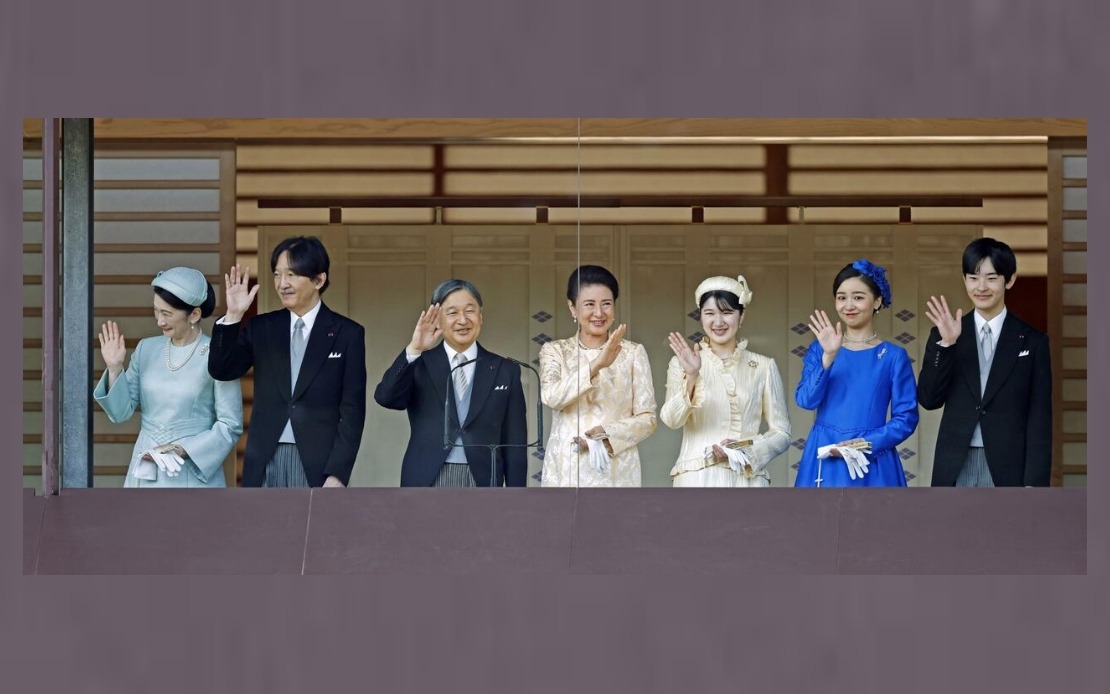
Japan's parliament has taken significant steps to address the monarchy's demographic crisis by approving sweeping revisions to the Imperial House Law on Friday, though the reforms deliberately stopped short of fundamentally altering the throne's male-only succession tradition. The changes represent the first meaningful overhaul of the 1947 legislation in more than seven decades, reflecting the urgent need to stabilize a shrinking royal family at a time when Emperor Naruhito has only three male heirs. Yet the conservative approach taken by Prime Minister Sanae Takaichi's ruling coalition has drawn sharp criticism from opposition parties who argue that the parliament failed to conduct sufficiently thorough deliberations before endorsing the controversial framework.
The revised law introduces two principal modifications designed to ease the succession crisis. First, it opens the door for the adoption of unmarried males aged 15 and above who descend from the 11 former branch families that were stripped of their imperial status following World War II. This represents a historic policy reversal, as such adoptions were previously deemed legally and traditionally impossible. The second change permits female members of the imperial household to maintain their royal standing even after marrying ordinary citizens, a concession that acknowledges the reality of modern matrimonial choices within the extended imperial circle.
The demographic pressures driving these reforms are stark. When the 1947 Imperial House Law took effect under American occupation following Japan's wartime defeat, authorities removed 51 members from 11 collateral branches of the imperial line, dramatically reducing the pool of succession candidates. Seventy-seven years later, the consequences of that post-war purge have become apparent. The male line has been severely depleted, creating an existential challenge for an institution that has survived more than a millennium and a half by adhering rigorously to patrilineal descent.
Under the new legislative framework, male descendants of those adopted from the former branch families could theoretically ascend the Chrysanthemum Throne, a possibility that would have been constitutionally unthinkable mere months ago. The government argues this approach preserves the sanctity of direct male inheritance while pragmatically expanding the pool of eligible candidates. However, this reasoning has failed to satisfy critics who point out that the solution is inherently temporary. Future adoptees will themselves age and eventually lack the biological capacity to produce male heirs, meaning the cycle could repeat itself within several generations.
The legislative process leading to Friday's vote highlighted deep divisions within Japanese political circles. Months of cross-party negotiations culminated in a parliamentary "consensus" representing the views of 13 political parties and groups, yet this broad agreement conspicuously avoided addressing the fundamental succession question that prompted the reforms in the first place. The Liberal Democratic Party and its junior coalition partner, the Japan Innovation Party, reportedly prioritized preserving the male and paternal-line succession principle over other potential solutions, a stance that exposed their reluctance to embrace more radical modernization.
Prime Minister Takaichi, who made the imperial law revision a priority during her tenure as the first female premier to lead Japan, emphasized that male descendants could ascend the throne under the revised provisions. This messaging sought to reassure traditionalists concerned that any imperial reform might culminate in female succession, a scenario that remains explicitly excluded from the new law. The irony that Japan's first female leader was championing legislation that further entrenches male-only inheritance has not escaped public notice or commentary from gender equality advocates.
Public sentiment, however, has moved decisively toward embracing change that the political establishment continues to resist. A Kyodo News poll conducted in May revealed that 83.0 per cent of Japanese respondents supported permitting female emperors, compared to only 13.1 per cent opposed. This substantial gap between popular opinion and legislative action reflects a broader tension within Japan's political culture, where institutional conservatism often outweighs public preference on fundamental questions of tradition and governance. The monarchy's legitimacy ultimately rests on public acceptance, yet policymakers have chosen to prioritize abstract adherence to patrilineal principle over democratic responsiveness.
For Malaysian and Southeast Asian observers, Japan's cautious approach to imperial modernization offers instructive parallels and contrasts with how other regional monarchies balance tradition with contemporary pressures. Japan demonstrates how even the world's oldest continuous hereditary institution must grapple with the practical realities of demographic change and evolving social values. The debate also illuminates how institutional conservatism can persist even when facing objective challenges that threaten long-term viability.
The adoption mechanism embedded in the revised law represents Japan's particular solution to a universal problem confronting hereditary monarchies worldwide. Rather than expanding the definition of legitimate succession to include female lineage, the government has chosen to restore male members previously excluded from the imperial house. This preserves formal adherence to male-line succession while acknowledging that biological chance alone cannot sustain the institution indefinitely. The approach may prove sufficient for the immediate succession crisis, but the long-term sustainability of this compromise remains uncertain.
Looking forward, the revised Imperial House Law may prove to be merely an interim measure on Japan's path toward fuller modernization of its succession rules. Public opinion continues to shift toward supporting female succession, and demographic trends will likely intensify pressure on future governments to revisit these restrictions. The current legislation may buy time but cannot indefinitely defer fundamental questions about whether a hereditary institution can remain legitimate when it explicitly excludes the majority of its potential heirs based on gender. Japan's parliament has chosen incremental reform over transformative change, a decision that reflects conservative political forces prevailing over popular sentiment.

