Yo Kusakabe, a retired geriatric physician from Osaka, has thrust a deeply uncomfortable idea into Japan's public consciousness through his provocative novel and its recent film adaptation: that deliberately amputating the paralysed limbs of elderly patients could represent a rational response to the nation's accelerating care crisis. The 70-year-old former doctor contends that such a measure, undertaken with patient consent, could substantially reduce the physical and emotional strain on caregivers whilst potentially improving quality of life for those whose immobile appendages cause them chronic discomfort and restrict their mobility. His darkly speculative work, "Haiyoshin (Useless Body)," written over two decades ago, had long been dismissed as unsuitable for cinema adaptation, yet its theatrical release last month has transformed an obscure literary concept into a nationwide flashpoint regarding how Japan should manage the care demands of its rapidly greying population.
The film's emergence resonates with particular urgency given Japan's demographic trajectory. Nearly one person in three within the country has already reached 65 years or older, a proportion that continues climbing as birth rates languish and life expectancy remains among the world's highest. Government projections estimate a critical shortfall of approximately 570,000 caregivers by 2040, a deficit that threatens to overwhelm both institutional and family-based care systems already straining under current demand. This numerical reality underpins Kusakabe's otherwise shocking proposition: Japan's care infrastructure is not yet collapsing entirely, yet the trajectory is unmistakably toward systemic breakdown unless fundamental assumptions about elderly care undergo radical reconsideration. The doctor's argument transcends mere provocation; he frames it as a serious response to what he views as an impending catastrophe that conventional policy discussions have failed to address adequately.
Kusakabe's reasoning, whilst confrontational, contains internal logic worth examining. He observes that paralysed arms and legs represent pure liabilities within the caregiving context: they create physical obstacles during bathing and dressing, complicate transfers and repositioning, increase injury risk for caregivers, and contribute substantially to the musculoskeletal toll that makes elder care labour so physically damaging. A female caregiver lifting a heavy, immobilised male patient faces genuine risk of back injury and chronic pain, particularly across the low-wage, undertrained care workforce that dominates Japan's sector. By reducing patient weight and eliminating limbs that serve no functional purpose for those with complete paralysis, Kusakabe contends that caregiving becomes materially less onerous, potentially enabling individual carers to maintain longer careers and reducing injury-related absences that further exacerbate staffing shortages. The proposition challenges fundamental assumptions about bodily integrity and end-of-life dignity, yet does so from a place of recognising genuine material constraints within the caregiving relationship.
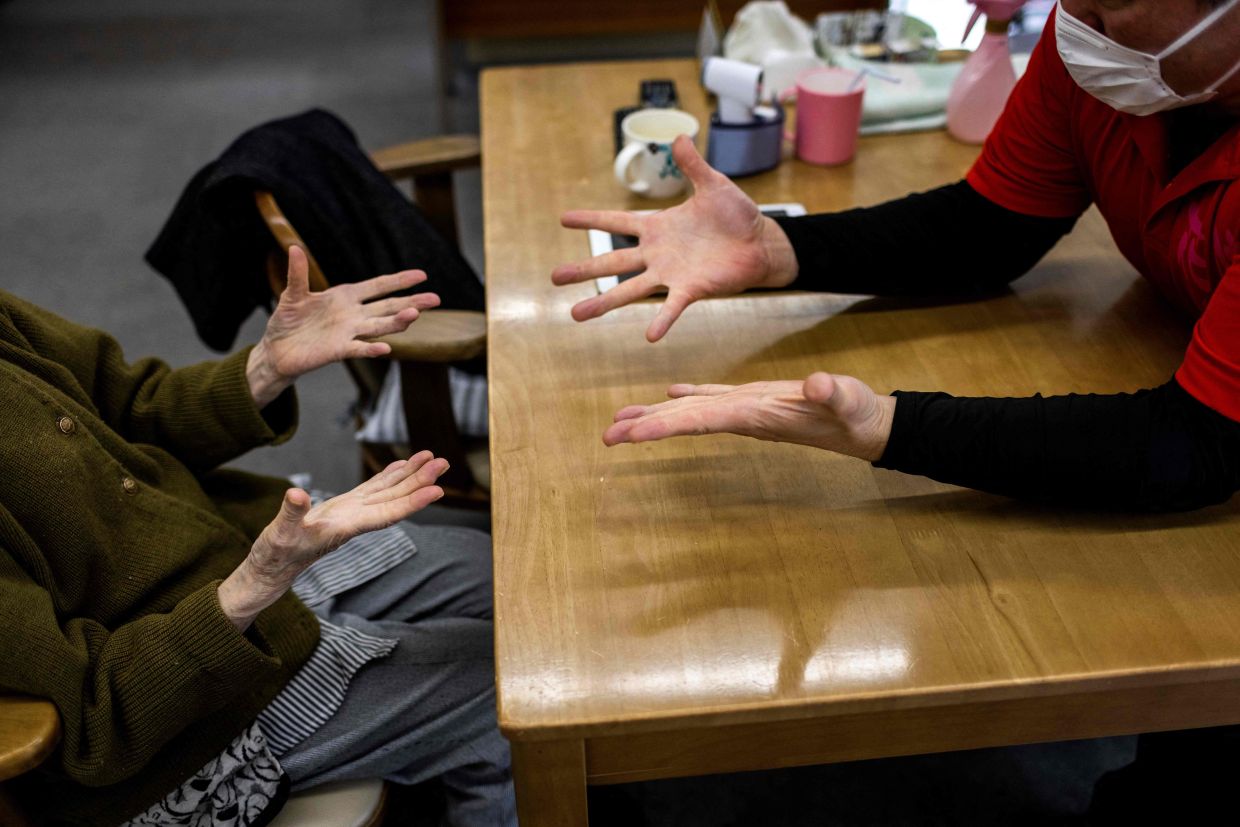
Within the film's narrative, patients themselves are portrayed as beneficiaries of amputation, at least initially. Kusakabe draws on his medical experience, recalling elderly patients who expressed genuine longing to be relieved of limbs that caused constant pain, limited their mobility, or generated involuntary convulsions. In the story, individuals who undergo amputation experience liberation from chronic discomfort and report improved subjective quality of life, discovering unexpected agility and independence through alternative modes of locomotion and self-care. The film presents scenes of former patients enjoying renewed capability and engagement, using wheelchair mobility with newfound confidence and manipulating their remaining limbs with greater dexterity than was possible when burdened by useless appendages. This portrayal raises a profound philosophical question about dignity in terminal decline: whether forcing a non-functional arm through a pyjama sleeve despite causing the patient acute suffering, simply to maintain bodily wholeness, genuinely preserves dignity or instead inflicts unnecessary suffering in service of an abstract principle.
Online reactions to the film have fractured along predictable lines. Many viewers have denounced the concept as ruthlessly unethical and fundamentally incompatible with medical and human rights principles. Yet others have engaged more seriously with the film's central premise, acknowledging that amputation, whilst undoubtedly extreme, responds to a genuine problem within the current care paradigm. One cinema discussion website contributor noted that the amputation concept, though seemingly callous, raised legitimate points worthy of consideration rather than reflexive dismissal. This fracturing of public opinion reflects deeper tensions within Japanese society regarding how to approach end-of-life care and quality of life considerations for the severely disabled elderly population. The film functions less as an endorsement of the amputation concept than as a thought experiment that forces viewers to confront uncomfortable questions about suffering, dignity, and the real costs borne by overwhelmed caregivers.
Kusakabe contrasts Japan's approach to elderly care with practices in Scandinavian countries such as Sweden and Denmark, where palliative care principles often guide decisions about life-sustaining interventions. In these nations, elderly patients who cease eating are typically permitted to die naturally rather than subjected to feeding tubes and intravenous nutrition that prolong suffering without improving outcomes. However, Japan's medical culture and family expectations operate under different assumptions. Insurance systems heavily subsidise feeding tubes and intravenous drips for those aged 75 and older, creating powerful financial incentives toward aggressive life extension. Families, Kusakabe argues, struggle with the psychological burden of "doing nothing" for dying relatives, interpreting withdrawal of aggressive treatment as abandonment rather than compassionate care. This cultural orientation toward maximising survival duration at any cost, regardless of quality of life considerations, represents what Kusakabe views as a fundamental irrationality that ultimately compounds the caregiver crisis by extending the period of intensive care required for individuals experiencing minimal conscious awareness or capacity for engagement.
The broader context of Japan's care crisis extends beyond mere numerical shortfalls. The nation has documented a troubling pattern of what Japanese media terms "kaigo satsujin," or caregiving murders, in which overwhelmed family members or professional carers kill elderly patients they can no longer manage. A 2016 investigation by Japan's public broadcaster NHK revealed that such tragedies occur with disturbing frequency, approximately once every two weeks. These killings represent the extreme endpoint of a spectrum of abuse, neglect, and caregiver desperation that pervades Japanese elder care. Kusakabe's provocative argument essentially suggests that if the care crisis continues deteriorating without meaningful intervention, society might eventually face a choice between accepting increasingly brutal outcomes or adopting radical measures such as elective amputation. Whilst few would endorse such a trajectory, the point serves to highlight just how urgent the care policy crisis has become and how inadequate current responses remain relative to the scale of the demographic challenge.
Yet Kusakabe himself ultimately acknowledges that amputation care, however theoretically rational, likely represents a poor fit for contemporary Japanese society. The nation's cultural framework, medical ethics traditions, and psychological orientation toward suffering and bodily integrity all work against acceptance of such a radical measure. His novel, significantly, does not endorse amputation as a solution; rather, the narrative arc involves a tragedy that shatters the protagonist's confidence in the concept's efficacy and ethics. This narrative structure suggests that Kusakabe himself recognises the fundamental inadequacy of even radical medical interventions to solve what is ultimately a social and political problem. The caregiver crisis cannot be addressed through individual medical decisions alone; it requires systemic responses including workforce development, compensation reform, immigration policy changes to allow care workers, and cultural shifts regarding end-of-life care philosophy.
The film's reception and Kusakabe's willingness to articulate such challenging ideas serve an important function within Japanese public discourse. By presenting a genuinely radical proposal for addressing the care crisis, the narrative forces society to confront the inadequacy of incremental policy responses and the mounting human costs of inaction. Whether or not amputation care ever gains traction matters less than whether its articulation prompts serious national discussion about alternative approaches to end-of-life care, caregiver support, and demographic management. The controversy generated suggests that Japan's population, confronted with concrete proposals even when abhorrent, recognises intuitively that current trajectories are unsustainable and that bolder thinking about these issues has become necessary. For Malaysia and other Southeast Asian nations beginning to experience similar demographic aging, the Japanese case offers both cautionary lessons about delayed policy response and potential insights regarding how public discourse on difficult topics can potentially catalyse genuine reform.