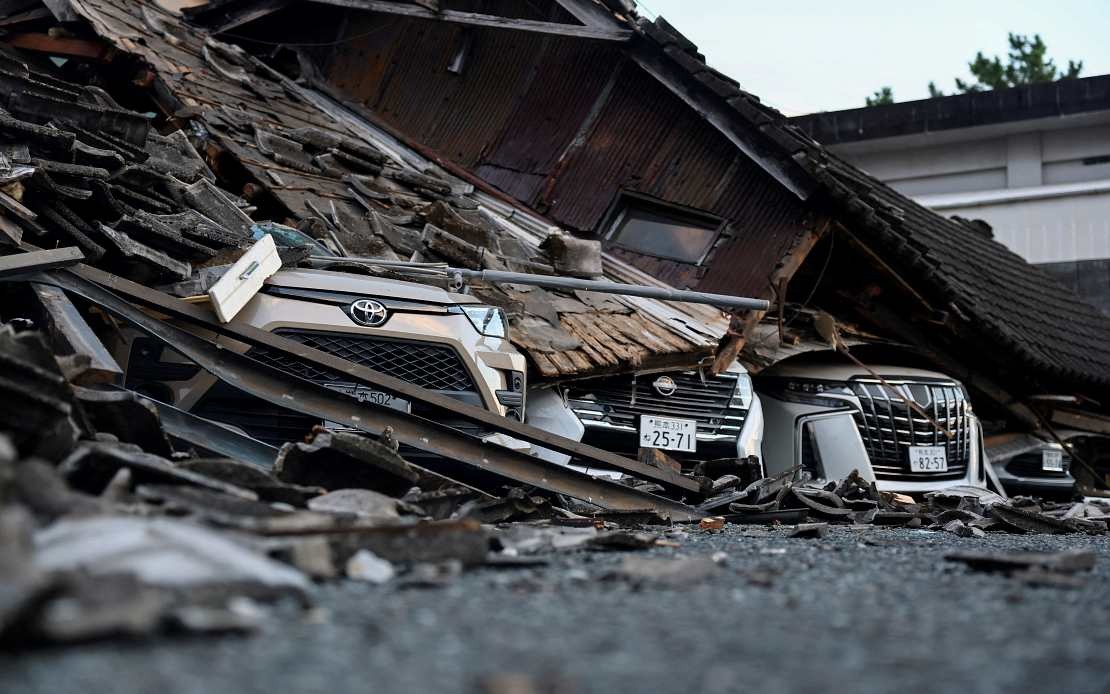
A major controversy has emerged in southwestern Japan following a catastrophic explosion at an Aeon shopping mall, with the operator of a chain store now admitting to a decision that cost two employees their lives. Habita, the company managing the retail outlet, has publicly acknowledged ordering two women back into the Kumamoto facility immediately after a powerful earthquake had forced initial evacuation, instructing them to move the day's sales revenue to a secure location. The tragic reversal of fortune has prompted soul-searching about workplace safety protocols and employer responsibility during natural disasters across Japan's retail sector.
The disaster unfolded in Kashima Town, Kumamoto Prefecture on Tuesday following a magnitude 7.1 earthquake that registered at the highest level on Japan's seismic intensity scale. In the immediate aftermath, employees and shoppers evacuated the Aeon Mall Kumamoto as a precautionary measure, among them the two women working for Habita's variety store chain. However, within minutes of achieving safety outside the building, management reversed course and recalled staff members to retrieve the cash takings from their store counter on the second floor, with instructions to transport the proceeds to a secure safe located on the first floor. Moments after the employees complied and re-entered the structure, a massive explosion tore through the shopping complex, killing seven people in total and marking one of Japan's deadliest incidents of its kind in recent years.
Koji Yuse, a 64-year-old sales manager for Habita based in Kumamoto, confronted reporters on Monday and formally admitted his role in the fatal decision. He stated he had instructed the store manager to dispatch the two employees back into the building to relocate cash reserves, acknowledging the gravity of his order with an unusual level of candour. In his public statement, Yuse expressed remorse, declaring "I think the order was inappropriate. I deeply regret it." The company subsequently issued formal apologies to the families of the deceased employees and furnished written documentation detailing the sequence of events that led to the tragedy.
One of the victims was identified as a 22-year-old woman, representing the younger generation of Japan's retail workforce. Her untimely death raises questions about power dynamics within Japanese corporate hierarchies, where employee compliance with management directives is often expected without question, even when circumstances may suggest otherwise. The fact that evacuation procedures had already been initiated suggests a level of organisational awareness regarding the dangers posed by the earthquake, yet this awareness apparently did not extend to reconsidering the urgency of cash management in the immediate post-quake environment.
The broader seismic situation in the region proved severe. The Kumamoto prefectural government reported that as of Tuesday morning, a confirmed 36 deaths had been directly attributed to the earthquake itself, with an additional two fatalities still under investigation regarding causal factors. This context underscores how the explosion represented an extraordinary secondary hazard compounding the already devastating natural disaster. The combination of the earthquake's magnitude and the subsequent explosion created a compound emergency that exposed vulnerabilities in emergency response and workplace decision-making protocols.
For Malaysian readers and Southeast Asian observers, this incident offers cautionary lessons about workplace culture and emergency procedures in technologically advanced economies. Japan is frequently regarded as a global leader in disaster preparedness, with rigorous building codes and regular evacuation drills standard practice. Yet this tragedy demonstrates that no amount of physical infrastructure improvement can fully protect against human judgment failures, particularly when financial concerns are prioritised over life-safety considerations. The contrast between Japan's sophisticated earthquake engineering and the elementary error of recalling evacuated workers reveals a gap between technical and organisational resilience.
The incident also highlights recurring tensions in corporate hierarchies across East Asia, where employee autonomy in challenging management instructions remains limited. In many Japanese workplaces, questioning a superior's directive can carry social and professional consequences, creating implicit pressure to comply even when safety concerns merit reconsideration. This dynamic may have influenced whether the two employees felt empowered to question or delay their re-entry into the building. Such cultural factors intersect with regulatory compliance in ways that technical safety standards alone cannot address.
Habita's response, while including acknowledgment and apology, arrives only after tragedy has already claimed lives. The company's admission of fault suggests a recognition that the decision fell below expected standards, yet this recognition cannot undo the consequences. The written documentation provided to bereaved families presumably contains details that might inform future workplace safety protocols, though such painful lessons carry an incalculable human cost.
The investigation into the explosion's cause remains ongoing, and it is not yet entirely clear whether the structural damage and loss of life would have differed significantly had the employees remained outside the building. However, the counterfactual is unmistakable: had Habita prioritised immediate safety over financial concerns, two young lives would likely have been preserved. This reality will inevitably influence how Japanese retailers and other businesses reconsider emergency response procedures in the aftermath of natural disasters.

