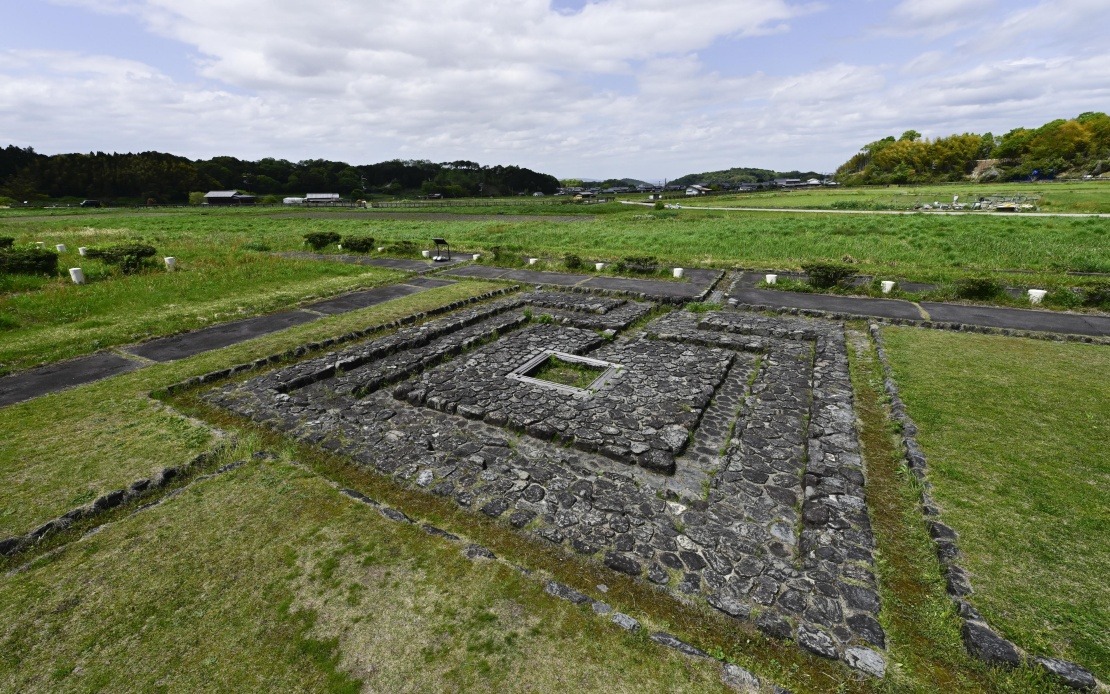
Japan has secured its 27th World Heritage Site designation following UNESCO's decision to inscribe the Asuka-Fujiwara archaeological cluster in Nara Prefecture. The recommendation came during the UNESCO World Heritage Committee's meeting in Busan, South Korea, bringing Japan's total protected heritage to 22 cultural and five natural sites on the global register.
The Asuka-Fujiwara grouping encompasses 19 distinct archaeological locations spanning the late sixth century through the early eighth century, a formative period when Japan underwent profound political transformation. These sites collectively document the archaeological traces of Japan's ancient imperial capitals and the structures, settlements, and religious buildings that emerged alongside centralized governance. The designation underscores the international recognition of these ruins as irreplaceable evidence of a pivotal era in East Asian history.
The site's significance lies in its capacity to illustrate the mechanisms through which a unified state architecture crystallized within Japan, a process deeply influenced by sustained contact and cultural exchange with neighboring China and the Korean Peninsula. Rather than developing in isolation, Japan's early state-building drew substantially from continental models and technologies, a reality the archaeological record vividly demonstrates. This interconnection makes the Asuka-Fujiwara sites valuable not merely for understanding Japan's development but for comprehending broader East Asian political and cultural trajectories during this transformative millennium.
Among the cluster's most historically important components are the remains of Asuka Palace and Fujiwara Palace, both intimately tied to the emergence of Japan's early centralized authority. These palaces served as administrative and ceremonial centers where power consolidated, and their archaeological footprints reveal the spatial organization and architectural sophistication that characterized early Japanese state institutions. The sites also encompass the remnants of what is recognized as Japan's first fully realized capital city, representing an urban planning milestone in the archipelago's political development.
Buddhist temple ruins scattered throughout the designated area highlight the crucial role religious institutions played in stabilizing nascent state authority. Buddhism, introduced from the Korean Peninsula and China, became intertwined with imperial ideology and governance structures. The temples and pagodas that once dominated the Asuka-Fujiwara landscape functioned not only as spiritual centers but as symbols of imperial legitimacy and sophistication, drawing on continental prestige to reinforce state power domestically.
Among the burial monuments preserved within the site, the Takamatsuzuka mounded tomb stands out for its extraordinarily well-preserved murals, which display vibrant pigmentation and iconographic imagery reflecting both Japanese and continental Asian artistic traditions. These vividly colored walls provide rare visual documentation of elite aesthetic preferences and cosmological understanding during the ancient period. The Kitora mounded tomb, equally significant, houses the oldest known astronomical chart in East Asia, a scientific document that demonstrates the sophisticated knowledge systems Japan's early elite possessed and maintained through continental scholarly networks.
The archaeological ensemble reveals settlement patterns, religious architecture, administrative structures, and material culture that collectively narrate Japan's transition from regional polities to an increasingly centralized realm. Excavations across the 19 sites have yielded pottery, tools, architectural features, and burial goods that illuminate daily life, technological capacities, and elite consumption patterns during this formative centuries. These tangible remains provide evidence that cannot be obtained from historical texts alone, making the physical archive irreplaceable for scholars and the public alike.
For Southeast Asian observers, Japan's sustained investment in heritage preservation and its successful navigation of UNESCO designation processes offer instructive parallels. Many Southeast Asian nations possess equally ancient and culturally significant archaeological sites, some predating or contemporaneous with Asuka-Fujiwara, yet encounter greater challenges in securing international recognition and funding for preservation. Japan's systematic documentation, scientific excavation standards, and institutional frameworks for site management demonstrate the infrastructure requirements necessary for World Heritage candidacy, providing a model worthy of study across the region.
The designation also reflects broader trends in how UNESCO evaluates historical significance. Rather than isolating sites as purely national achievements, the committee increasingly recognizes archaeological complexes that illuminate transnational processes—in this case, the diffusion of state-building technologies and cultural practices across East Asia. This framework acknowledges that understanding one nation's development requires examining how continental interactions shaped institutional emergence, a perspective increasingly central to heritage conservation philosophy.
Japan's successful inscriptions have grown steadily, reflecting both the nation's archaeological richness and its organizational capacity for heritage management. The Asuka-Fujiwara addition represents recognition of sites that, while long studied by scholars, now enter the global consciousness as tangible testimonies to human achievement and cross-cultural exchange. For Japanese policymakers and cultural institutions, the designation secures resources and international attention for ongoing research and public interpretation, ensuring these ancient capitals continue yielding insights into how societies organize themselves across centuries of transformation.

