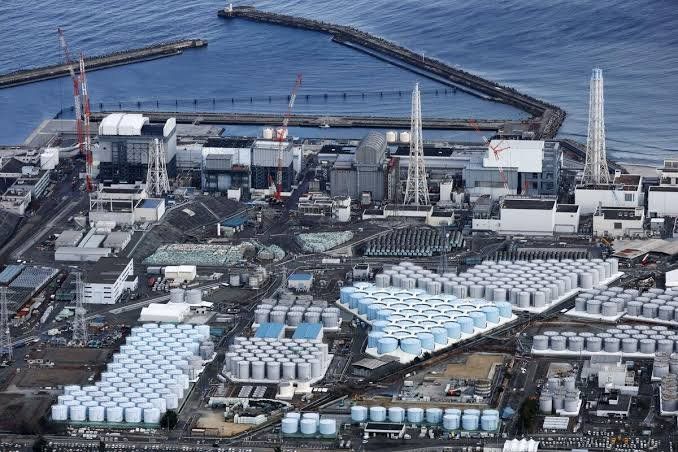
Japan's largest utility company, Tokyo Electric Power Company Holdings Inc., reached a significant operational milestone on August 24 when it completed three years of systematically releasing treated radioactive water from the damaged Fukushima nuclear facility into the Pacific Ocean. Since the discharge programme began in August 2023, TEPCO has conducted 22 separate release operations totalling 172,700 tonnes of processed water. This carefully monitored initiative represents a fundamental shift in how Japan manages the ongoing environmental consequences of the 2011 nuclear catastrophe, which killed nearly 20,000 people and forced the evacuation of entire communities.
The scale of the water management challenge remains substantial. Storage tanks originally constructed as temporary containment measures now hold approximately 1.24 million tonnes of treated water—a volume that has declined by 7.6 per cent since the releases commenced. The operator has already dismantled 17 of its roughly 1,000 storage tanks after they were emptied, providing tangible evidence of progress in decommissioning operations. However, the broader timeline underscores the mammoth undertaking ahead: TEPCO aims to conclude all water releases and complete full decommissioning by 2051, meaning this process will span four decades from the initial accident.
The treated water originates from the relentless production of radioactive wastewater at the site. Each day, approximately 60 tonnes of contaminated water are generated as cooling systems continue managing the reactor cores damaged during the earthquake and tsunami. Rather than storing this material indefinitely, TEPCO employs an advanced liquid processing system that removes most radioactive substances, bringing tritium concentrations to below one-fortieth of the limits set by Japanese safety regulations. The processed water is then diluted further with seawater before being discharged from an outlet located one kilometre offshore, creating another barrier between the release point and coastal populations.
International oversight provides a layer of independent verification to the discharge operations. The International Atomic Energy Agency, alongside the Japanese government and TEPCO itself, continuously monitors water quality and radiation levels. To date, no abnormal tritium concentrations have been detected in surrounding ocean waters or in tested seafood samples, suggesting that the dilution and safety measures are functioning as intended. This scientific validation becomes crucial for public confidence, particularly given lingering memories of the 2011 crisis and widespread concerns about long-term environmental impacts.
The decision to implement this release strategy was not made hastily. In April 2021, Japan's government formally approved the approach, recognising that the accumulating water posed its own set of challenges for site operations and future decommissioning work. By removing stored water, TEPCO gains physical space to construct facilities designed to locate and eventually extract melted fuel debris from the reactor vessels—the most hazardous remaining task. The first discharge operation on August 24, 2023, proceeded despite organised opposition from Japan's fishing industry, whose members feared economic damage from potential seafood market restrictions.
Their concerns proved prescient. China, which historically represented Japan's largest seafood export market, implemented an immediate blanket ban on all Japanese seafood imports the day the releases began. Although Chinese officials signalled in June 2024 that they would permit imports from nine prefectures outside the affected zone, Beijing has effectively maintained the embargo amid deteriorating diplomatic relations. The flashpoint came in November 2024, when Prime Minister Sanae Takaichi suggested Japan might intervene militarily if a crisis erupted over Taiwan—comments that infuriated Beijing and hardened its stance on Japanese products.
Beyond China's restrictions, import barriers persist across other markets. Russia maintains its ban, as do various other countries and territories, reflecting residual anxieties about radioactive contamination despite international scientific consensus supporting the safety protocols. For Japanese fisheries and exporters, these commercial barriers translate into substantial economic losses extending far beyond Fukushima's immediate vicinity. Aquaculture operations specialising in scallops and sea cucumbers have been particularly hard hit, dependent as they were on Chinese and Hong Kong markets.
TEPCO has responded to industry grievances by establishing a compensation framework. As of August 5, the utility had processed approximately 1,100 claims totalling around 92.8 billion yen (US$585 million), acknowledging the genuine financial hardship experienced by businesses unable to access their traditional export channels. Many compensation cases relate directly to the inability to ship scallops and sea cucumbers to Chinese and Hong Kong buyers—casualties of the water release programme's diplomatic consequences rather than any direct contamination.
The operational tempo of the releases has evolved as TEPCO refined its procedures. During the 2023 fiscal year, four separate discharge operations were completed, followed by seven in each of the next two fiscal years. This year, TEPCO modified its transfer infrastructure to enable continuous operations between storage tanks and release tanks, accelerating the process. The company plans eight discharge operations for fiscal 2026, with four already finished by August, suggesting the utility is moving towards increasingly efficient handling of the material.
For Southeast Asian nations, particularly those with significant Japanese seafood importers and close trade relationships with Japan, the Fukushima discharge situation presents a complex balancing act. Regional countries must weigh their commercial interests against consumer anxieties about radioactive material and the broader geopolitical dimensions of China's embargo. Thailand, Vietnam, and other major importers have maintained their own regulatory frameworks rather than following Beijing's blanket ban, though consumer sentiment remains a factor shaping purchasing behaviour.
Akira Ono, TEPCO's chief decommissioning officer, acknowledged the company's responsibility to maintain transparency and support affected communities. At a press conference, he stated that the utility would continue delivering "accurate information and appropriate compensation," recognising that public trust depends not only on scientific evidence but also on demonstrated commitment to those bearing the economic consequences. This balancing act—between operational necessity, scientific safety protocols, international scrutiny, and domestic economic hardship—will define the Fukushima recovery narrative through 2051.
The three-year mark represents neither beginning nor end, but rather a checkpoint in an unprecedentedly long recovery mission. While the volume released so far seems manageable from an environmental perspective, the diplomatic and economic ramifications extend across Asia, challenging assumptions about nuclear safety, scientific consensus, and geopolitical influence. For Malaysia and its Southeast Asian neighbours, observing how Japan navigates these intersecting pressures offers lessons about managing post-crisis recovery in an interconnected world where technical solutions cannot always overcome political friction.

