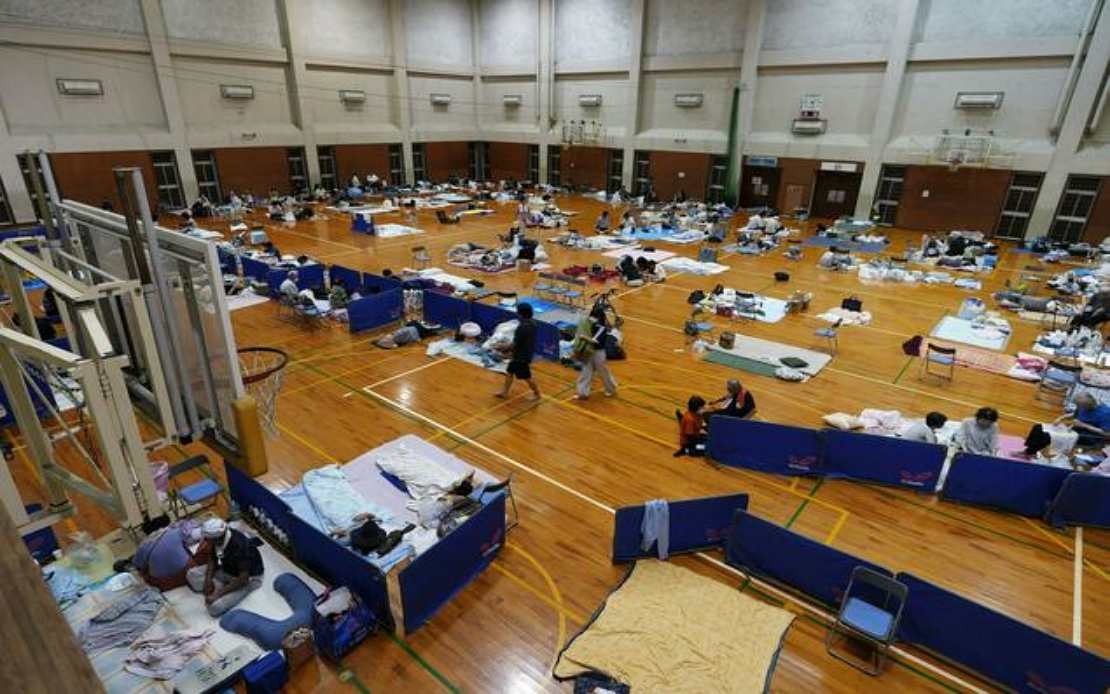
Seven days after a magnitude 7.1 earthquake struck Kumamoto Prefecture on July 28, the southwestern Japanese region continues to grapple with a humanitarian crisis of compounding challenges. Over 8,000 people are still sheltering in approximately 150 evacuation centres across the prefecture, unable to return to their homes as water shortages persist and temperatures soar to record levels. The situation underscores the cascading nature of natural disasters, where the immediate physical destruction gives way to secondary crises that can prove equally devastating if left unaddressed.
The scale of structural damage from the initial tremor has proven massive. Authorities estimate that roughly 12,000 buildings sustained damage in the earthquake, with destruction concentrated in several municipalities. The death toll stands at 38 people, though the circumstances surrounding these deaths reveal how earthquake impacts extend far beyond the moment of ground movement. Seven individuals perished in an explosion at an Aeon shopping mall in Kashima, while nine others died at a Nippon Paper Industries facility in Yatsushiro where a chimney collapsed. At least one additional death has been suspected as disaster-related, attributed to heatstroke among those sleeping in vehicles, highlighting how the post-disaster environment itself becomes lethal.
Temperature conditions in the affected region have become exceptionally severe. On Monday alone, numerous locations throughout the prefecture recorded highs of 35 degrees Celsius or above, with certain areas reaching 40 degrees Celsius—temperatures never before recorded in those specific locations. For evacuees confined to shelters with limited access to adequate cooling, proper hydration, and sanitation facilities, such heat represents a critical health threat. The combination of trauma, displacement, and extreme environmental conditions creates ideal circumstances for heat-related illnesses, particularly among vulnerable populations including elderly residents and young children.
Water infrastructure remains compromised across a significant portion of the prefecture. Approximately 45,000 households across five municipalities continue to experience water outages, severely hampering efforts to maintain basic hygiene and provide adequate drinking water supplies. The Japanese government has mobilized water distribution trucks from prefectures across the country to serve affected areas, yet logistical constraints mean that supply remains insufficient relative to demand. This scarcity of water creates a vicious cycle: without water for bathing and sanitation, disease risks increase; without sufficient drinking water in extreme heat, dehydration threatens lives.
In response to the escalating crisis, Prime Minister Sanae Takaichi visited an evacuation shelter on Monday and announced that the national government will formally designate the earthquake a "disaster of extreme severity." This administrative designation carries substantial practical implications for affected communities. The classification enables local governments to access higher levels of financial subsidies from the national treasury specifically earmarked for reconstruction efforts. Furthermore, it allows authorities to implement special assistance measures tailored to the particular needs of disaster victims, creating a legal and financial framework for more comprehensive support than standard disaster protocols would ordinarily permit.
The authorities are simultaneously pursuing multiple strategies to reduce the evacuation population and improve conditions for those displaced. Applications have commenced for secondary evacuation to hotels, offering evacuees access to functioning infrastructure including water, cooling systems, and sanitation facilities. Simultaneously, construction of temporary housing has begun in the municipalities of Uki and Hikawa, which experienced the most severe damage. These initiatives represent a transition from emergency response toward early recovery, though the timeline for returning residents to permanent housing remains uncertain.
Government efforts to prevent heatstroke at evacuation centres have intensified across several fronts. Beyond water truck operations, officials are expanding the provision of portable toilets to maintain sanitation and reduce disease vectors. The deployment of spot coolers in shelters provides localized temperature relief, though coverage remains limited given the number of displaced persons. These incremental improvements reflect awareness that the secondary crisis—a mass heatstroke event within shelters—could produce casualties exceeding the initial earthquake toll if prevention measures prove inadequate.
Regional and international solidarity has emerged as a response to the disaster's human dimensions. The southern Taiwanese city of Kaohsiung dispatched essential care supplies to Miyabien, a nursing home in Yatsushiro that serves a particularly vulnerable population. Midori Tagata, the facility's director, acknowledged the donated supplies with gratitude, explaining that the widespread water outages throughout Yatsushiro have complicated efforts to maintain proper hygiene standards for elderly residents dependent on institutional care. This cross-border humanitarian gesture demonstrates how natural disasters transcend national boundaries in their human impact, prompting assistance from communities beyond Japan's borders.
Transportation infrastructure disruptions compound the overall recovery challenge. The Kyushu Shinkansen bullet train line remains suspended between Kumamoto and Kagoshima-chuo stations, constraining passenger movement and economic activity across the region. Similarly, the Kyushu Expressway has been closed to general traffic between the Matsubase and Ebino exits, restricting commercial transport and limiting the ability of supply chains to function normally. These transportation constraints directly impact evacuation relief efforts, as trucks carrying supplies face longer, more circuitous routes to reach affected municipalities.
For Malaysian and Southeast Asian observers, the Kumamoto situation offers instructive lessons regarding disaster preparedness and response capacity. Japan, despite possessing advanced infrastructure, early warning systems, and substantial national resources, still confronts severe humanitarian challenges in the week following a major earthquake. The cascading nature of the crisis—where destroyed water infrastructure creates secondary health threats in the context of extreme heat—demonstrates how interconnected modern infrastructure systems mean that single-point failures can produce multiplier effects on vulnerable populations. For developing nations in the ASEAN region prone to earthquakes, typhoons, and other natural hazards, the Kumamoto case underscores the necessity of redundant systems, substantial reserve capacity in emergency shelters, and pre-positioned supply caches distributed across disaster-prone areas.
The recovery trajectory for Kumamoto Prefecture remains uncertain. While initial emergency response has stabilized the immediate humanitarian crisis, the longer-term reconstruction phase will test governmental capacity and social resilience. For evacuees, the transition from emergency shelters through temporary housing to permanent restoration of homes and communities could span months or years. The designation as a disaster of extreme severity will facilitate financial recovery, yet the human and psychological costs of displacement persist independent of material reconstruction. As the prefecture enters the second week post-earthquake, attention must turn from immediate survival measures toward the institutional frameworks and long-term planning necessary to restore normalcy to communities where 8,000 people remain displaced and thousands more face damaged homes awaiting repair or reconstruction.

