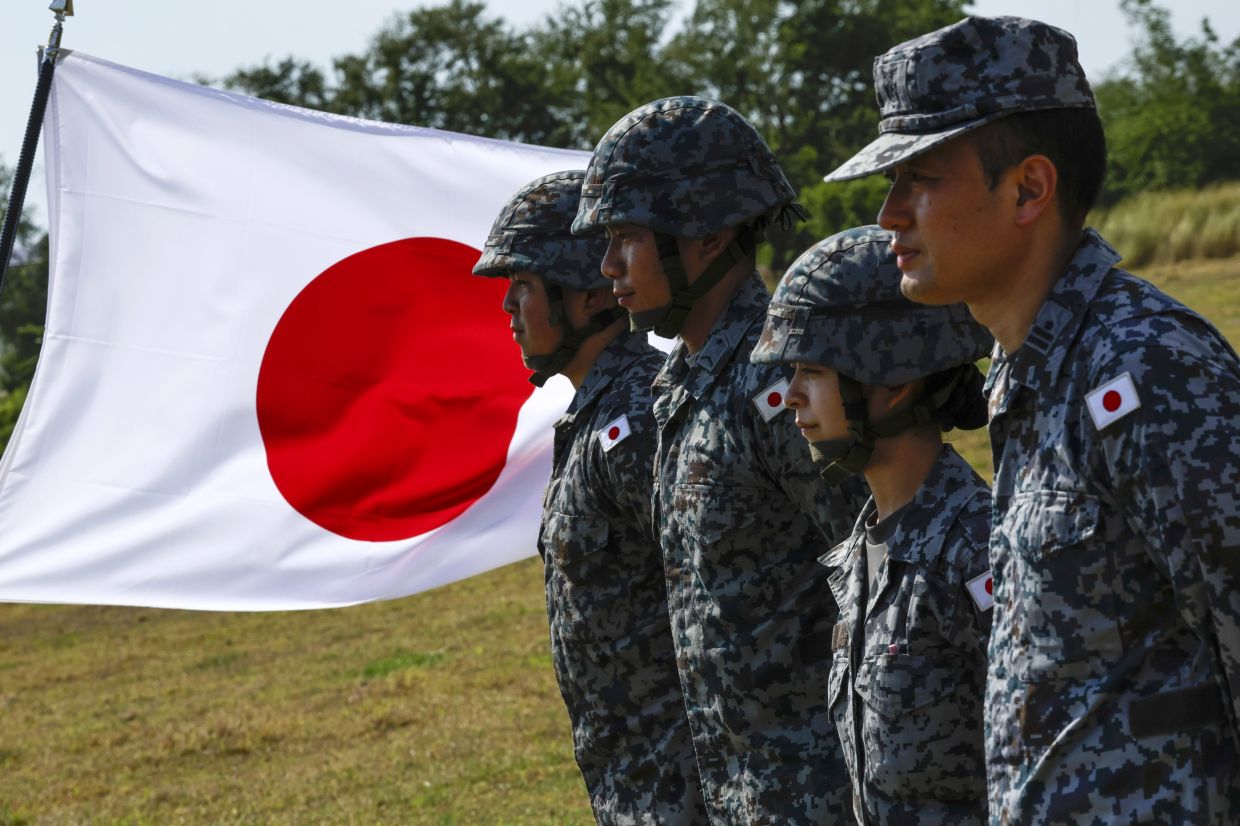
Japan has emerged as a proactive force in shaping the regional security landscape, moving beyond passive dependence on Washington to construct its own network of strategic partnerships designed to contain Chinese military ambitions. The initiative, which gained visibility at regional security forums in May, reflects Tokyo's recognition that the United States cannot be relied upon as the sole guarantor of stability in the Indo-Pacific, particularly given shifting political dynamics in Washington that have raised questions about America's long-term commitment to the region.
The shift became apparent when Japan's Defence Minister took centre stage at a major security gathering in Singapore, where he conspicuously met with US Defence Secretary Pete Hegseth to publicly affirm the bilateral alliance. Yet this very public reassurance also revealed a deeper anxiety: Japan's own vulnerability in an era when American foreign policy appears increasingly transactional and unpredictable. The meeting underscored how Tokyo views the US relationship as essential but no longer sufficient as a standalone security guarantee, compelling Japan to develop complementary mechanisms for maintaining regional stability and protecting its interests.
Central to Japan's emerging strategy is the cultivation of a sophisticated network of minilateral security partnerships that deliberately avoid explicit anti-China framing, which regional nations might find provocative. Instead, Tokyo has crafted a narrative around shared interests in maritime security, freedom of navigation, and economic resilience that appeals to Southeast Asian and Pacific Island states without forcing them to choose sides in great-power competition. This pragmatic approach acknowledges that most regional partners prioritise economic development and stability over ideological positioning, making them reluctant to be drawn into overt military blocs that might antagonise Beijing or disrupt trading relationships.
Tokyo has accelerated its expansion of security assistance programmes that now encompass twelve countries compared to just four three years ago, with funding increasing from 2 billion yen to 18.1 billion yen. These programmes deliver sophisticated equipment including advanced radar systems and drones to regional partners, effectively building the military capabilities of nations that might otherwise be vulnerable to Chinese pressure. The financial commitment, while substantial for Japan, remains modest compared to Chinese investment in the region, forcing Tokyo to pursue qualitative advantages and technological sophistication rather than attempting to match Beijing's expenditure dollar-for-dollar.
Japan's strategy extends beyond traditional defence frameworks into what experts term a holistic approach encompassing infrastructure development, energy security, and economic connectivity. The recalibrated Free and Open Indo-Pacific framework announced in May represents a significant evolution from its 2016 predecessor, which emphasised abstract principles like rule of law. The updated version prioritises concrete economic tools including undersea cable projects, energy supply chain diversification, and maritime infrastructure development that simultaneously advance Japan's strategic objectives while delivering tangible development benefits to recipient nations. This integration of security and economic instruments allows Tokyo to build influence without appearing militaristic or threatening to regional sensibilities.
A particularly innovative mechanism is Japan's Official Security Assistance programme, created to circumvent constraints embedded in Tokyo's overseas development aid policy that traditionally prohibited military support. The OSA framework enables Tokyo to provide defence assistance directly to partner militaries, effectively solving a critical gap where development aid proved insufficient to address maritime domain awareness and coastal security needs. By channelling military support through a dedicated framework, Japan maintains policy coherence while expanding its strategic toolkit, allowing regional partners to upgrade their defence capabilities without Japan appearing to abandon non-military aid principles.
Japan's lifting of its decades-old ban on lethal weapons exports in April represents perhaps the most significant policy shift, permitting defence equipment sales to seventeen countries including six ASEAN members. This decision, while presented as a commercial measure, carries substantial strategic implications for the region. The subsequent agreement with Indonesia to discuss exports of Asagiri-class destroyers signals Japan's intention to become a serious player in regional defence procurement, offering alternatives to Chinese equipment that often come with political strings attached. For regional nations seeking to diversify their defence supply chains and reduce dependence on Beijing, Japanese capabilities represent an attractive middle ground between American cutting-edge technology and Chinese affordability.
Understanding Washington's apparent retreat from Asia-Pacific engagement provides crucial context for Japan's strategic repositioning. The Trump administration's insistence that regional allies substantially increase defence spending, combined with tariff policies that disadvantage key strategic partners like India, has sown doubt about American reliability. This uncertainty extends beyond defence matters into economic policy, compelling regional nations to assume greater responsibility for their own security while seeking partnerships that do not depend entirely on the goodwill of American administrations. Japan's initiatives therefore address a genuine regional need created by shifting American priorities and domestic politics that seem likely to constrain Washington's capacity for traditional security guarantees.
The infrastructure dimension of Japan's strategy proves particularly significant for regional acceptance. Funding port developments, airport expansions, and connectivity projects generates less political controversy than direct military aid while simultaneously creating the physical infrastructure necessary to support coastguard operations and defence logistics. This approach allows Japan to strengthen regional military capabilities while framing investments in development terms that appeal to recipient governments and their publics. The dual-use nature of such infrastructure—simultaneously serving civilian and defence purposes—reflects sophisticated strategic thinking about how to build capabilities without triggering nationalist backlash against military buildup.
Japan's defence industrial base benefits substantially from these regional engagement initiatives, gaining access to proving grounds for advanced equipment while building relationships with international buyers. The export of defence systems to regional partners serves to showcase Japanese military technology's capabilities and reliability, potentially opening markets that have traditionally been closed to Tokyo. This industrial dimension adds economic incentive to strategic partnerships, creating constituencies within Japanese business and government committed to sustaining and expanding regional engagement. The synergy between strategic objectives and commercial interests strengthens Japan's commitment to these programmes even as domestic political priorities shift.
The broader implications for the region extend beyond traditional security concerns to encompass economic resilience and energy security, particularly following the launch of Japan's ten-billion-dollar Power Asia initiative in April. This programme addresses regional anxieties about energy supply vulnerabilities, particularly given concerns about potential disruptions to shipping through the Strait of Hormuz. By helping regional partners secure alternative energy supplies and build strategic reserves, Japan simultaneously strengthens their economic resilience and reduces their vulnerability to coercion while positioning itself as a development partner rather than a security threat.
Looking forward, Japan's success in building this regional framework depends upon maintaining the careful balance between strategic ambition and political sensitivity that has characterised its approach thus far. The temptation to explicitly frame these initiatives as anti-China measures could alienate regional partners who value economic relationships with Beijing and resist polarisation. Simultaneously, Japan must convince regional nations that its commitments are durable and credible, requiring sustained resource commitment and consistent strategic messaging across different administrations. The framework Japan is constructing represents perhaps the most sophisticated regional security architecture designed to manage great-power competition without forcing participating nations into rigid alliance structures, offering important lessons for how middle powers can shape their strategic environment when traditional great-power relationships appear unstable.

