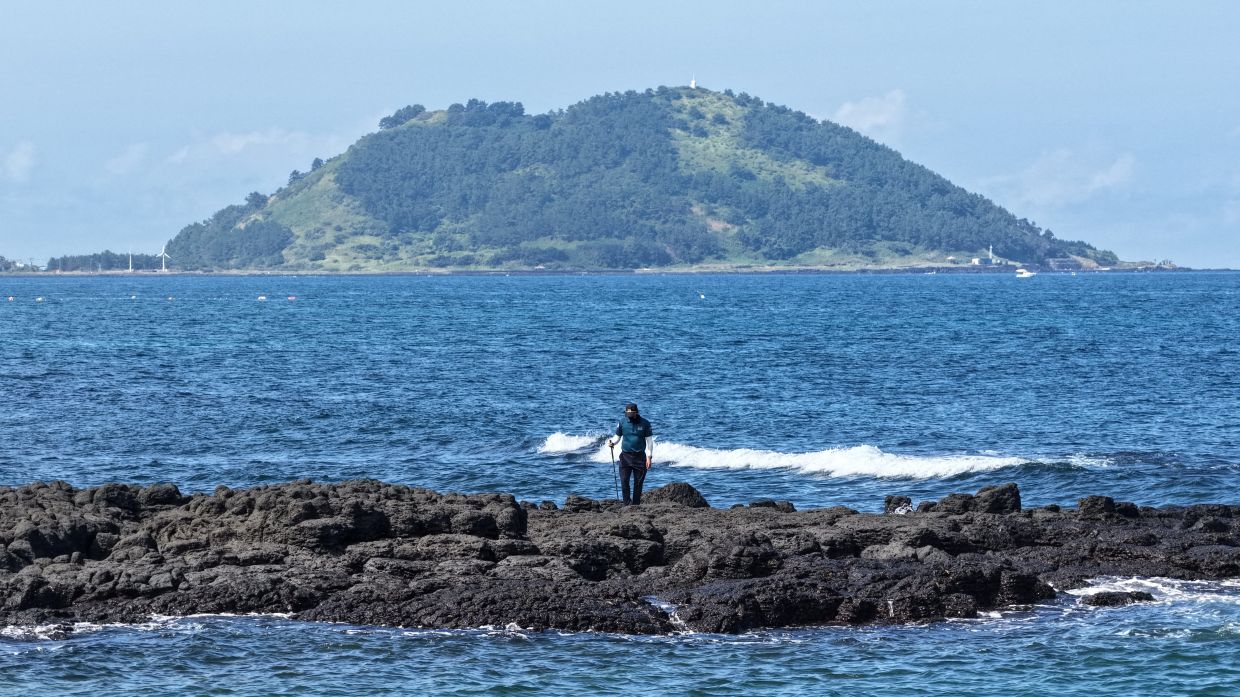
Jeju Island, South Korea's most celebrated holiday destination and traditional honeymoon spot, is confronting an unprecedented reputational crisis as a cascading police scandal and the discovery of multiple bodies within days have crystallised public anxieties about safety on the island. The convergence of these events has triggered both tangible cancellations and a broader loss of confidence that threatens the economic lifeblood of a region already struggling with falling visitor numbers.
The scandal's focal point involves the mishandling of the disappearance of Jang Mi-ran, a 37-year-old woman who vanished between late May 12 and early May 13 from her residence in Hallim-eup, Jeju City. A police officer assigned to her case took the remarkable step of formally closing the investigation in May, claiming he had made direct contact with her—a claim that proved entirely false. When authorities finally conducted a proper search months later, her remains were discovered on August 24 in a small copse of palm trees less than a ten-minute walk from where she had lived, suggesting a proximity that compounded the troubling nature of the police failure.
This single case might have remained a localized concern, but the timing and clustering of subsequent discoveries transformed it into a systemic crisis. Within just 72 hours through August 24, four individuals previously reported missing on Jeju were located deceased. On August 23, a man in his 60s who had been reported missing was found dead in Gujwa-eup following a belated search—his case, like Jang's, had been improperly closed by the same officer. On the same day Jang's body was recovered, another previously missing person was discovered dead near a valley in Aewol-eup. The next day brought the discovery of a man in his 70s whose body was spotted by a fisherman in waters off Sinheung-ri in Jocheon-eup. Police have found no evidence linking these deaths to organised criminal activity or suggesting a broader pattern of foul play, yet the sheer concentration of recoveries following revelations of police negligence has shattered public confidence in both law enforcement competence and the island's safety profile.
The psychological impact on residents and prospective visitors has been profound and measurable. Social media platforms have filled with expressions of concern, from practical worries about isolation on the island's less-developed roads to personal decisions to cancel planned visits. A Jeju resident operating short-term rental properties reported on Instagram that tenants were terminating leases prematurely. Hong Hye-geol, a doctor and television personality who has lived on Jeju for seven years, posted cautionary observations about the island's rural infrastructure, noting that many secondary roads remain sparsely populated and that straying from main routes during daylight hours no longer feels reliably safe. One prospective bride announced she was abandoning plans to photograph her wedding in Gujwa, citing the recent incidents as justification. Another user called explicitly for a tourism boycott until authorities resolved the police officer's conduct and took responsibility for the broader missing-person failures.
These sentiments are translating into concrete economic consequences for island businesses. Bang, who operates a women-only guesthouse in Jocheon-eup, described a sharp increase in safety-related inquiries from prospective guests. A three-person booking cancellation occurred just two days before she spoke to media, though the causal link remained unclear. What troubles her particularly is the irony that her guesthouse's distinctive positioning as a female-focused accommodation—once a competitive advantage—has become a perceived vulnerability in the current climate. She emphasised that her neighbourhood remains objectively well-lit with streetlights and supplementary lighting every 20 to 30 metres, yet rational reassurance appears insufficient against the emotional resonance of recent events.
Jeju's tourism sector faces this challenge against a backdrop of already-declining visitor numbers that predate the scandal. The Jeju Tourism Organization reported that domestic visitor arrivals in July totalled 963,401, representing a decline of 12.4 percent, or 136,620 visitors, compared to 1,100,021 in July of the previous year. This figure carries particular symbolic weight as it marked the first occasion since the Covid-19 pandemic commenced in 2020 that Jeju's monthly domestic visitor count fell below the million-visitor threshold. The downward trajectory persisted into August, with the island receiving an average of 35,295 domestic visitors daily during the August 1-23 period, compared to 35,575 during the identical window the previous year—a modest but consistent erosion.
Statistical data on crime presents a more alarming picture. According to the Korean National Police Agency, Jeju recorded the nation's highest crime rate in 2024, with 4,539.6 reported offences per 100,000 residents. This figure requires contextual interpretation: it is calculated against Jeju's resident population of approximately 663,000, yet the island annually welcomes millions of visitors, creating a denominological distortion that inflates the rate relative to typical crime reporting. Nevertheless, the headline statistic has already circulated widely in public discourse and contributed to the prevailing anxiety, regardless of methodological nuance.
The implications for Jeju extend beyond immediate tourism revenue. As South Korea's premier domestic vacation destination and a crucial component of its international tourism positioning, the island's perceived safety crisis threatens the broader regional economy. Hospitality businesses, transportation operators, retail establishments, and numerous service sectors dependent on visitor spending face potential contraction. The scandal also raises uncomfortable questions about police institutional competence and accountability that resonate throughout South Korean society.
Local authorities and law enforcement agencies face mounting pressure to restore public confidence through decisive action. The pattern of alleged misconduct by a single officer demands transparent investigation and clear accountability measures. Beyond this, however, Jeju requires a more comprehensive approach: visible policing enhancements in rural areas, improved emergency response systems that cannot be bypassed by institutional negligence, and sustained communication campaigns addressing the gap between actual crime statistics and the perception shaped by recent events. Without such interventions, Jeju risks suffering extended economic damage as potential visitors redirect their travel plans to alternative destinations.
The situation represents a critical juncture for South Korean tourism policy. The incident illustrates how institutional failures in law enforcement can rapidly erode destination reputations in an age of instantaneous social media amplification. Recovery will require not merely technical improvements to police procedures but a broader restoration of confidence that acknowledges public concerns while providing concrete evidence of systemic reform. For Malaysian and Southeast Asian travellers who often view Jeju as an accessible and culturally proximate destination, the unfolding situation warrants close attention as a case study in how reputational crises develop and, ultimately, how they might be remedied.

