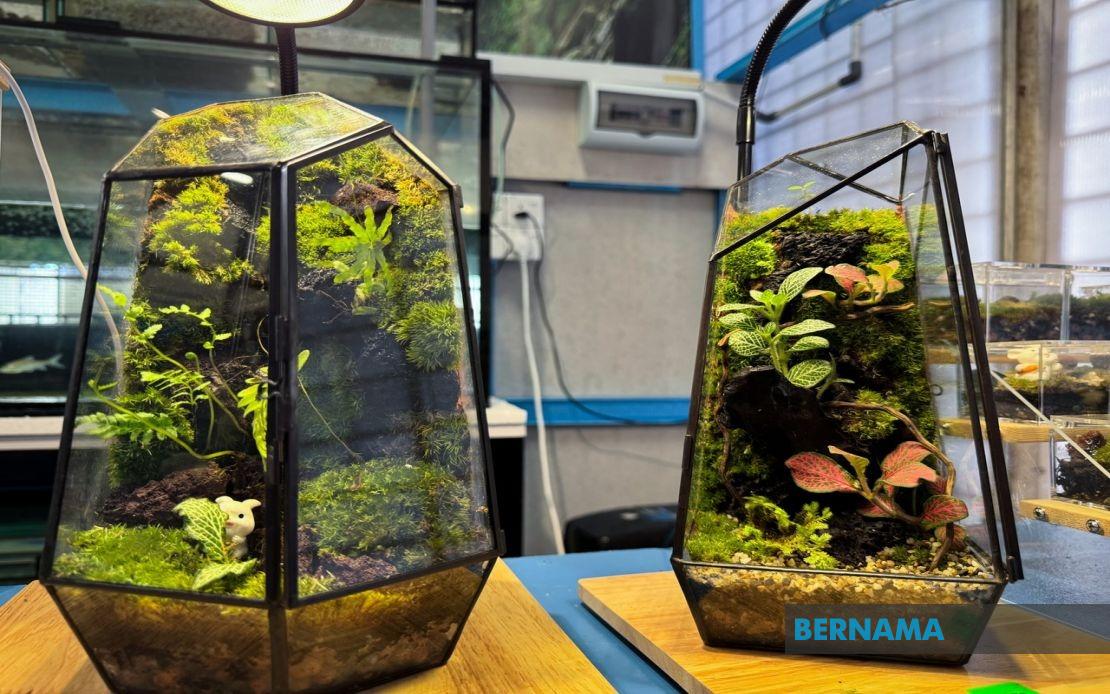
Muhammad Syukur Abdullah, a second-semester Aquaculture Technology Diploma student at Jeli Polytechnic in Kedah, has transformed what began as a casual hobby into a flourishing micro-enterprise. The 21-year-old from Bukit Mertajam, Penang, now designs and sells intricate miniature glass gardens that showcase both botanical knowledge and artistic vision, with pieces ranging from RM10 basic models to RM570 premium designs. His journey reflects a growing trend among Malaysian youth who are discovering profitable opportunities within the sustainability and eco-conscious sectors.
Abdullah's introduction to terrarium-making came through casual online research during his secondary school years. After watching YouTube tutorials that sparked his curiosity, he experimented repeatedly until successfully creating his first piece. This initial success ignited a deeper passion that would eventually shape his educational and career trajectory. Rather than dismissing the hobby as a mere pastime, Abdullah pursued formal horticultural education at Jerantut Community College in Pahang, completing a two-year Aquaculture Technology Certificate in 2022. This deliberate pivot toward formal training demonstrates how informal digital learning can serve as a springboard for more structured vocational pursuits.
During his time at the community college, Abdullah acquired comprehensive knowledge about plant physiology, propagation techniques, and care protocols that proved instrumental in improving his terrarium designs. This foundational understanding enabled him to create more resilient miniature ecosystems capable of thriving in sealed glass environments. Subsequently, a five-month industrial placement at Gardenroad Aquatic in Shah Alam exposed him to professional-grade terrarium production methods and commercial business operations. This combination of academic learning and hands-on industry experience positioned him to launch his commercial venture with confidence and technical competence.
Abdullah began selling his creations online in 2022 through Facebook and Marketplace, initially operating at modest scale while establishing brand presence on social media platforms including TikTok. The transition to Jeli Polytechnic for his current diploma programme catalysed further expansion of his business activities. Recognizing the potential for community engagement around terrarium creation, he co-established the Green Vista Club with guidance from Aquaculture Technology lecturer Zalina Che Manan. This initiative extends beyond product creation to encompass educational outreach, including knowledge-sharing sessions with kindergarten educators, thereby positioning terrarium-making as both a commercial and pedagogical endeavour.
Abdullah has mastered three distinct terrarium typologies, each requiring different technical approaches and plant selections. Waterless landscapes eliminate standing water, relying instead on moss and specialized substrates to regulate humidity. Aquascapes recreate submerged underwater ecosystems within glass containers, showcasing aquatic flora and carefully arranged rocks or driftwood. Paludariums represent the most complex category, combining terrestrial and aquatic zones within a single composition, often featuring water features such as miniature waterfalls that create dramatic focal points. This specialization reflects his deepening technical expertise and ability to address diverse customer preferences.
The construction process begins with meticulous layering that mimics natural soil stratification. Abdullah starts with clay balls at the base, followed by black soil mixed with dried moss, creating a moisture-retentive foundation that sustains plant growth while preventing waterlogging. Once this structural base reaches optimal condition, he introduces aesthetic elements including wood, stone, and living moss. Spiderwood features prominently in his designs due to its inherent resistance to mould and capacity to withstand humid microclimate conditions without deterioration. Each material selection reflects both aesthetic judgment and practical durability considerations essential for long-term terrarium viability.
Craft execution demands exceptional spatial reasoning and fine motor control, as minute placement errors can compromise the overall visual composition and diminish natural appeal. Abdullah typically incorporates plants such as fittonia, ferns, and miniature bonsai specimens, selecting species that thrive in the controlled, humid conditions that sealed terrariums provide. Design aesthetics range from forest-inspired naturalism to elaborate diorama styles featuring fantastical landscapes, Japanese minimalist compositions, and Iwagumi arrangements borrowed from aquascaping traditions. Market feedback indicates strong preference for diorama-style pieces, likely reflecting consumer desire for imaginative, storybook-like miniature worlds that offer escape from mundane surroundings.
Quality assurance comprises a crucial but often overlooked phase of Abdullah's production cycle. Each completed terrarium undergoes one to two weeks of monitoring to verify successful plant acclimation before customer delivery. This post-production oversight ensures that stress-related wilting, nutrient deficiencies, or environmental shock do not compromise customer satisfaction. Maintenance guidance provided to buyers emphasizes the importance of monitoring humidity levels and ambient lighting while restricting watering to once or twice weekly depending on observable moisture conditions. This customer education component transforms Abdullah from mere product vendor into horticultural consultant, enhancing perceived value and fostering long-term customer relationships.
Operational capacity currently sits at five to ten pieces monthly across various size categories, with production timelines ranging from one hour for simpler designs to a full day for intricate compositions. This modest but sustainable output reflects Abdullah's deliberate prioritization of quality over quantity, a positioning strategy particularly valuable in artisanal product markets where customers willingly pay premiums for demonstrated craftsmanship. Geographic limitation to Kedah and surrounding territories stems from legitimate concerns about terrarium fragility during interstate transit, a constraint that simultaneously signals his commitment to delivering undamaged products rather than maximizing immediate revenue through expanded distribution channels.
Balancing simultaneous demands of formal education and entrepreneurial activity presents Abdullah's most significant operational challenge. Pursuing a diploma while maintaining customer communication, managing inventory, and executing intricate designs demands sophisticated time management and priority-setting. His determination to preserve academic integrity while honouring business commitments reflects mature understanding that neither pursuit should subordinate the other. The tension between student and entrepreneur roles, rather than representing failure, instead exemplifies the realistic complexities that vocational students navigating commercialization must navigate.
Abdullah's trajectory carries broader significance for Malaysian vocational education and youth entrepreneurship discourse. His success demonstrates that polytechnic training need not confine graduates to conventional employment pathways, but instead can provide launching platforms for student-led enterprises grounded in technical competence and market awareness. The integration of sustainability principles—recycling glass containers, utilizing natural materials, creating living systems—aligns his venture with environmental consciousness increasingly valued by Malaysian consumers, particularly younger demographics. Furthermore, his willingness to share knowledge through the Green Vista Club exemplifies how individual success can catalyze community capacity-building, multiplying impact beyond personal commercial achievement.
Looking forward, Abdullah's business model contains potential for scaled expansion once he completes his diploma and allocates greater time to commercial operations. Interstate logistics solutions, whether through strategic partnerships or specialized shipping protocols, could unlock broader regional markets. Product diversification, perhaps incorporating terrarium maintenance services or conducting workshops, represents additional revenue avenues. His established online presence and growing social media following provide infrastructure for marketing expansion. Yet the current approach—prioritizing educational achievement, maintaining quality standards, and building community engagement—reflects wisdom that sustainable growth typically emerges from solid foundations rather than premature scaling.

