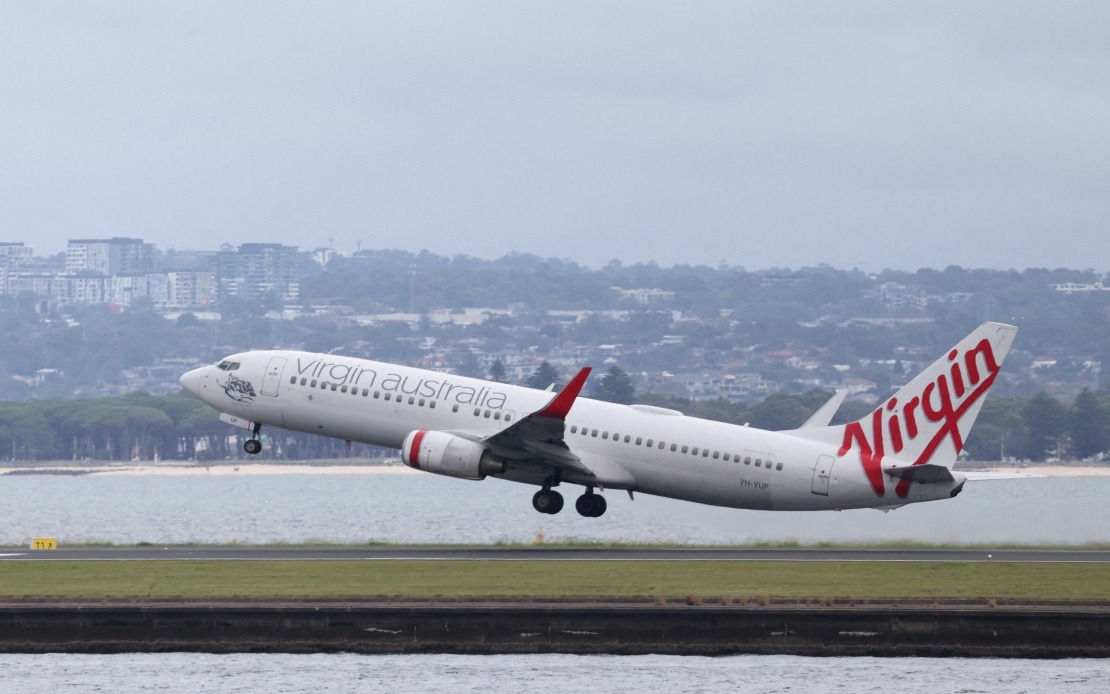
A crew member aboard a Jetstar Airways aircraft sustained injuries during a tense moment at Sydney Airport when the plane came perilously close to striking an empty Qatar Airways Boeing 777 that was being towed across a runway on Sunday morning. The incident, which unfolded around 7 am Australian Eastern Standard Time, has revived concerns about operational safety at one of Australia's busiest aviation hubs and raises questions about coordination between ground services and flight operations during a period of known staffing strain.
Flight JQ402, operated by the Qantas-owned budget carrier Jetstar, was in the process of taxiing along the runway in preparation for departure to the Gold Coast when the pilots received an urgent directive to apply heavy braking to avert what could have developed into a serious collision. The aircraft carrying passengers was following established air traffic control instructions when another aircraft suddenly approached with insufficient separation. The cabin crew member who was hurt required treatment from paramedics dispatched to the scene, though the injury was not life-threatening. Remarkably, none of the passengers travelling on the flight experienced injury during the emergency manoeuvre.
Jetstar's public response to the incident acknowledged the emergency nature of the situation while emphasising adherence to regulatory procedures. A company representative explained that the flight deck crew had been executing clearances provided by air traffic control personnel when circumstances compelled them to brake with considerable force. This defensive statement suggests that Jetstar views the responsibility for the near-miss as lying primarily with ground control coordination rather than pilot error, though an official investigation will ultimately determine the sequence of events and any contributing factors.
The timing of this incident carries particular significance given the operational pressures facing Sydney Airport in the preceding days. Just forty-eight hours before the near-collision, more than 250 flights departing from Sydney experienced delays stemming from staff shortages affecting Airservices Australia, the government body responsible for managing air traffic control operations at major Australian airports. These cascading delays created a backlog of aircraft movements and likely elevated the urgency and complexity of runway operations, potentially creating an environment where coordination errors become more probable.
Airservices Australia operates air traffic control infrastructure across Australia's principal airports, including the heavily congested Sydney facility. Staffing shortages within this organisation directly translate to reduced operational capacity and increased workload for controllers managing multiple aircraft simultaneously. When controllers are stretched thin, the margin for miscommunication or tracking errors contracts, elevating risks even when safety protocols remain theoretically sound. The confluence of Friday-Saturday delays and Sunday's near-miss suggests a broader systemic challenge requiring attention.
For Malaysian aviation observers and passengers, this incident underscores the interconnected nature of safety management across international air networks. Jetstar operates extensively throughout Southeast Asia, including Malaysia, and serves substantial passenger volumes on regional routes. The carrier's Qantas ownership means the incident will be scrutinised through corporate and regulatory oversight mechanisms, but the underlying issue—staff availability and coordination during peak operational periods—represents a challenge facing airports across the Asia-Pacific region.
The near-collision between aircraft at major hubs occasionally occurs despite sophisticated safety systems, and Sydney Airport is no exception to occasional close calls. However, the frequency and context of such incidents matter significantly. When multiple serious incidents cluster temporally around known operational constraints like staffing gaps, regulators must examine whether existing protocols adequately safeguard against cascading failures. The incident became notable precisely because it involved an active commercial passenger flight, maximising the potential consequences had collision occurred.
Qatar Airways, the aircraft involved in the near-miss, operates extensive international services and maintains substantial operations throughout the Southeast Asian region, including Australia. The Boeing 777 that was being towed represents valuable equipment, and its involvement in a potential collision would have triggered significant disruptions to Qatar Airways' network operations. The fact that the aircraft was empty—presumably being repositioned or prepared for service—reduced immediate passenger impact but not the seriousness of a potential collision event.
The investigation Jetstar has initiated will examine radio communications, controller workload levels, aircraft positioning data, and visual observation protocols to establish exactly how the aircraft came into close proximity. These investigations typically consume weeks or months and involve multiple agencies. Findings will likely inform recommendations to Airservices Australia regarding operational procedures, controller staffing models, and potential technological enhancements to separation warning systems.
For regional carriers and airports managing growth in air traffic, the Sydney incident serves as a cautionary reminder that operational safety cannot be sustained through protocols alone when human and material resources become constrained. Southeast Asian airports experiencing rapid traffic growth must carefully calibrate expansion investments to ensure that ground services, air traffic control capacity, and safety oversight infrastructure develop in concert rather than in a potentially dangerous sequence where traffic growth outpaces operational capability.

