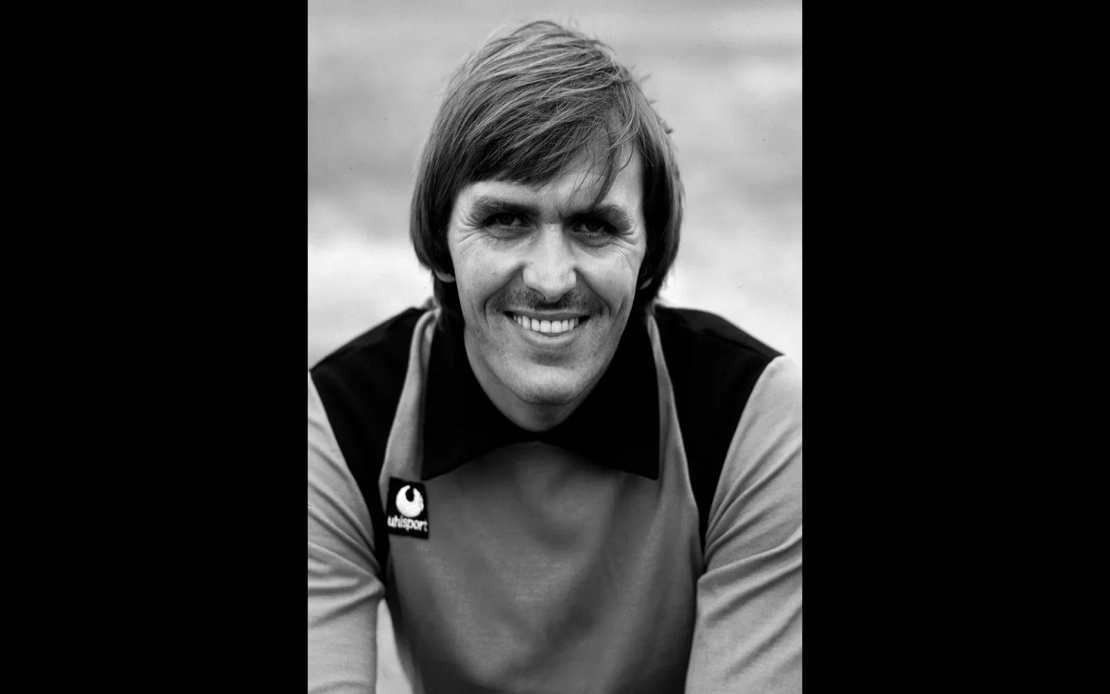
Jimmy Rimmer, the goalkeeper whose career became defined by extraordinary misfortune despite holding two European Cup winners' medals, has passed away at age 78. Rimmer's most enduring legacy remains one of sport's cruelest ironies: a man who achieved the highest honour in club football yet spent the crucial moments unable to play his part in either victory.
Rimmer's credentials as a top-tier custodian were established during Aston Villa's dominant 1980-81 season, when the Midlands club captured the English First Division title. The goalkeeper was an ever-present figure in Villa's title triumph, demonstrating the consistency and quality that made him one of the generation's most respected goalkeepers. His performances that season validated Villa's ambitions and set the stage for their assault on European competition the following campaign.
The following year brought Villa's greatest achievement when they claimed the European Cup, then club football's most prestigious trophy. Yet it is this very victory that encapsulates the peculiar tragedy of Rimmer's career. In the 1982 final against Bayern Munich in Rotterdam, Rimmer suffered a serious neck injury just nine minutes into the match and was forced to leave the field. His replacement, understudy Nigel Spink, seized the unexpected opportunity with remarkable composure, keeping a clean sheet throughout the remainder of the match as Peter Withe's second-half goal secured a 1-0 victory. That triumph remains the club's only European Cup title to date.
This was not Rimmer's first brush with such heartbreak. Fourteen years earlier, when playing for Manchester United, he had watched from the substitute's bench as the Red Devils defeated Benfica at Wembley in the 1968 European Cup final. Twice receiving the honour of holding a European Cup winner's medal, yet twice denied the experience of playing through to the final whistle, Rimmer's story became the stuff of sporting folklore—a cautionary tale about how circumstance and injury can rob even the accomplished of their defining moments.
Aston Villa's statement acknowledging his passing highlighted this poignant reality. The club noted that despite his collection of winners' medals, Rimmer's legacy carried an underlying thread of misfortune. The organisation recognised him as among the finest goalkeepers of his generation, yet simultaneously as arguably the unluckiest when major occasions arrived. This paradox defined how the football world remembered him.
Following the Rotterdam final, Rimmer found his Villa career fundamentally altered. Spink had established himself as the club's first-choice goalkeeper, leaving little room for Rimmer to reclaim the position. His departure came in 1983 when he was sold to Swansea City, ending a substantial contribution to the club. During his time at Villa Park, Rimmer had made more than 200 competitive appearances, a testament to the respect in which he was held prior to the European Cup final.
Rimmer's career path had taken him through several of English football's biggest institutions. He began at Old Trafford, Manchester United's illustrious home, but found himself unable to displace Alex Stepney, then the club's established number one. The competitive environment at United provided the backdrop for his bench appearance in the 1968 European Cup final. Seeking regular football, he moved to Arsenal in 1974 before securing a transfer to Villa three years later, where he would experience both his greatest team success and his most crushing personal disappointment.
For Malaysian and Southeast Asian football enthusiasts, Rimmer's story carries particular resonance given the region's growing engagement with European club football. His career demonstrates how elite goalkeeping demands not merely technical excellence and composure under pressure, but also the unpredictable intervention of circumstance. The contrast between his undeniable quality—proven through consistent performances for multiple top clubs—and the manner in which injury and timing robbed him of full participation in his greatest achievements serves as a sobering reminder of football's inherent uncertainties.
Rimmer earned a single England cap, a recognition that placed him among the elite goalkeepers of his era. Yet his international career never scaled the heights his club performances deserved, further compounding the sense that his talent never fully translated into the personal glory commensurate with his abilities. His solitary appearance for the national team contrasts sharply with the achievements of contemporary goalkeepers who emerged from the same competitive environment.
The goalkeeping position has always occupied a peculiar place in football mythology. Rimmer's career illustrates why: no position combines such reliance on individual brilliance with such vulnerability to circumstance beyond the player's control. An injury sustained in the opening minutes transforms a career narrative entirely, reframing a player from protagonist to footnote regardless of underlying quality. Rimmer's neck injury in Rotterdam created precisely such a narrative break, one from which his career never recovered in terms of platform or opportunity.
As tributes flow following his passing, Rimmer will be remembered not merely as a goalkeeper of considerable talent, but as a figure whose career encapsulates football's capacity to be simultaneously generous and cruel. His two European Cup medals remain tangible proof of his place among the elite of his generation, yet both carry the bittersweet knowledge of matches watched rather than played. In death, the football world marks the passing of a man whose story, tragic as it was, remains quintessentially human—a reminder that professional achievement, however substantial, cannot guarantee protection from life's reversals.

