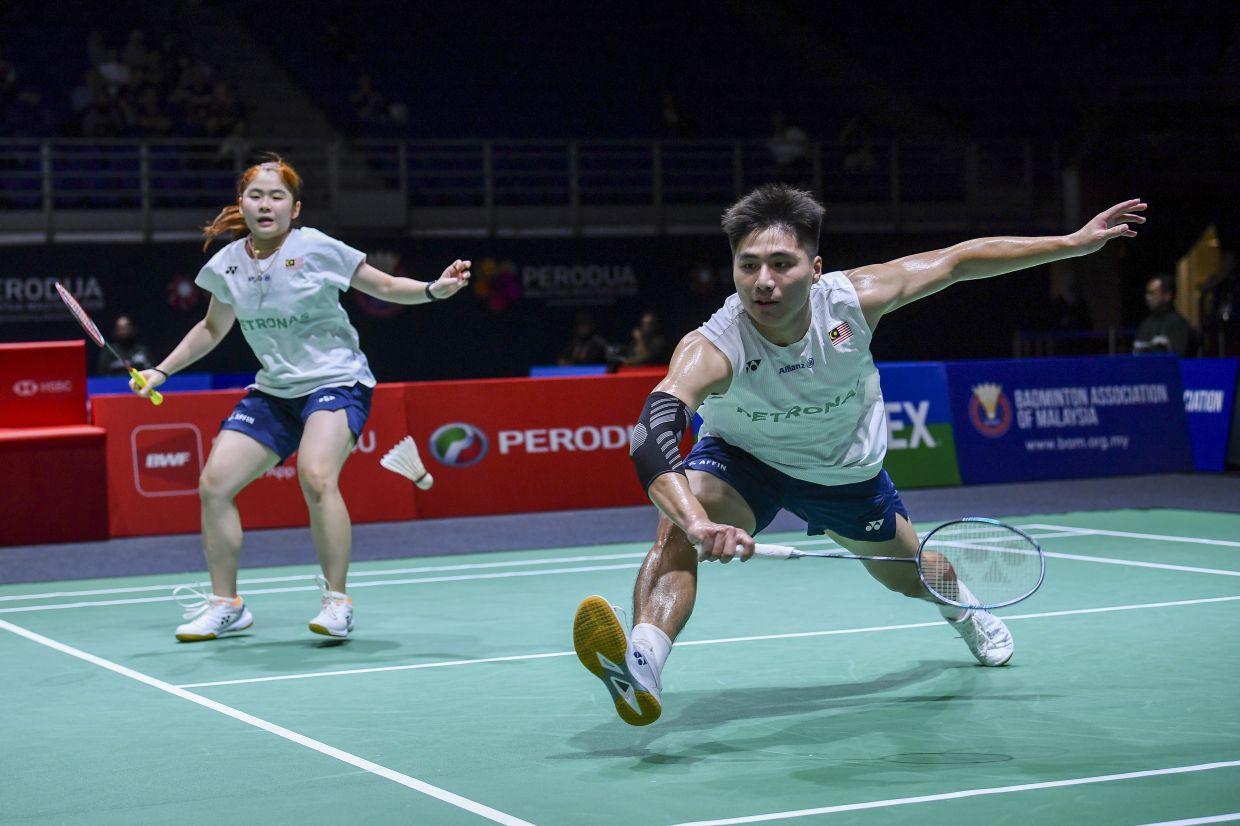
National mixed doubles shuttler Jimmy Wong is gaining confidence in his ability to fulfil his Olympic aspirations following his return to Malaysia's Badminton Association of Malaysia (BAM) squad in April. The 23-year-old believes the transition back into the structured national environment, coupled with access to world-class coaching and training facilities, has positioned him favourably to pursue qualification for the 2028 Los Angeles Games alongside partner Cheng Su Yin.
Wong's reintegration into the national set-up marks a significant juncture in his badminton career. While he acknowledges that competing at the Olympic level remains among his foremost objectives, the player has adopted a measured approach to goal-setting, recognising that excessive pressure stemming from multiple targets can undermine performance rather than enhance it. Instead, Wong prioritises consistency and execution during competition, trusting that sustained improvement across tournaments will naturally translate into ranking progression and qualification opportunities.
The coaching environment at BAM has proven instrumental in Wong's adjustment phase. Working under mixed doubles specialist Nova Widianto, an Olympic silver-medallist and former world champion, has exposed Wong to elite-level tactical instruction and psychological preparation. Widianto's experience navigating high-stakes international competition has extended beyond technical refinement of Wong's gameplay, contributing instead to his broader development as a competitive athlete equipped to manage demanding match scenarios.
Wong and Cheng Su Yin have established a tangible intermediate target that underscores their pathway to Olympic qualification. Currently ranked 118th globally, the partnership aims to penetrate the world's top 32 by the conclusion of 2024. This ranking threshold is not arbitrary; it represents the entry point for participation in the sport's most prestigious tournament categories, namely Super 750 and Super 1000 events, where substantial ranking points and enhanced exposure become accessible. Progression through these elite-level competitions would significantly strengthen their candidacy for 2028 qualification.
The early returns from Wong and Cheng Su Yin's collaboration have yielded encouraging signals. During their appearance at the Singapore Open last month, the partnership executed an impressive upset against world number one pairing Feng Yanzhe-Huang Dongping in the opening round, demonstrating that the duo possess the competitive capacity to contend against established top-ranked combinations. Although their campaign concluded at the second-round stage, the victory against the world's leading mixed doubles team provided tangible evidence of their potential trajectory.
Communication and chemistry between partners constitute critical foundations for success in badminton's mixed doubles discipline, where coordinated court positioning and tactical understanding prove essential. Wong characterises his working relationship with Cheng Su Yin as harmonious and communicative, though both players acknowledge unresolved technical and strategic dimensions requiring continued refinement. Rather than viewing these areas as deficiencies, Wong frames them as natural components of the developmental journey that younger partnerships inevitably navigate.
The broader context of Malaysian badminton provides both opportunity and competition for Wong's ambitions. Malaysia has historically produced world-class mixed doubles talent and maintains robust infrastructure supporting player development. However, the global mixed doubles landscape has intensified considerably, with Chinese combinations dominating rankings and Indonesian pairings consistently challenging for major titles. For Wong and Cheng Su Yin to achieve their top-32 objective and ultimately Olympic qualification, they must accelerate their improvement trajectory while competing against increasingly formidable opposition.
Wong's experience since rejoining BAM has underscored the tangible advantages of national team integration. Beyond access to Nova Widianto's expertise, the player benefits from structured training schedules, sports science support, competition analysis, and institutional resources that independent professionals cannot replicate. These systemic advantages compound over time, translating into measurable performance improvements that become visible through ranking progression and tournament results.
The psychological dimension of Wong's approach warrants attention. By consciously avoiding excessive target-setting while maintaining clear intermediate objectives, he adopts a performance psychology framework increasingly advocated within elite sport. This mindset enables athletes to concentrate on controllable variables—effort, execution, tactical adaptation—rather than fixating on uncertain outcomes. For an ambitious 23-year-old navigating the pathway toward Olympic qualification, such mental discipline may prove as consequential as technical proficiency.
Looking forward, the trajectory of Wong and Cheng Su Yin's partnership will become clarified through their forthcoming tournament schedule. The remainder of 2024 represents a critical evaluation period during which their ranking progression, performance against higher-ranked opponents, and consistency across varying tournament conditions will determine whether the top-32 objective remains achievable. Success would position them favourably not only for Olympic qualification but also for sustained competitiveness within the international mixed doubles circuit.
For Malaysian badminton enthusiasts and stakeholders, Wong's revival represents a broader narrative of domestic talent development. The national association's investment in coaching expertise through acquisitions such as Nova Widianto suggests institutional commitment to cultivating competitive excellence across disciplines. Should Wong and Cheng Su Yin progress toward Olympic qualification, their achievement would validate these investments while potentially inspiring other emerging Malaysian players to pursue similar pathways. The next twelve months will prove instructive in determining whether Wong's optimism regarding his Olympic dream proves prescient or premature.

