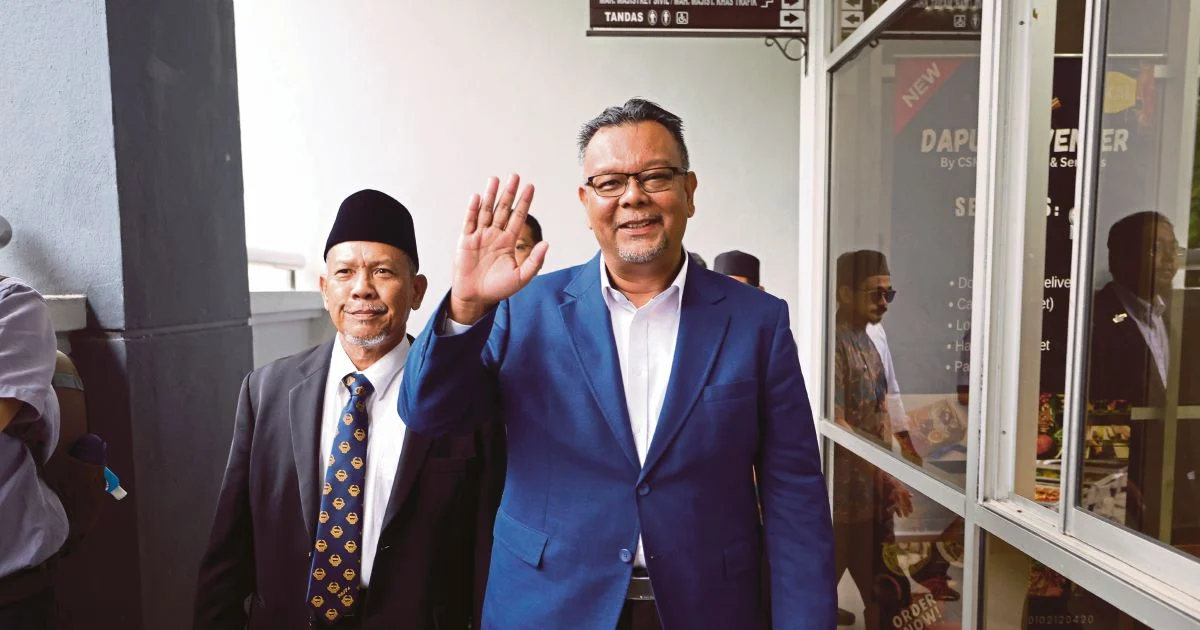
Dr Haim Hilman Abdullah, the elected assemblyman representing the Jitra state constituency, appeared before the magistrate's court in Seremban today to face allegations that he made public statements calculated to generate public unrest and concern. The legislator firmly disputed the charge, entering a formal not guilty plea as the proceedings got underway.
The charge against the Jitra representative falls under legal provisions designed to maintain public order and prevent the spread of statements that could destabilise the community. Such charges have been invoked with increasing frequency in recent years across Malaysian courtrooms, reflecting heightened official scrutiny of political speech and public commentary. The specific nature of the statements in question has not yet been disclosed to the public, leaving observers to speculate about what triggered the prosecution.
The appearance in Seremban marks a significant legal moment for the Jitra assemblyman, who has represented his northern constituency in the state legislature. The proceedings underscore the complex intersection between political speech and legal boundaries in Malaysia's evolving democratic landscape. Elected representatives operate within a framework where public discourse is protected but also constrained by provisions meant to safeguard public tranquility.
Charges of this nature typically emerge following complaints lodged with law enforcement authorities, suggesting that someone—potentially a member of the public or an official—took sufficient concern with the assemblyman's remarks to escalate the matter to police. The decision to proceed with formal charges indicates that investigating officers determined sufficient evidence existed to support the allegation. However, the assemblyman's not guilty plea signals his intention to contest the case and challenge the characterization of his statements as inflammatory.
The legislative backdrop for such prosecutions includes constitutional protections for parliamentary speech alongside statutory provisions against sedition and public alarm. Malaysian courts have grappled repeatedly with where precisely to draw the line between legitimate political expression and statements that cross into prohibited territory. For state assemblymen like Dr Haim Hilman, this boundary remains somewhat fluid, subject to interpretation by prosecutors and ultimately judges.
The timing of the charge carries potential implications for the political climate in the state and the Jitra constituency specifically. Opposition figures have sometimes characterized such prosecutions as politically motivated, whilst authorities maintain they are enforcing laws neutrally and objectively. Observers familiar with Malaysian politics understand that perception often shapes public assessment of such cases, regardless of the legal merits that will ultimately be decided in court.
The Seremban magistrate's court has not yet set a trial date or provided details about when the next hearing will occur. The legal process ahead may involve preliminary examinations, submissions on evidence, and possibly examination of witnesses. Such cases can extend over several months or longer depending on court schedules and the complexity of evidence surrounding the allegedly problematic statements.
For political figures across Malaysia, the case illustrates the risks attendant upon public speaking and social media engagement. State assemblymen and other elected officials must calibrate their communications to avoid crossing legal lines whilst still fulfilling their obligation to voice constituent concerns and engage in political debate. The precise words used, their interpretation by authorities, and the sensitivity of the subject matter all factor into whether remarks might trigger legal action.
The broader context includes ongoing debates within Malaysian society about freedom of expression, the scope of legitimate criticism, and the appropriate boundaries for political discourse. Civil society organisations have periodically raised concerns about provisions permitting prosecution for statements likely to cause public alarm, arguing they can be applied overly broadly to suppress legitimate speech. Government authorities maintain such laws remain necessary for preserving public order and preventing destabilisation.
As the case proceeds through the court system, attention will focus on the evidence prosecutors present and the legal arguments the defence mounts. The outcome may establish precedent for how similar charges are interpreted and applied in future cases involving political figures or public personalities. For the Jitra constituency, the proceedings also raise questions about the political implications of having a state representative engaged in court proceedings whilst simultaneously performing legislative duties.
Dr Haim Hilman's decision to contest the charge rather than negotiate a settlement signals his conviction that the statements in question fell within acceptable bounds of political expression. His legal team will presumably argue that his words, whatever their exact nature, did not genuinely threaten public calm or satisfy the legal threshold for prosecution. The magistrate's bench will ultimately determine whether the evidence supports the prosecution's position or vindicates the assemblyman's not guilty plea.

