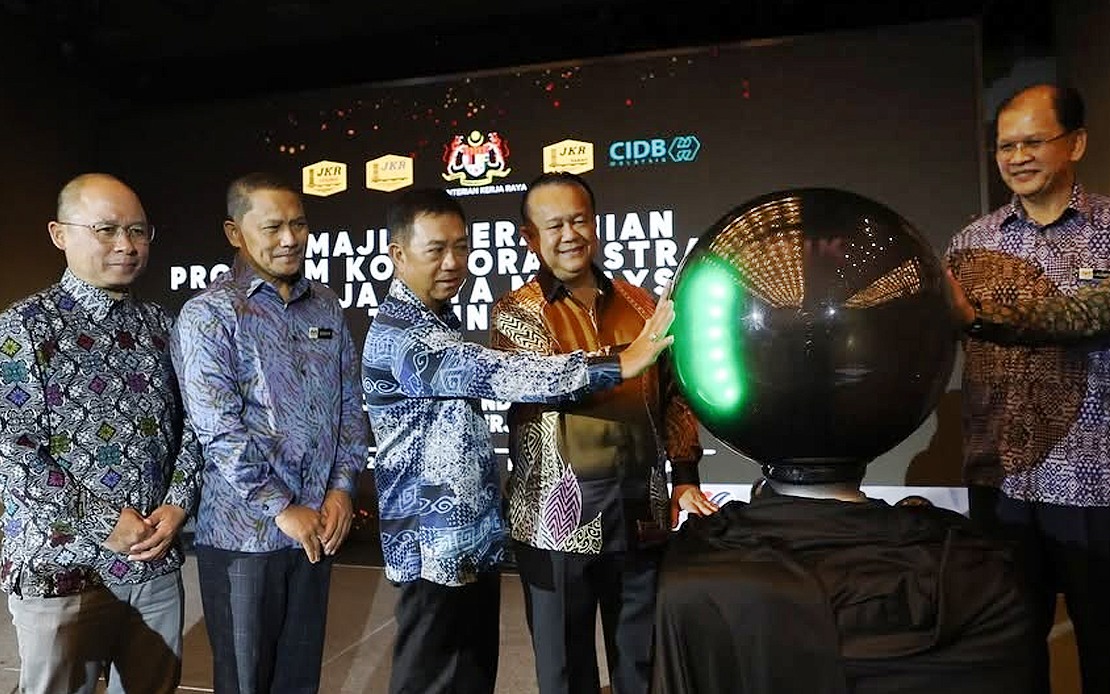
Malaysia's three main public works implementing agencies are intensifying their collaborative efforts to resolve longstanding coordination issues that have plagued major infrastructure projects across the country. Works Minister Datuk Seri Alexander Nanta Linggi underscored the critical importance of this partnership during a strategic collaboration programme launched in Kota Kinabalu, signalling the government's determination to streamline project delivery mechanisms and ensure timely completion of work worth billions of ringgit currently in progress nationwide.
The collaborative framework, which brings together JKR Malaysia, JKR Sabah, and JKR Sarawak alongside the Construction Industry Development Board (CIDB), represents a structured approach to identifying and resolving the operational bottlenecks that have historically contributed to delays in major undertakings. Nanta acknowledged that despite measurable improvements since the initial establishment of this collaborative platform, significant challenges remain that require coordinated and efficient problem-solving to maintain project timelines and quality standards.
Central to this initiative is the recognition that coordination constraints have emerged as a principal factor behind the delays affecting numerous ongoing initiatives. By establishing a dedicated platform for dialogue between the three key implementing agencies, the government aims to create an environment where challenges can be discussed openly and solutions developed jointly rather than in isolation. Nanta emphasised that once effective problem-solving mechanisms are established and deployed, the agencies can transition to more efficient operational practices that benefit all stakeholders involved in project execution.
The Pan Borneo Highway project, one of East Malaysia's most significant infrastructure undertakings, exemplifies both the scale of current construction activity and the complexity of coordination required across multiple jurisdictions and implementing bodies. This mega-project, alongside other major roads and government building developments, demonstrates the critical need for seamless communication and unified approaches to overcoming obstacles that might otherwise accumulate into substantial delays and cost implications for the public exchequer.
When addressing specific technical matters such as the strategic placement of U-turn facilities along the Pan Borneo Highway, Nanta underscored that each location undergoes rigorous technical assessment rather than arbitrary selection. The determination process incorporates detailed road geometry analysis, sight distance calculations, and comprehensive user safety considerations to ensure that infrastructure development maintains the highest standards of motorist protection and operational efficiency. This detail-oriented approach reflects the ministry's commitment to delivering infrastructure that serves the Malaysian public reliably and safely.
Deputy Chief Minister I and Sabah Works and Utilities Minister Datuk Seri Dr Joachim Gunsalam articulated a broader vision positioning infrastructure development as a fundamental catalyst for economic expansion, enhanced regional competitiveness, and improved community wellbeing throughout East Malaysia. His perspective emphasises that strategic infrastructure investment directly influences the quality and accessibility of government services, making efficient project delivery a matter extending well beyond construction timelines to encompassing genuine developmental impact across multiple sectors of the Malaysian economy.
Gunsalam further elaborated that every infrastructure investment must be grounded in meticulous strategic planning, executed with consistent quality control, and managed through sustainable asset stewardship principles that extend throughout the project lifecycle. This comprehensive approach reflects contemporary best practices in infrastructure governance and acknowledges that the true measure of project success encompasses not merely completion but the delivery of genuine public value through responsible resource allocation and transparent operational frameworks.
The formalisation of collaborative arrangements through multiple agreements signals institutional commitment to sustaining improved coordination beyond initial enthusiasm. The works ministry witnessed the signing of a road asset data declaration involving the Works Ministry and both Sabah's Ministry of Works and Utilities and Ministry of Local Government and Housing, creating unified information management systems essential for coordinated decision-making. Simultaneously, memoranda of agreement were executed to establish MyBIM laboratories utilising government premises in both Sabah and Sarawak, representing a technological modernisation initiative aimed at enhancing design coordination and reducing construction conflicts through Building Information Modelling systems.
For Malaysian readers and policymakers, this collaborative framework carries significant implications for infrastructure delivery across all three regions. The explicit acknowledgment that coordination constraints represent a principal obstacle to timely project completion suggests that future infrastructure initiatives will increasingly depend on institutional mechanisms fostering inter-agency cooperation rather than siloed departmental operations. The emphasis on technical rigour, transparent governance, and evidence-based decision-making reflects evolving expectations regarding infrastructure project management standards throughout Southeast Asia.
The establishment of MyBIM laboratories in Sabah and Sarawak represents a modernisation dimension to this collaboration, introducing digital tools that enable more sophisticated project coordination and clash detection before physical construction commences. This technological dimension complements the institutional coordination improvements, suggesting that enhanced infrastructure delivery will combine improved human systems with enhanced technical capabilities. For Malaysian businesses involved in construction and engineering, this shift signals expectations of greater integration with digital project management systems and methodologies.
Beyond the immediate infrastructure projects, this collaborative initiative reflects broader questions about how Malaysia's federal and state governments can effectively coordinate development activities across three distinct jurisdictions with varying technical capacity and resource availability. The partnership model potentially offers lessons applicable to other multi-jurisdictional challenges, from environmental management to transport planning, where seamless coordination between different administrative levels proves essential for achieving policy objectives efficiently.
The sustained focus on this coordination agenda by senior ministerial figures indicates that infrastructure delivery quality has become a priority indicator of government effectiveness. As Malaysian policymakers increasingly face pressure to demonstrate tangible results from significant public investments, the success or failure of this collaborative framework will likely influence broader conversations about institutional reform, procurement practices, and project governance frameworks affecting infrastructure delivery throughout the country for years to come.

