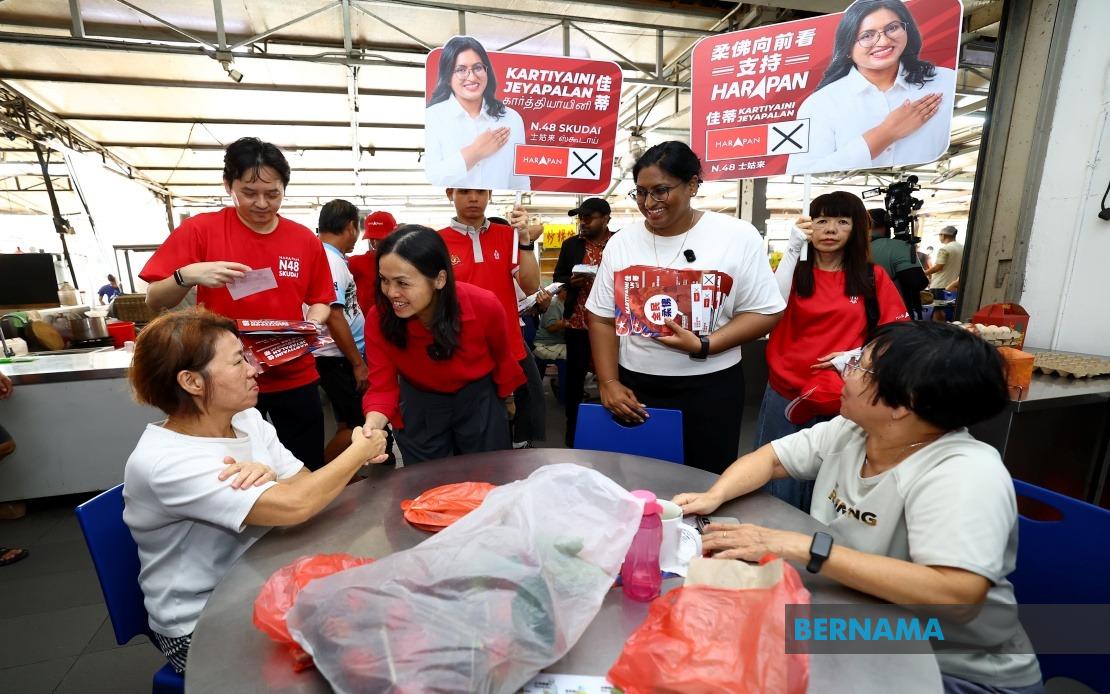
Johor DAP chairman Teo Nie Ching has made an impassioned appeal to voters in the lead-up to Saturday's state election, emphasizing the value of democratic participation and the responsibility citizens bear to make informed choices. Speaking in Johor Bahru on Monday, the Deputy Communications Minister highlighted the determination shown by Malaysians scattered across the globe who have gone to extraordinary lengths to ensure their votes count in this crucial poll, framing their efforts as a model for domestic voters.
The contrast between the sacrifices made by overseas voters and the convenience available to those within Malaysia underscores a deeper message about civic duty. Teo shared several compelling anecdotes that illustrated the depths of commitment from diaspora communities. A voter in Queensland, Australia, faced difficulties when courier services proved unreliable, prompting a desperate trip to the airport to find someone willing to hand-carry a postal ballot back to Malaysia. Similarly, a postgraduate student in China incurred more than RM1,000 in additional costs by changing flight plans specifically to return home and vote, while another Malaysian in the United States undertook significant effort to locate a fellow citizen willing to witness their postal voting process. These stories, Teo suggested, should shame those with the luxury of geographic proximity into taking their franchise seriously.
The appeal carries particular weight given Malaysia's historical struggles with voter turnout, especially among younger demographics and those residing in major economic hubs. Johor, as the nation's third-largest state by population and home to a substantial number of workers commuting to Singapore daily, faces unique challenges in mobilizing its electorate. Teo specifically called upon those based in Kuala Lumpur and Singapore to mirror the commitment displayed by their overseas counterparts, presenting the Saturday election not as an inconvenience but as a privilege earned through democratic struggle.
Beyond simple exhortations to vote, Teo broadened her message to address the contemporary threat posed by digital misinformation. With election campaigns increasingly fought on social media platforms where false narratives can spread with alarming velocity, the Deputy Communications Minister warned against the proliferation of deliberately misleading content designed to sway voter opinion. She emphasized that the final stages of any electoral contest tend to witness an intensification of such tactics, as motivated actors seek to exploit voter uncertainty or fatigue to undermine participation or skew results.
The solution Teo proposed centres on digital literacy and the cultivation of healthier information consumption habits. She advocated for a "verify before you share" cultural norm, arguing that individual responsibility in the information ecosystem proves essential when institutional guardrails prove insufficient. This approach acknowledges the reality that viral falsehoods often spread because ordinary citizens, acting in good faith but without critical scrutiny, amplify content through their networks. By encouraging voters to pause and question before sharing, Teo suggested that the collective behavior of the electorate could itself become a bulwark against manipulation.
Meanwhile, Kartiyaini Jeyapalan, the Pakatan Harapan candidate for the Skudai state seat, revealed that the opposition coalition's ground organization is conducting a targeted campaign directed at Johor voters employed in Singapore. The strategy extends beyond mere logistical encouragement to participate; instead, it attempts to reframe state elections as substantive contests with real implications for governance and policy outcomes. Kartiyaini argued persuasively that state governments, when responsive and proactive, possess considerable capacity to shape local development trajectories and implement measures addressing community needs, a message designed to counter any perception that state elections represent secondary contests worthy of lower engagement.
The intensity of Pakatan Harapan's outreach demonstrates sophisticated campaign infrastructure. Kartiyaini disclosed that PH leaders had stationed themselves at the Sultan Iskandar Building Customs, Immigration and Quarantine Complex from the early morning hours to engage cross-border workers heading to Singapore, positioning themselves at the geographic threshold where these voters physically leave Malaysia. The campaign further extended to boarding transport buses carrying workers destined for Singapore, transforming everyday commute journeys into opportunities for political engagement. According to Kartiyaini, such grassroots contact has generated notably positive responses, suggesting that voters regard direct personal appeals as more persuasive than conventional advertising.
The 16th Johor state election represents a significant electoral moment within Malaysia's broader political calendar, with 2.7 million registered voters eligible to participate and 56 state assembly seats up for contest. The scale of participation directly determines which coalition will govern Johor for the next term, making voter mobilization genuinely consequential rather than merely instrumental. The geographic spread of the Johor electorate, coupled with economic patterns of internal and cross-border labor migration, creates distinctive challenges for electoral participation that neither Kuala Lumpur-centric nor even Peninsular-focused political organizing can fully address.
For Malaysian readers particularly those navigating the tensions between work commitments in other states or nations and civic obligations at home, Teo's message carries resonance. The election illustrates broader trends reshaping electoral dynamics across Southeast Asia, where geographic mobility driven by economic opportunity increasingly decouples where citizens live from where they vote. The success with which Malaysia's political parties manage these logistical and motivational challenges in Johor offers a template for future contests, while the apparent commitment of overseas voters suggests reserves of democratic engagement that domestic campaigns might productively mobilize.
The emphasis on combating misinformation similarly reflects regional and global preoccupations with electoral integrity in increasingly digitalized environments. Southeast Asian democracies have witnessed escalating concerns about foreign interference, coordinated inauthentic behavior, and the weaponization of social media platforms to undermine public trust in elections. Teo's framing of individual digital literacy as a defensive measure acknowledges that protection against such threats cannot rely solely on regulatory action or platform moderation, but requires cultivation of informed, skeptical publics capable of recognizing and resisting manipulation.
As Johor voters prepare to cast their ballots on Saturday, the competing imperatives emphasized by DAP leadership center on both the practical mechanics of participation and the intellectual challenges of making sound choices amid information abundance and uncertainty. The detailed attention paid by both Teo and Kartiyaini to the specific circumstances and decision points faced by different voter segments suggests recognition that electoral outcomes depend not merely on abstract commitment to democracy but on concrete responses to tangible barriers and persuasive communications tailored to circumstances on the ground.

