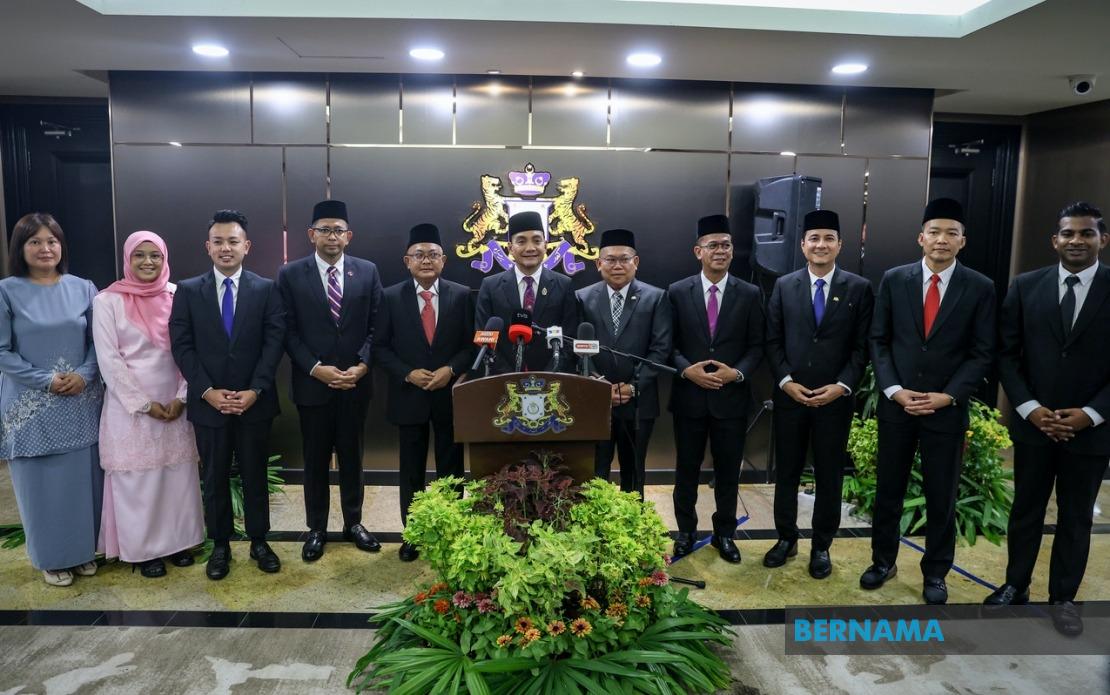
Johor has taken steps to reinforce its education governance structure by appointing a deputy chairman to the State Education and Information Committee, a decision framed as essential to strengthening administrative efficiency and expanding the committee's capacity to serve the public more effectively. The appointment of V. Rugendran as deputy chairman was announced during a ceremony at the Johor Talent Development Council office in Kota Iskandar, signalling the state government's commitment to distributing leadership responsibilities across multiple initiatives within the education portfolio.
Dr Muhammad Naqib Md Ghazali, who chairs the committee, explained that the dual-leadership structure will enable better delegation of tasks and foster a more collaborative working environment among the various agencies and departments under his purview. By introducing a deputy position, the committee aims to improve its capacity to reach and engage with diverse stakeholder groups, including educators, students, parents, and community leaders across Johor's multiple districts. This structural reform reflects broader administrative changes undertaken by the state government to enhance service delivery mechanisms.
The appointment comes as part of a wider reorganisation within Johor's state government administration. Menteri Besar Datuk Onn Hafiz Ghazi announced the appointment of 10 deputy chairmen across various state government committees, each tasked with reinforcing the administration's capacity to address public concerns more rapidly and implement development policies more equitably. The expansion of committee leadership aims to ensure that government initiatives reach all communities regardless of geographic location or socioeconomic status.
For Malaysia's education sector, such structural initiatives at the state level hold particular significance as education remains largely a state-coordinated function within the country's federal framework. Johor's decision to strengthen its education committee reflects the ongoing challenge facing state governments in managing increasingly complex education systems while maintaining responsiveness to local needs. The appointment of a deputy chairman effectively creates a secondary decision-making authority that can operate in parallel with the chairman's existing responsibilities, potentially accelerating responses to emerging issues within schools and educational institutions.
Dr Muhammad Naqib identified education as the core pillar of his committee's mandate, emphasising the department's role in developing a resilient generation capable of meeting future challenges. He highlighted particular focus areas including the Sekolah Rintis Bangsa Johor initiative and the expansion of the Johor Talent Development Council, both programmes designed to cultivate talent and prepare students for employment and civic participation. These initiatives underscore the state's strategy to position education not merely as academic instruction but as a comprehensive development platform.
The timing of this appointment coincides with Dr Muhammad Naqib's attendance at his first State Executive Council meeting under the current administration, suggesting that education governance reforms form part of a broader policy agenda recently set by the state leadership. The chairman's emphasis on serving all citizens regardless of racial or religious background reflects Malaysia's constitutional commitment to pluralism and non-discrimination, principles that carry particular weight in education policy where equity and access remain ongoing concerns.
For regional observers, Johor's structural reforms in education administration merit attention as the state has historically positioned itself as an education hub within Southeast Asia and Malaysia. The state hosts numerous educational institutions and has attracted students from neighbouring countries, making governance efficiency directly relevant to the state's competitive positioning in the regional education market. Enhanced administrative capacity within the education committee could translate into faster policy implementation and more responsive management of educational standards and facilities.
The involvement of department heads and agency directors in the committee's operations indicates that this initiative operates within an established bureaucratic framework rather than representing a departure from standard governance practices. Dr Muhammad Naqib expressed confidence that the collective experience of these officials would drive effective collaboration and produce measurable improvements for the state's education system. This reliance on existing expertise suggests a pragmatic approach to structural reform that builds upon established relationships and institutional knowledge.
The emphasis on teamwork and collaborative approaches reflects current trends in public administration across Malaysia and the region, where siloed decision-making has increasingly given way to integrated management structures. By introducing a deputy chairman position, the committee creates opportunities for more distributed leadership and potentially reduces bottlenecks that might arise from concentrating all authority in a single individual. This structure also provides capacity for succession planning and knowledge transfer within the committee's leadership.
For students, educators, and parents within Johor, the practical implications of this administrative change will likely emerge gradually as the new committee structure settles into routine operations. More efficient task distribution could result in faster responses to school infrastructure needs, improved coordination between educational institutions, or more streamlined communication channels for addressing complaints and suggestions. However, the true measure of success will depend on how effectively this structural change translates into improved educational outcomes and enhanced service quality at ground level.
The broader context of state-level education governance in Malaysia involves balancing multiple pressures including curriculum standardisation requirements from the federal Ministry of Education, pressure to maintain educational excellence in a competitive environment, and the need to ensure equitable access across diverse communities. Johor's initiative to strengthen its education committee through deputisation represents an attempt to create more administrative bandwidth for addressing these multifaceted challenges. Whether similar reforms will be adopted by other states may depend on the visible outcomes of this Johor experiment.

