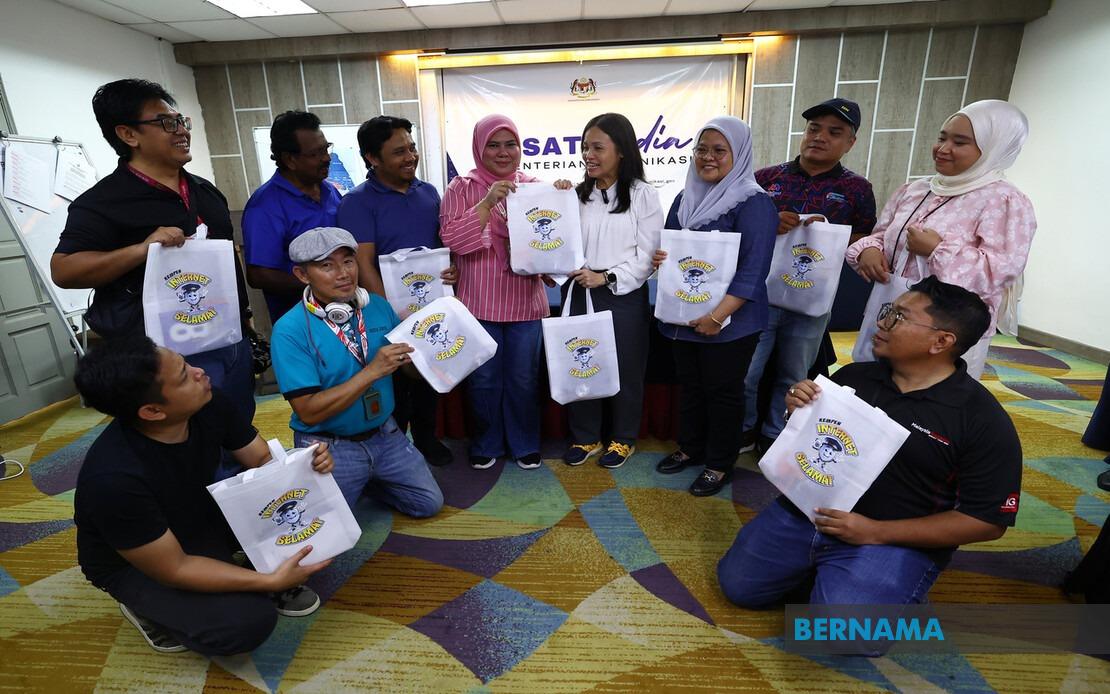
The Malaysian government has rolled out a comprehensive media infrastructure across Johor in preparation for the 16th state election, with Deputy Communications Minister Teo Nie Ching announcing the deployment of two principal media centres and a network of 100 National Information Dissemination Centres (NADI) to support journalists covering the election campaign. The initiative reflects the government's commitment to enabling seamless news operations during what is expected to be a closely watched electoral contest that will shape Johor's political direction.
The two anchor facilities—one stationed at Hotel Seri Malaysia in Johor Bahru and the other at NADI Kampung Sawah Awok in Muar—represent the government's strategic positioning of media resources across the state's major centres. These hubs will operate continuously from 9 am to 9 pm beginning June 26, extending through polling day on July 11, ensuring that journalists have access to facilities throughout the campaign period. This around-the-clock operational window is designed to accommodate the varied schedules of media organisations operating across print, broadcast, and digital platforms.
Teo emphasised that infrastructure quality would not be compromised, with the Communications Ministry guaranteeing internet connectivity speeds of at least 100 Mbps at all centres. This threshold represents a meaningful commitment to operational efficiency, as modern news organisations increasingly depend on rapid transmission of multimedia content—particularly video and high-resolution photography—to meet audience expectations across multiple platforms. The emphasis on speed reflects the reality that contemporary election coverage demands instantaneous content delivery rather than the delayed reporting of previous eras.
Beyond internet infrastructure, the designated media centres have been furnished with essential equipment to support independent journalistic operations. Laptops, desktop computers, photocopiers, and printers are available for media personnel, effectively transforming the hubs into functional newsrooms where journalists can file stories, edit materials, and produce graphics without requiring return trips to their home offices. This arrangement particularly benefits freelance correspondents and smaller media outlets that may lack the resources to maintain independent infrastructure throughout the campaign.
Recognising that election coverage extends beyond the media centres themselves, the Malaysian Communications and Multimedia Commission (MCMC) will actively monitor telecommunications providers throughout the campaign period to maintain optimal internet performance. Rather than relying on passive monitoring, MCMC will actively engage with major telecommunications operators to identify and resolve connectivity bottlenecks that could impede news operations in remote areas or during peak usage periods. This proactive approach acknowledges that election coverage often shifts between multiple locations as campaigns develop.
Teo introduced the MCMC Nexus application as a novel tool for real-time monitoring of internet signal strength, inviting the public to participate in a crowdsourced assessment of network performance. The application operates on a technical data-sharing model where location coordinates and signal metrics are reported to telecommunications companies for infrastructure improvement, while personal identification information remains protected. This approach transforms individual users into informal monitors of service quality, creating pressure on providers to maintain consistent performance across all areas rather than focusing solely on high-density commercial zones.
The government's messaging framework for the election campaign explicitly flagged the boundaries of acceptable political discourse. Teo reminded political parties and their supporters that campaigns should maintain healthy standards while avoiding sensitive topics encompassing matters of race, religion, and royalty—a familiar articulation of Malaysia's established red lines in political speech. The invocation of these boundaries reflects longstanding concerns about how electoral competition can sometimes escalate into inflammatory rhetoric that threatens social cohesion, particularly in a multiethnic society where shared political values must coexist with distinct communal identities.
Electoral authorities and law enforcement will collaborate to monitor social media platforms for content deemed to contain extreme provocation, with the power to remove such material. This surveillance architecture acknowledges that contemporary elections are fought on digital battlegrounds where misinformation and inflammatory rhetoric can spread rapidly beyond traditional media gatekeeping. The partnership between MCMC and police establishes clear enforcement mechanisms while raising ongoing questions about the balance between protecting social harmony and preserving space for robust political debate.
Recognising the prevalence of misinformation during election periods, Teo commended the Malaysian Media Council's establishment of a fact-checking platform and encouraged public participation in verification practices before sharing information. This emphasis on collective responsibility for information integrity shifts some burden away from authorities and toward individual media consumers, promoting a culture where truth-seeking becomes a civic habit rather than relying exclusively on top-down official corrections. The strategy reflects international best practices in combating election-related disinformation by building institutional and public capacity for verification.
The early voting period scheduled for July 7 precedes the main polling date of July 11, a structure that allows election authorities to manage voter flows and accommodates those unable to vote on the primary election day. For Southeast Asian observers, Johor's electoral infrastructure demonstrates how Malaysian electoral administration continues evolving to incorporate digital elements while maintaining traditional oversight mechanisms. The scale of media support—100 NADI centres across a single state—underscores the resources Malaysian governments commit to facilitating news coverage, even as questions persist about whether infrastructure investment translates into substantively different campaign coverage quality.
The comprehensive nature of these arrangements reveals how modern elections increasingly depend on coordinated infrastructure planning across multiple agencies and private sector partners. For Malaysian media practitioners, the accessibility of these facilities, combined with guaranteed connectivity, should enable more dispersed election coverage beyond the traditional concentration in state capital offices. The deployment across Johor also sets a potential template for future state elections and potentially federal elections, establishing operational standards for media engagement that may influence how similar infrastructure is planned elsewhere in Malaysia.

