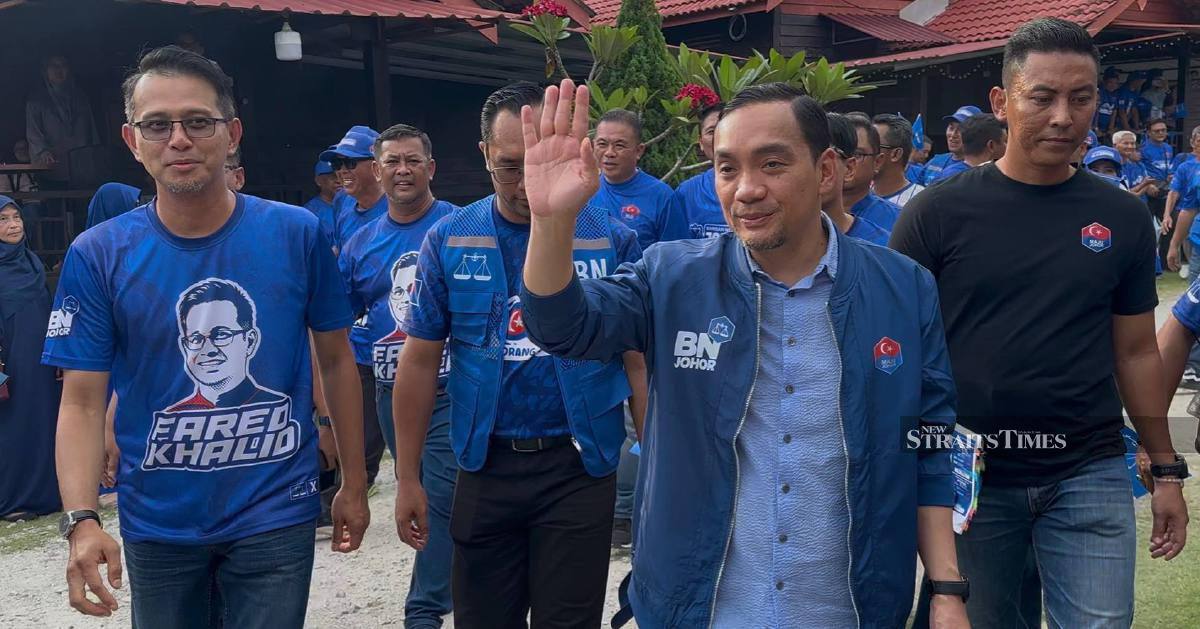
The caretaker Menteri Besar of Johor, Datuk Onn Hafiz Ghazi, has moved to quash swirling speculation about hidden agendas behind the imminent state election, emphasizing that the poll's singular purpose is to grant Johorians fresh democratic choice in electing their next government. Speaking in the Batu Pahat district, Onn Hafiz framed the electoral exercise as a straightforward constitutional process designed to restore the state's executive authority through the ballot box.
The timing and announcement of state elections in Malaysia frequently trigger waves of political commentary and conjecture about underlying strategic calculations. In Johor's case, the caretaker leader's explicit statement reflects concern that opposition narratives have attempted to portray the dissolution of the state assembly and subsequent ballot as serving particular factional interests rather than serving democratic principle. By grounding his remarks in the foundational premise of popular sovereignty, Onn Hafiz sought to reorient public discourse toward the conventional electoral justification.
For Malaysian readers familiar with state politics, such clarifications serve dual purposes. They reassert the government's commitment to constitutional norms while simultaneously signaling that the election represents a genuine democratic opportunity rather than a calculated maneuver benefiting any single figure or faction. The specificity of Onn Hafiz's public statement suggests awareness that certain segments of the electorate harbor skepticism about motivations underlying the poll's timing.
Johor's political landscape has remained notably volatile across recent years, with shifting alliances and leadership transitions defining the state's trajectory. The current context places particular emphasis on whether the election represents a renewal of popular confidence in the existing administration or catalyzes meaningful realignment among competing political forces. Onn Hafiz's positioning effectively claims the electoral exercise belongs to voters themselves, not to any narrow set of political actors seeking to consolidate advantage.
The emphasis on democratic mandate carries significance beyond Johor's boundaries. Southeast Asia increasingly observes Malaysian electoral processes as barometers of institutional health and democratic robustness. When state leaders invoke popular sovereignty and constitutional regularity as their guiding framework, they implicitly reinforce regional norms regarding democratic governance and peaceful power transitions. The caretaker Menteri Besar's rhetoric thus operates on multiple registers—both within Johor's immediate political context and within the broader regional conversation about institutional legitimacy.
From a voter perspective, Onn Hafiz's clarification addresses practical concerns about whether an election serves their genuine interests or primarily advances elite political calculations. The statement implicitly acknowledges that Malaysian citizens increasingly demand transparency regarding the authentic purposes of electoral exercises. By presenting the Johor poll as unambiguously centered on popular choice, the caretaker leader invokes a principle that transcends partisan affiliation and appeals to fundamental democratic values.
The reference to returning mandate to the people also reflects established conventions within Malaysian electoral politics, where leaders routinely invoke popular consent as their ultimate source of authority. Onn Hafiz's formulation aligns with traditional rhetoric surrounding state and federal elections, emphasizing that governing authority ultimately derives from voters rather than from institutional arrangements or elite consensus. This framing resonates with constitutional democracy principles, even while operating within Malaysia's specific Westminster-influenced framework.
Anticipation surrounding the Johor election extends beyond the state itself, given the peninsula's largest state's outsized political significance. The outcome will influence perceptions of momentum for competing federal coalitions and potentially reshape calculations about viability of various political alliances. Against this backdrop, Onn Hafiz's insistence that the election represents purely a democratic process serves to depoliticize the contest in rhetorical terms, even while acknowledging that the actual electoral competition inevitably carries substantial political stakes.
For observers tracking institutional developments across Malaysia, such statements by caretaker leaders illuminate how political figures navigate tension between technical constitutional requirements and broader democratic legitimacy. By emphasizing that elections exist fundamentally to satisfy popular sovereignty rather than to serve partisan advantage, Onn Hafiz positions himself within a recognizable tradition of Malaysian democratic discourse. Whether the actual electoral outcome vindicates his framing remains dependent on voters' decisions at the ballot box.
The broader context of state elections within Malaysia's federal structure adds another dimension to the Johor election's significance. State governments occupy crucial constitutional space, wielding authority over matters affecting daily lives of millions. When leaders characterize state elections as opportunities for citizens to determine their own governance, they reinforce understanding that such contests involve genuine democratic stakes rather than merely formal procedures. Onn Hafiz's emphasis thus connects technical electoral mechanics to substantive questions about representation and accountability.
Moving forward, the extent to which voters embrace, contest, or complicate the caretaker Menteri Besar's framing will define how the Johor election functions within Malaysia's broader political narrative. His statement establishes the official position that the ballot serves democratic renewal rather than factional advancement, setting terms for subsequent campaign discourse and media coverage. The election itself will ultimately adjudicate between competing visions of what the exercise represents and whom it truly serves.

