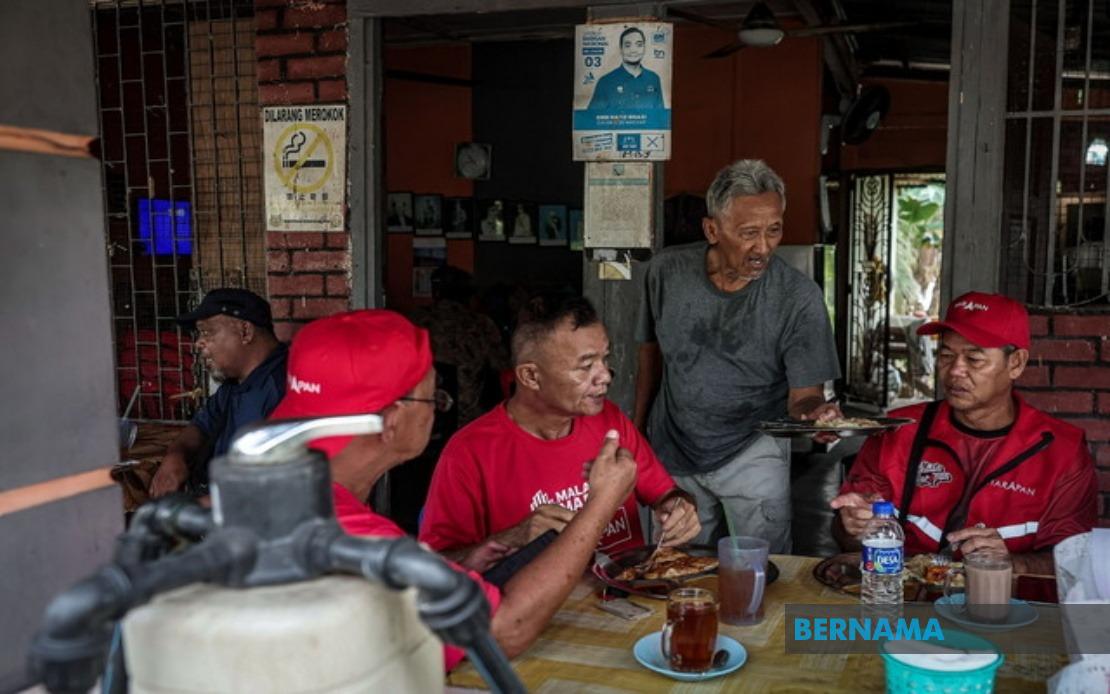
The ongoing Johor state election has delivered an unexpected economic lifeline to petty traders and hawkers in outlying areas, with vendors reporting substantial increases in daily takings as campaign activities intensify across the state. Food stall operators in Felda Layang-Layang and Simpang Renggam have emerged as the primary beneficiaries, experiencing customer surges that have transformed their typically modest daily earnings into notably higher figures. This electoral phenomenon illustrates how democratic processes can generate localised economic activity that extends well beyond political participation itself, creating tangible opportunities for the informal trading sector that often operates at the margins of the formal economy.
In Felda Layang-Layang, 70-year-old Noorma Zafmeeden and her husband Bahari Madiran, aged 76, have operated their roti canai and nasi lemak warung since settling in the Felda community in 1987. The couple's experience during this election period starkly contrasts with their ordinary trading days, when morning sales typically amount to less than RM400. Since the campaign season commenced, their revenue has climbed substantially, validating what many long-established traders in rural communities have long recognised: electoral cycles create predictable waves of economic opportunity. For Noorma, the elevated activity during polling seasons represents a welcome reprieve from the lean periods that characterise much of the year, allowing the couple to maximise their labour during windows when demand substantially outpaces supply.
Bahari's perspective on the economic windfall encompasses broader social dimensions beyond mere financial gain. He describes their warung as having evolved into a gathering place that transcends typical commercial transactions, serving instead as a spontaneous meeting point where customers from different ethnic and religious backgrounds interact harmoniously. This characterisation reflects the important role that food stalls and informal trading establishments play in fostering community cohesion, particularly in smaller towns and rural settlements. The influx of campaign workers and political supporters from various regions creates unplanned opportunities for cross-cultural exchange, enriching the social fabric of communities that might otherwise have limited exposure to visitors from different parts of the country.
Elsewhere in the Johor campaign landscape, Ahmad Ridzuan Awang's nasi campur stall in Simpang Renggam exemplifies the more dramatic end of the sales spectrum. The 45-year-old vendor has witnessed his business effectively double during the election period, with inventory that ordinarily remains on display throughout the day now completely depleted by early afternoon. Ahmad Ridzuan attributes this transformation directly to bulk orders from various political parties and their campaign machinery, which require catering for supporters and workers involved in grassroots activities. His experience demonstrates that the electoral boost extends beyond organic customer footfall, incorporating organised demand generated by campaign operations themselves.
Ahmad Ridzuan's observations regarding what he describes as "political tourists" highlight an important secondary effect of election campaigns: the economic multiplier impact across interconnected local businesses. When his food stall experiences heightened demand, the benefits cascade through local supply chains, as he requires increased quantities of ingredients from neighbourhood suppliers. This creates a domino effect that fortifies other micro-enterprises—produce vendors, transport operators, and ingredient suppliers—who collectively benefit from sustained elevated activity within their economic ecosystem. For small towns like Simpang Renggam, such periodic surges represent crucial opportunities to consolidate business relationships and maximise the productivity of existing assets and labour.
The timing of the Johor state election, with 172 candidates competing for 56 seats and polling scheduled for July 11, reflects the state's ongoing political significance within Malaysia's federal structure. Early voting has been set for July 7, providing an extended campaign window that intensifies foot traffic in commercial areas frequented by voters, political workers, and party machinery. This extended engagement period lengthens the window during which traders can capitalise on elevated economic activity, compared to shorter polling schedules that compress campaign activities into briefer timeframes. Understanding these temporal dynamics helps explain why stall operators can report such dramatic increases in earnings during specific electoral cycles.
The phenomenon of election-driven commercial activity carries implications for how policymakers conceptualise the relationship between democratic processes and economic development in smaller communities. Rural and semi-rural areas, where informal traders constitute a significant portion of the economic base, often experience limited capital circulation during non-electoral periods. Election campaigns inadvertently function as temporary economic stimulus mechanisms, injecting spending power into localities that might otherwise struggle with consistent customer demand. While such cyclical boosts cannot substitute for sustained economic development policies, they underscore the tangible ways in which democratic participation generates measurable economic consequences for vulnerable populations.
For vendors operating within Malaysia's informal economy, predictability in business cycles matters considerably. Traders like Noorma, Bahari, and Ahmad Ridzuan have learned to recognise electoral periods as anticipated windows of opportunity, allowing them to prepare inventory strategically and optimise their operations during these predictable surges. This knowledge becomes embedded in their commercial decision-making, influencing production planning and investment in the months preceding election campaigns. The regularised nature of such opportunities—occurring at intervals determined by electoral cycles—provides a degree of commercial certainty that traders otherwise lack when relying purely on day-to-day customer demand in modest local markets.
The broader significance of election-driven economic activity for Malaysian traders extends beyond immediate financial considerations. Such cycles illuminate broader structural inequalities within the informal economy, where the absence of stable customer bases forces vendors to depend upon seasonal or event-driven spikes in demand. The experiences recounted by Johor traders serve as a microcosm of wider challenges confronting Malaysia's self-employed and informal sector workers, who collectively represent a significant proportion of the nation's labour force. Their vulnerability to demand fluctuations, coupled with their essential role in community commerce and social cohesion, suggests that deliberate economic strategies supporting informal traders outside electoral cycles warrant serious policy consideration.
As the Johor election campaign intensifies toward its July 11 polling date, vendors across the state can anticipate continued elevated business conditions for the duration of active campaigning. The visible transformation occurring in small commercial establishments throughout the state reflects how democratic processes intertwine with economic realities at the grassroots level. For traders like those in Felda Layang-Layang and Simpang Renggam, such electoral periods represent rare opportunities to accumulate additional capital, replenish inventory, and strengthen their commercial positioning. Understanding and documenting these impacts contributes to broader conversations about recognising and valuing the contributions made by informal economy participants to Malaysia's social and economic fabric, a recognition that extends considerably beyond election cycles themselves.

