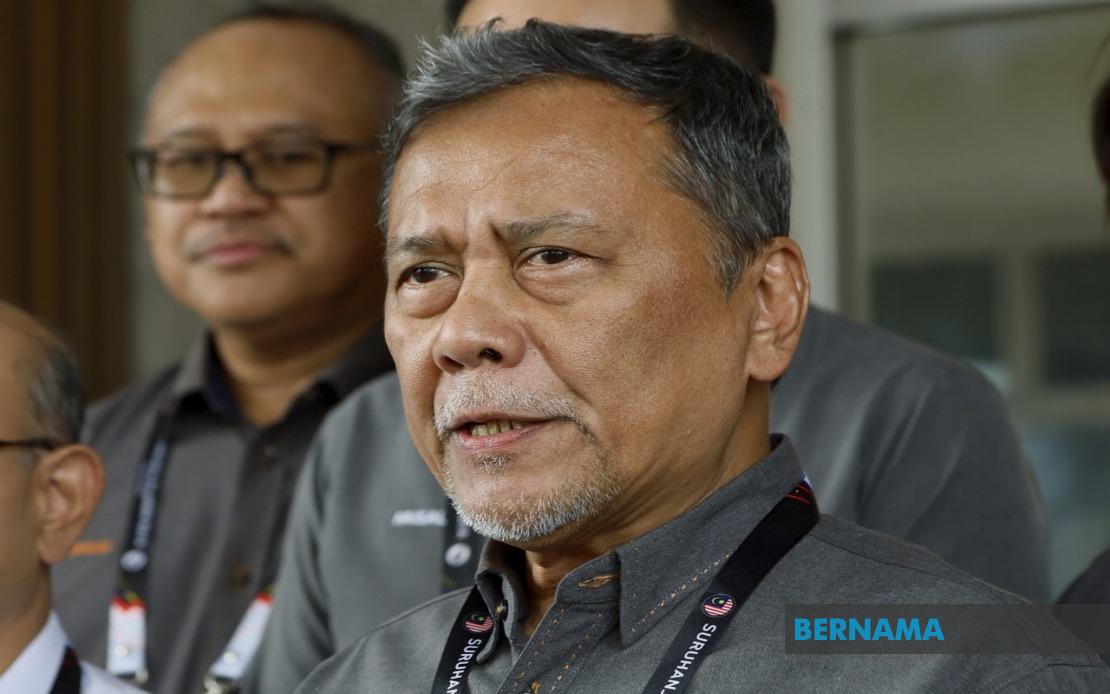
As Malaysia prepares for Johor's state election this Saturday, the Election Commission has logged a substantial number of alleged electoral violations during the campaign period. EC Chairman Datuk Seri Ramlan Harun disclosed that 588 complaints covering diverse election offences had been received, underscoring the regulatory challenges that emerge during polling campaigns across the country. The volume of complaints reflects the commission's role in maintaining electoral integrity and public confidence in democratic processes, a responsibility that carries particular weight in a crucial state contest.
The scale of reported violations has triggered formal action through conventional legal channels. According to Ramlan's statement during a press conference at Dewan Mahkota in Kluang, police have initiated investigations into 44 cases referred from the complaint pool. Beyond criminal channels, the Election Commission has escalated three matters to the Malaysian Anti-Corruption Commission, suggesting that concerns of potential graft or improper financial dealings have emerged during the campaign. This multi-agency approach demonstrates the institutional framework designed to address different categories of electoral misconduct, from procedural breaches to corruption-related offences.
Prior to making these disclosure, Ramlan had conducted field observations of the electoral process alongside Army Chief General Tan Sri Azhan Md Othman, visiting multiple early voting locations. The two officials monitored proceedings at facilities including the Kluang District Police Headquarters and Kem Mahkota, where security and armed forces personnel exercised their franchise ahead of the main poll. Their direct oversight reflects the commission's commitment to transparent administration and signals close coordination between the electoral body and security establishments during election periods.
The early voting exercise itself proceeded with substantial participation from the uniformed services. Across designated centres, 20,607 individuals cast ballots in advance, comprising two distinct constituencies: 8,544 personnel from the Malaysian Armed Forces and their spouses, alongside 12,063 police officers and their family members. This advance voting mechanism accommodates the scheduling demands faced by security personnel who may be deployed during the main election day, ensuring their democratic participation despite operational commitments.
The 16th Johor State Election has drawn considerable competition among aspirants vying for representation. A total of 172 candidates are contesting across 56 state assembly seats, indicating an average of more than three contestants per seat in most constituencies. This competitive density can create logistical and supervisory challenges for the Election Commission, as heightened candidate activity and campaign intensity sometimes correlate with regulatory violations. The diversity of candidates and campaigns underscores the significance of robust complaint mechanisms and enforcement protocols.
Johor's electoral contest holds broader implications for Malaysian politics. As one of the nation's economically significant states with substantial population, electoral outcomes in Johor traditionally influence national political dynamics and regional power balances. The polling scheduled for this Saturday will determine the composition of the state assembly and the direction of state governance for the coming term. For Malaysian citizens monitoring electoral health and democratic participation, the conduct of this election serves as a barometer for institutional capacity and commitment to fair processes.
The complaint documentation process itself reflects evolving awareness among voters and party structures regarding electoral regulations. The 588 complaints filed suggest that either violations have increased compared to previous contests, awareness of reporting mechanisms has improved, or both factors are contributing. This heightened reporting activity, while indicating challenges, also demonstrates that election oversight mechanisms are functioning and accessible to the public. Whether complaints originate from voters, election observers, or political parties, the formalized receipt and processing of allegations represents a necessary safeguard.
The Election Commission's disclosure of enforcement statistics serves important transparency functions. By publishing complaint volumes and initial actions taken, the body provides public assurance that alleged violations are not being ignored or minimized. Simultaneously, the disclosure creates accountability pressure, establishing a record against which future performance can be measured. In Southeast Asia's electoral context, where confidence in institutional independence sometimes wavers, such openness carries particular value in legitimizing democratic processes.
The involvement of the Malaysian Anti-Corruption Commission in three cases reflects the commission's expanded mandate in contemporary electoral oversight. Corruption allegations connected to campaigns—whether involving improper funding, vote-buying, or other financial irregularities—fall within the MACC's purview and increasingly receive formal investigation. This institutional collaboration acknowledges that modern election violations often span multiple legal categories, requiring coordinated response from specialized agencies.
Looking toward Saturday's polling day, the Election Commission faces the dual responsibility of processing ongoing complaints while administering the main electoral event. Election officials must maintain operational focus on conducting the poll fairly while managing the administrative demands created by documented violations. The 44 police investigations proceeding in parallel represent a delayed enforcement burden; resolution of these cases will continue weeks or months after voting concludes. For the Malaysian electoral system, managing this timeline demands institutional capacity that the commission continues to develop and refine across successive elections.

