As voting approaches in the Johor state election, Malaysia's Election Commission has clarified the division of responsibility for managing campaign materials across physical and digital platforms, signalling a two-pronged enforcement approach to maintain electoral integrity. The distinction came as the country prepares for polls that will see 2.7 million registered voters elect 56 state assemblymen across 16 constituencies in what represents a significant test of electoral governance in one of Malaysia's most politically consequential states.
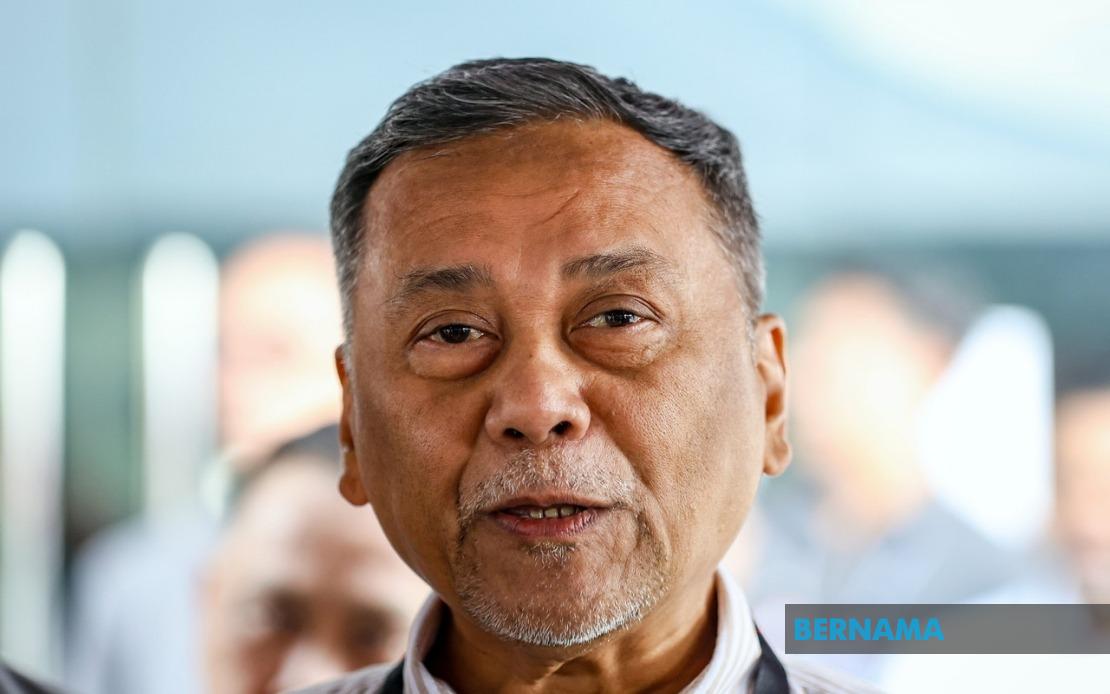
Election Commission Chairman Datuk Seri Ramlan Harun emphasised during an inspection of ballot preparation facilities in Pontian that members of the public should channel complaints about online campaign content directly to the Malaysian Communications and Multimedia Commission rather than to the Election Commission itself. This delegation of authority reflects the existing regulatory framework, where the MCMC holds statutory responsibility for overseeing digital content distribution and enforcement of rules governing telecommunications and multimedia platforms. The clarification became necessary as campaign-related material—both authorised and unauthorised—circulates across social media, messaging applications, and websites at unprecedented volumes during modern Malaysian elections.
The Election Commission's enforcement machinery has already been mobilised to address physical campaign materials deemed to violate electoral rules. Ramlan noted that his commission's dedicated enforcement team has responded to complaints by physically removing posters and banners from various locations throughout Johor. This hands-on approach underscores the Election Commission's capacity and willingness to actively patrol the electoral landscape, moving beyond mere reactive complaint-handling to proactive identification and removal of non-compliant materials. Such field operations require coordination across multiple constituencies and demand timing that aligns with the election timetable.
However, the digital sphere presents distinct challenges for traditional electoral oversight mechanisms. Campaign materials circulating through Facebook, WhatsApp, TikTok, and other online platforms operate across jurisdictional boundaries and multiply at speeds that physical removal operations cannot match. The Election Commission's decision to direct online complaints to the MCMC reflects a pragmatic recognition that the Communications Commission possesses the technical infrastructure, digital expertise, and legal standing to identify, track, and remove non-compliant content from servers and platforms more efficiently than a traditional electoral body. This division of labour represents an acknowledgement that regulating modern campaigns requires specialised technical capabilities.
The controversy gained prominence after UMNO Supreme Council member Datuk Seri Shahaniza Shamsuddin raised concerns about campaign materials featuring the likenesses of former Prime Minister Datuk Seri Najib Razak and his wife, Datin Seri Rosmah Mansor. Shahaniza's intervention highlighted a persistent question in Malaysian electoral politics: whether utilising images of non-candidates to mobilise voters constitutes a legitimate campaign tactic or represents an attempt to circumvent candidate-centred campaigning rules. By deploying recognisable national figures, campaigns may be seeking to tap into existing voter associations and emotional connections without directly linking those figures to specific contests or policy platforms. Such tactics blur the boundary between grassroots enthusiasm and coordinated party strategy.
The Johor election itself carries implications extending well beyond state-level governance. As Malaysia's second-most populous state and a consistent bellwether of national political sentiment, Johor's electoral outcome frequently signals shifting voter preferences across the broader Malaysian landscape. The state has historically served as a battleground where competing coalitions test messaging strategies, organisational capacities, and voter mobilisation techniques. Results from Johor often reverberate through calculations about federal politics and coalition sustainability, making the integrity and fairness of the electoral process particularly consequential for national political dynamics.
The timing of the Election Commission's clarification—announced just before the polling date—suggests attempts to preempt last-minute campaign material surges that often characterise the final days before elections. Both online and offline platforms typically experience accelerated activity as campaigns attempt maximum reach before voting begins. By explicitly reminding the public of proper complaint channels, the Election Commission sought to establish clear procedures that would enable swift action against problematic materials. The coordination between the Election Commission and MCMC represents an effort to create a functional system for rapid response, even if some observers question whether existing mechanisms can effectively police the volume and velocity of digital content circulation.
The regulatory framework governing electoral campaigns in Malaysia reflects evolving challenges posed by technological change. Traditional rules developed when campaigns relied primarily on rallies, printed materials, and television advertising now contend with viral social media content, targeted digital advertising, and decentralised messaging that often lacks clear attribution. Enforcement mechanisms designed for centralised campaign operations struggle when grassroots actors—whether genuine volunteers or coordinated party operatives—distribute content autonomously across networks. The Election Commission and MCMC's approach prioritises complaint-based enforcement, which depends on public awareness and willingness to report violations.
For Malaysian voters and political observers, the clarification highlights the complexity of modern electoral administration. Engaging meaningfully in elections requires understanding not only how to cast votes but also how to identify and report campaign materials that violate electoral rules—and where to report them. The public faces a landscape fragmented across regulatory agencies, each controlling different domains. This distribution of responsibility, while technically logical, may create confusion among citizens attempting to participate responsibly in electoral governance. Clear communication from electoral authorities about enforcement mechanisms becomes essential for maintaining public confidence in the system's fairness and effectiveness.
The Johor election occurs within Malaysia's broader context of electoral reform discussions and debates about campaign finance transparency, the role of digital platforms in elections, and the adequacy of existing regulatory frameworks. As political competition increasingly manifests through online channels, the regulatory architecture must evolve to match the terrain where campaigns actually unfold. The coordination between the Election Commission and MCMC in this election may offer preliminary insights into how Malaysian authorities can manage distributed electoral governance across multiple agencies and platforms. Whether such coordination proves sufficient to address emerging challenges will likely influence discussions about electoral regulation in future Malaysian elections.

