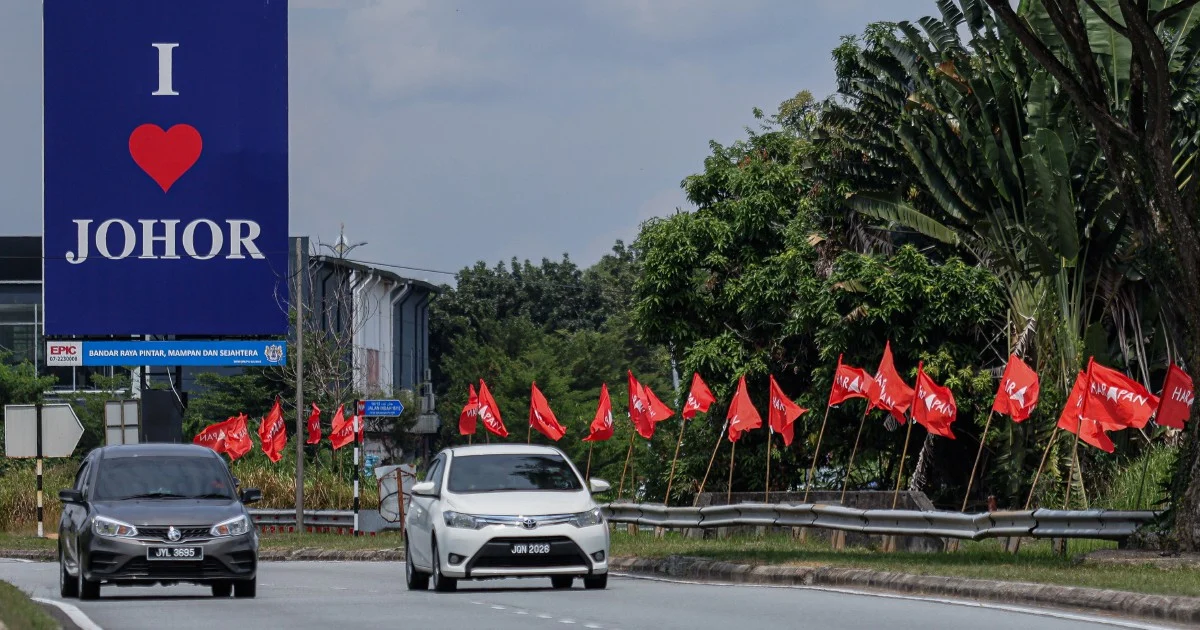
The Johor state election should be evaluated as a comprehensive referendum on which political coalition possesses the most capable leadership team and the most compelling vision for economic and social progress, according to PKR youth leadership. This assertion pushes back against the tendency of political discourse to narrow the election into a personality-driven contest centered solely on who will occupy the menteri besar office, instead urging voters to consider the complete package of governance and development strategy that each coalition brings to the table.
The framing represents a deliberate attempt to shift voter focus toward substantive policy matters and institutional capability. By emphasizing team competence and strategic planning over individual candidates, PKR youth figures are essentially arguing that governance at the state level requires more than a prominent figurehead. This perspective carries particular weight in Johor, Malaysia's largest state by development potential, where voters might reasonably expect comprehensive economic roadmaps and proven administrative frameworks rather than relying primarily on charismatic leadership.
Historically, Malaysian state elections have been conducted through a lens heavily influenced by menteri besar personalities and rivalries. The PKR position reflects a growing recognition that such narrow focus may obscure the real machinery of governance—the capabilities of state legislative members, the depth of policy expertise available to each coalition, and the coherence of economic development plans. In Johor specifically, where manufacturing, port operations, and tourism form economic cornerstones, strategic clarity on how to strengthen these sectors becomes crucial for voter decision-making.
The coalition's emphasis on team strength suggests internal confidence in the breadth of talent available within its ranks. Rather than banking everything on a single prominent figure, this approach distributes responsibility and demonstrates that viable governance does not rest on one individual's shoulders. For Malaysian voters increasingly focused on competent administration following years of institutional challenges, this messaging may resonate with those seeking stability and professional management over political theater.
Johor's economic position as Malaysia's industrial and export-oriented backbone adds weight to arguments favoring substantive policy debate. The state's development trajectory influences job creation, foreign investment confidence, and regional competitiveness within the ASEAN context. Voters evaluating which coalition can articulate clearer strategies for industrial evolution, workforce development, and infrastructure enhancement have genuine reason to look beyond menteri besar profiles toward the complete governance frameworks each coalition proposes.
This reframing also reflects changing political dynamics within Peninsular Malaysia, where coalition stability and team coordination have proven decisive in past state administrations. The Johor statement implicitly acknowledges that electoral mandates function more effectively when voters understand not just who leads but how decisions will be made, which ministries will prioritize which development areas, and what institutional mechanisms exist to execute plans. Such granular understanding typically emerges through discussing broader coalition structures rather than focusing exclusively on top leadership figures.
The PKR youth position carries particular significance given Johor's political history and economic importance. As the state that traditionally receives substantial federal allocation and holds considerable influence within larger political coalitions, Johor elections function as barometers of coalition health nationwide. A voter base that chooses based on team capability and policy substance rather than candidate personality offers different signals to national party leadership than one motivated primarily by individual leaders' popularity.
Regionally, this approach offers lessons for Southeast Asian democracies grappling with balancing personality-driven and institution-focused politics. Malaysia's development as a political system increasingly depends on whether citizens can sustain focus on administrative competence and policy frameworks amid cultural traditions of charismatic leadership. The Johor narrative suggests at least segments of the electorate are willing to engage at this more sophisticated level if offered the opportunity through deliberate campaign framing.
For Malaysian voters specifically, the PKR youth argument invites consideration of what governance actually requires in 2024. State administrations manage significant budgets, coordinate between federal and local governments, and shape regulatory environments affecting daily economic participation. These functions demand competent teams, coherent planning processes, and proven implementation capabilities—qualities that matter regardless of how popular the menteri besar candidate might be personally. The assertion that elections should test these qualities rather than merely decide between personalities represents a maturation of electoral discourse that benefits governance quality across Malaysia's federal system.
However, the practical effectiveness of this message depends on whether all participating coalitions embrace policy-centered debate rather than defaulting to personality-focused campaigning. If opponents continue emphasizing menteri besar candidates while PKR youth leaders focus on broader governance competence, voter attention may still concentrate on individual figures regardless of attempted reframing. The election outcome will reveal whether this messaging strategy successfully reorients Johor political conversation toward institutional and policy factors or whether traditional candidate-focused narratives remain dominant in voter decision-making.

