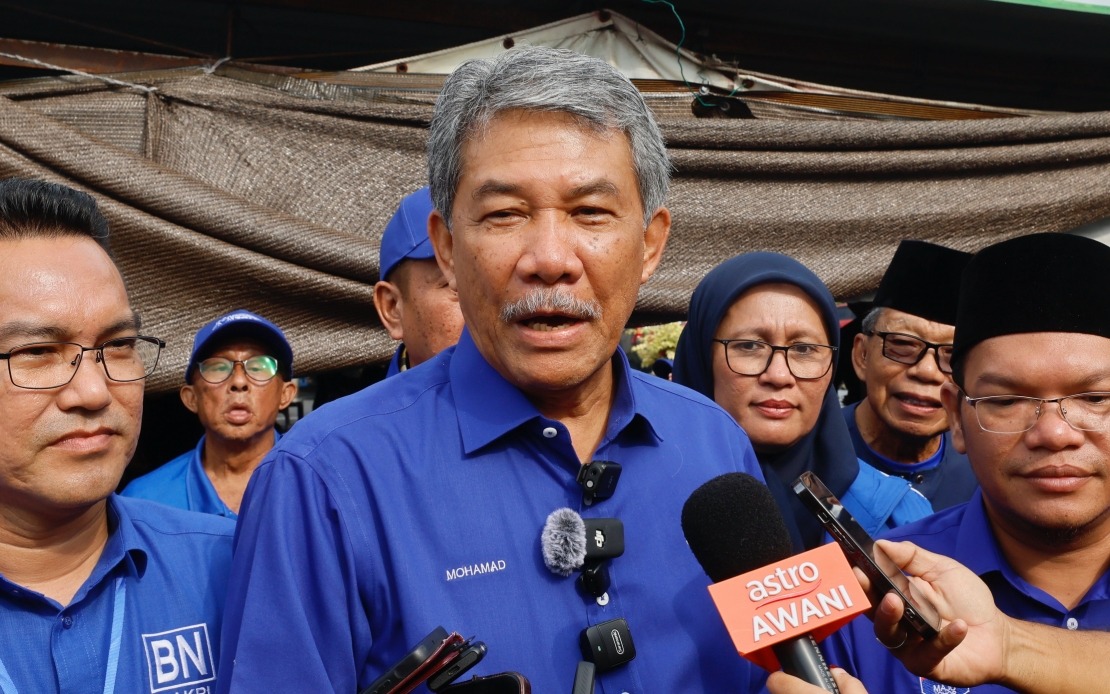
The Johor state election campaign must remain grounded in policy substance rather than personal invective, according to UMNO deputy president Datuk Seri Mohamad Hasan, who voiced concern that inflammatory tactics could jeopardise the stability of Malaysia's federal governance. Speaking during a voter engagement event at Tiram state constituency on July 6, Mohamad stressed that while political parties retain complete freedom to articulate their respective visions and policy platforms to the electorate, the boundaries of responsible campaigning must be carefully maintained to protect the collaborative framework of the Unity Government at the national level.
The distinction Mohamad drew reflects a critical tension within Malaysia's contemporary political landscape: the need to balance vigorous state-level competition with the imperative of maintaining functional relationships between coalition partners at the federal centre. His intervention suggests an underlying anxiety within UMNO that the Johor contest—Malaysia's first state election since the establishment of the Unity Government in 2022—could become a flashpoint that destabilises the delicate equilibrium underpinning current national governance. The Johor State Legislative Assembly election is scheduled for July 11, with early voting commencing on July 7, and 172 candidates are vying for 56 seats across the state.
According to Mohamad, there exists a meaningful demarcation between acceptable campaign rhetoric and language that transgresses professional boundaries. He characterised the former as legitimate territory for political competition, noting that light-hearted jousting between parties and personalities is a natural component of electoral politics. However, he drew a firm line at commentary that crosses into personal territory, potentially poisoning relationships that must remain functional regardless of electoral outcomes. This calibrated approach reflects sophisticated political thinking: recognising that parties must demonstrate their differences to voters while simultaneously preserving the institutional relationships required for Malaysia's complex federal system to function effectively.
Mohamad, who simultaneously holds the position of Foreign Minister, also moved to dispel a narrative that has circulated within certain political quarters—namely, that the Johor election might be instrumentalised to create conditions for the release of former Prime Minister Datuk Seri Najib Tun Razak. By this logic, a strengthened UMNO position in Johor could theoretically enhance the party's broader political leverage over matters affecting Najib's legal status. Mohamad dismissed such allegations as fundamentally misconceived, grounding his rebuttal in constitutional principle and the separation of powers inherent in Malaysia's system of government.
Central to Mohamad's argument is the observation that state-level elections produce state governments, not federal administrations, and therefore the outcome in Johor cannot directly influence federal-level decision-making regarding matters of national scope. More significantly, any question of executive clemency for Najib falls within the exclusive constitutional prerogative of the Yang di-Pertuan Agong, a power that cannot be delegated to, influenced by, or derived from state-level political outcomes. Mohamad's invocation of the monarchy's role and the supremacy of law served as a reminder that Malaysia's constitutional framework places strict limits on political manoeuvrability in matters touching the interests of individuals within the criminal justice system.
This emphasis on constitutional propriety carries particular weight given Malaysia's recent history of intense politicisation around questions of accountability and clemency. The Najib dimension remains deeply sensitive within Malaysian politics, as his 1MDB-related convictions and subsequent legal processes crystallised divisions between those who view him as a victim of selective prosecution and those who regard his cases as emblematic of the rule of law's application to the powerful. By articulating the constitutional impossibility of state-level electoral outcomes influencing such federal matters, Mohamad has attempted to insulate the Johor campaign from what could otherwise become a highly divisive national controversy.
The Foreign Minister's statement also illuminates the particular challenges facing the Unity Government as a coalition structure. Unlike a single-party government, where internal elections and contests can be managed through party discipline and hierarchical decision-making, a coalition government must navigate moments when individual coalition partners seek to enhance their electoral standing or internal position. The Johor election represents precisely such a moment: UMNO, as a coalition participant, naturally wishes to demonstrate strength and electoral vitality to its membership and supporters, yet this ambition must not metastasise into rhetoric or tactics that fundamentally damage the coalition's viability.
Mohamad's emphasis on maturity and prudence in campaigning reflects an implicit recognition that Malaysian voters and party activists sometimes interpret state-level electoral dynamics through the lens of federal power calculations. A campaign that becomes too personalised or too focused on scoring points against coalition partners at the federal level risks signalling to grassroots activists that intra-coalition relationships are under strain, potentially destabilising confidence in the government's ability to function coherently. His warnings thus constitute a plea for both disciplined messaging and restraint in allowing state-level contests to become proxies for federal-level power struggles.
The polling exercise itself, scheduled for July 11 with early voting on July 7, represents a significant test of whether Malaysia's coalition partners can indeed maintain the equilibrium Mohamad advocates. Johor has historically been a stronghold of UMNO's political influence, and the outcome will undoubtedly carry symbolic weight for the party's health and trajectory. Simultaneously, opposition parties will seek to use the election as a platform to challenge the Unity Government's performance and relevance to ordinary Malaysians. Within this competitive space, Mohamad's intervention attempts to establish parameters for acceptable conduct that preserve both the legitimacy of electoral competition and the functionality of inter-party relationships essential to national governance.
For Malaysian voters and political observers, Mohamad's statement offers an interesting window into how senior figures within the ruling coalition perceive the relationship between state and federal politics in the contemporary era. His argument essentially contends that democratic competition and institutional collaboration are not mutually exclusive, and that political maturity requires the ability to distinguish between vigorous policy debate and destructive personal antagonism. Whether contesting parties heed this counsel will become apparent as the campaign enters its final days before polling.

