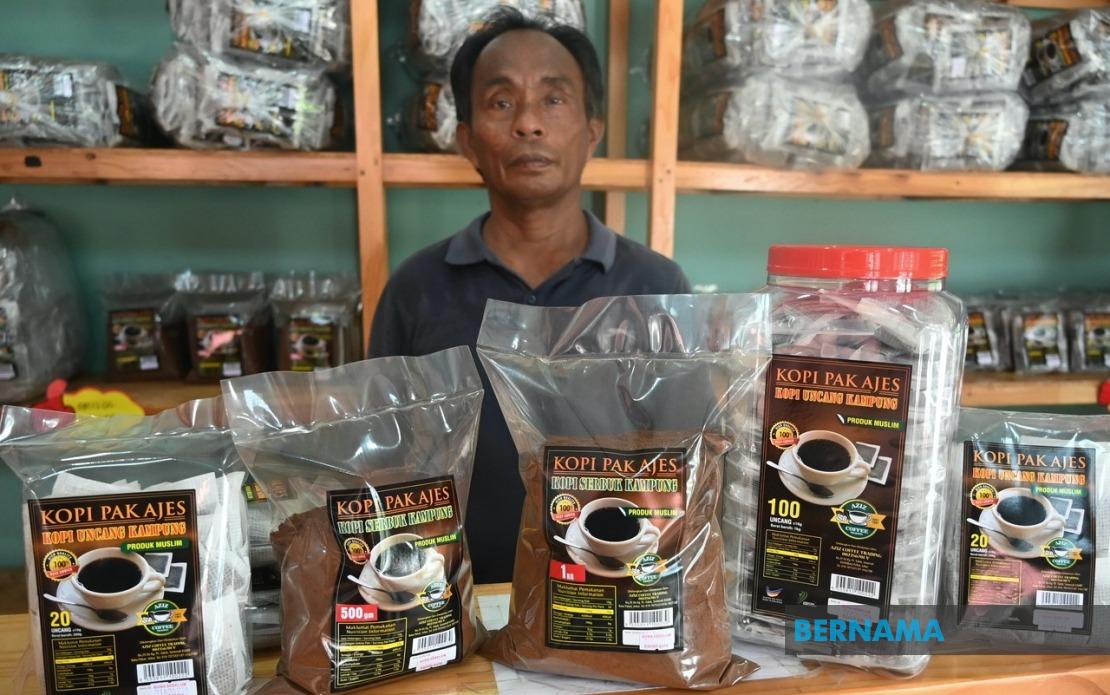
The frenzy of political campaigning sweeping through Johor has become an unexpected boon for one small-scale manufacturer in Kampung Parit Sidek, Semerah. As candidates and their entourages intensify their ground operations across the state ahead of Saturday's polls, Aziz Mohd—known locally as Pak Ajes—finds his coffee enterprise struggling pleasantly to keep pace with surging orders. The 65-year-old entrepreneur and proprietor of Aziz Coffee Trading says the electoral season represents a rare commercial opportunity, one that arrives infrequently enough to command his full attention and that of his family.
Pak Ajes and his son have mobilised their entire operation to fulfill the exceptional demand emanating from campaign workers and election machinery operating in constituencies including Semerah, Sungai Balang, and Bukit Naning. The pair prepared meticulously after receiving advance notice from various candidate organisations, scaling up their production capacity substantially. To sustain this heightened output, they have widened their supply chain, procuring coffee beans from Rengit and Kluang, stretching beyond their usual sourcing networks. The logistical juggling reflects the pressures facing small manufacturers during peak-demand periods and underscores how even localised political activity can ripple through supply chains and impact businesses miles away from campaign headquarters.
The trajectory of Pak Ajes's enterprise illustrates a distinctly Malaysian entrepreneurial arc. His venture into coffee processing commenced in 1991, emerging from an observation about oversupply of coffee beans in neighbouring villages. Initially, he processed beans for personal consumption and to support acquaintances operating beverage outlets. Before establishing his current focus, he had pursued quail farming for egg production and cultivated mushrooms for sale to suppliers and local markets—a diversified approach common among rural business operators seeking to maximise agricultural resources.
With barely RM200 accumulated from quail egg and mushroom sales, Pak Ajes began modestly, merchandising coffee powder in 100-gram packets responsive to immediate customer requests. The business has evolved dramatically from these humble origins. Today, Aziz Coffee Trading operates at a scale producing over five tonnes of monthly output, maintaining regular supply agreements with multiple coffee establishments throughout Muar and Batu Pahat. The company can now package approximately 1,500 individual coffee powder units daily, a transformation enabled by consistent market demand and operational refinement.
The transformation from micro-enterprise to established supplier reflects broader shifts in Malaysia's rural economy, where agricultural diversification and value-added processing have enabled farmers and small operators to move beyond commodity sales. Pak Ajes's progression from producing quail eggs and mushrooms to manufacturing branded coffee powder demonstrates how entrepreneurial adaptation and market identification can enable individuals to capture greater margins within commodity chains. His success particularly resonates within Peninsular Malaysia's agricultural hinterlands, where similar opportunities exist for enterprising individuals prepared to recognise and act upon emerging commercial possibilities.
The technical requirements of coffee powder production impose considerable constraints that Pak Ajes emphasises throughout his operation. The process demands methodical execution across multiple stages: separation of beans from stems and husks, solar drying extending approximately 15 days, mechanical roasting, grinding, and careful packaging. Each transition point carries risks; improperly managed exposure to air causes the powder to harden and form clumps, compromising commercial viability. Packaging itself demands precision, since the product's fragile nature renders it susceptible to spillage and moisture contamination. These technical considerations underscore why even seemingly simple consumer products require sophisticated knowledge and operational discipline to produce at commercial scale.
Recognising opportunities for organisational expansion, Pak Ajes partnered with his son Muhammad Fitri, 22, to establish Kupi Nang Ajes Cafe in 2022, positioning the establishment adjacent to the family residence. The café extends the value chain by offering finished coffee beverages, including Americano and latte variants, at accessible price points. This retail operation bridges the gap between wholesale manufacturing and direct consumer engagement, enabling the family to capture additional margin while building brand visibility. The café represents a typical trajectory for successful Malaysian manufacturers seeking to integrate backward toward retail distribution.
Looking forward, Pak Ajes harbours ambitions that reflect confidence in his market position and product quality. He and Muhammad Fitri aim to launch a second outlet strategically located in a high-traffic area, preferring either Batu Pahat town centre or Muar. Beyond these immediate targets, the entrepreneur articulates aspirations to establish branches throughout Malaysia's states—a vision indicative of how successful regional manufacturers increasingly seek national market penetration. Such expansion plans typically depend upon securing additional capital, developing consistent supply chains, recruiting trained staff, and navigating regulatory environments across multiple jurisdictions.
The Department of Agriculture has provided instrumental support to Pak Ajes's enterprise through equipment contributions and training programmes. The agency supplied a coffee grinder, coffee bagging machinery, and conducted courses addressing packaging standards and product labelling requirements. Such government support reflects Malaysia's commitment to nurturing small and medium enterprises within agricultural value chains. These interventions, though appearing modest individually, accumulate into material competitive advantages for rural entrepreneurs, enabling them to achieve professional standards and operational efficiencies that might otherwise demand prohibitive capital investment.
The 16th Johor state election, scheduled for Saturday, involves 172 candidates competing for 56 state assembly seats across the constituency framework. Campaign activities occurring across these constituencies have generated the demand surge benefiting Pak Ajes's business. The election cycle, temporally concentrated yet economically significant for service providers catering to political machinery, illustrates how democratic processes create commercial opportunities within regional economies. For suppliers of consumables and services, electoral seasons represent predictable demand peaks warranting anticipatory operational adjustments.
Pak Ajes's experience demonstrates how Malaysia's small-scale manufacturing sector responds dynamically to contextual opportunities. His coffee enterprise originated from agricultural observation, developed through decades of consistent customer service, and now operates within regional distribution networks. The electoral windfall, while temporary, funds operational capacity that may support expansion during subsequent demand cycles. His ambitions for multi-state franchise development reflect confidence increasingly prevalent among successful Malaysian manufacturers who have consolidated regional positions. The story underscores how entrepreneurial activity within Malaysia's smaller municipalities sustains economic vitality and employment while demonstrating resilience and adaptability characteristic of the nation's distributed manufacturing base.

