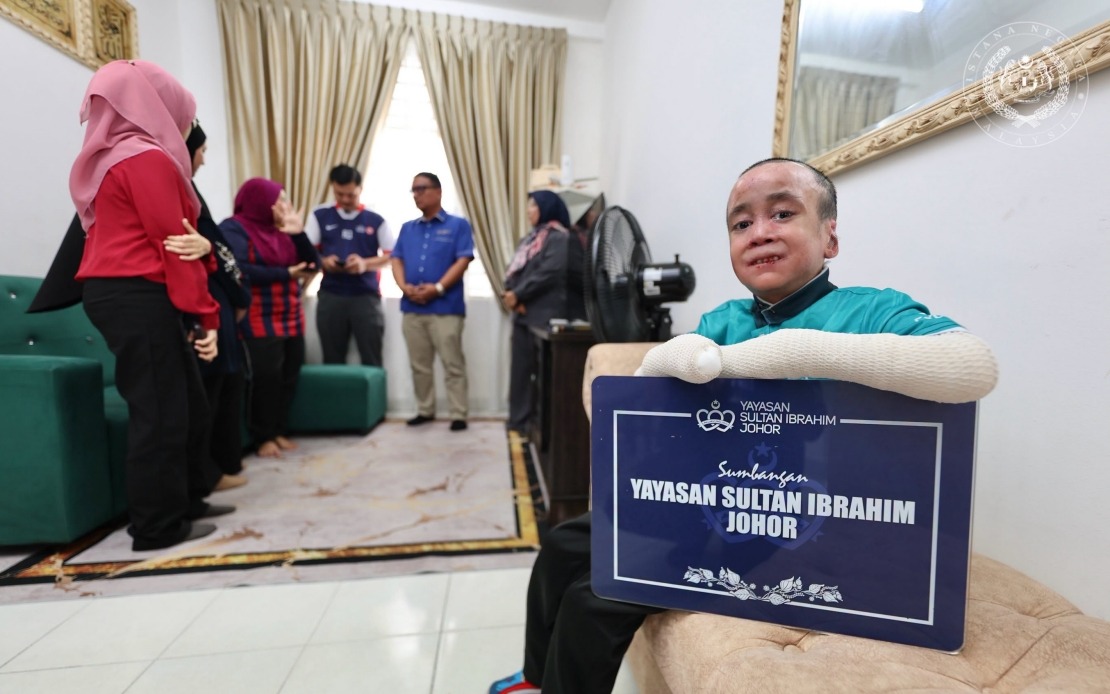
The Yayasan Sultan Ibrahim Johor (YSIJ) has stepped in with financial relief for Muhammad Hazreel Mikhail Hizar, a 15-year-old from Johor Bahru grappling with epidermolysis bullosa (EB), a severe hereditary skin disorder that has affected him since infancy. The aid was delivered through the foundation's Ziarah Kasih programme during a home visit to his residence at the Sungai Tiram People's Housing Project on August 18.
Epidermolysis bullosa represents one of the most challenging chronic conditions a young person can face, characterised by skin that blisters and tears with minimal trauma. For Hazreel, this means his daily existence demands meticulous wound management, constant monitoring for secondary infections that could prove life-threatening, and an environment meticulously maintained at cool temperatures with continuous air-conditioning. The condition leaves no room for neglect; even minor temperature fluctuations or friction against surfaces can trigger painful blistering and open wounds that require immediate attention.
Hazreel's mother, Noor Halimaton Hashim, shoulders the burden of caring for her son while managing two other children as a single parent. The financial and emotional toll of providing round-the-clock care for a child with EB has rendered full-time employment impossible for her. She must remain constantly vigilant, balancing the family's basic needs against the extraordinary expenses associated with specialised wound care, temperature-controlled housing, and potential emergency medical interventions. This precarious situation has left the household vulnerable to economic strain.
The assistance from YSIJ arrives at a critical juncture for the family, offering tangible relief from the relentless burden of living expenses. Through the statement released by the Royal Press Office and shared on Sultan Ibrahim Sultan Iskandar's official social media platforms, Noor Halimaton expressed profound gratitude for the foundation's recognition of her family's plight and the timely intervention that addresses their immediate needs.
The Ziarah Kasih programme, which translates to "Care Visits," exemplifies the foundation's commitment to identifying and supporting Malaysian families facing extraordinary hardship due to health challenges. Such initiatives underscore the vital role that royal foundations play in the social safety net, particularly for vulnerable populations whose circumstances fall between the cracks of conventional assistance programmes. The visibility afforded by this intervention also raises awareness about rare genetic conditions that many Malaysians remain unfamiliar with.
Epidermolysis bullosa, whilst rare globally, imposes catastrophic costs on affected families. Treatment protocols demand specialist dermatological care, custom wound dressings that can cost hundreds of ringgit monthly, and modifications to home environments to maintain appropriate climatic conditions. Many families caring for EB patients struggle with the compounding challenges of medical expenses, opportunity costs associated with full-time caregiving, and the psychological burden of managing a condition with no cure. Malaysia's healthcare system, whilst providing universal coverage through government facilities, may not fully address the specialised needs of EB patients, placing additional strain on family finances.
Noor Halimaton's situation reflects the broader challenge faced by Southeast Asian families managing children with rare genetic disorders. In many developing economies, including Malaysia, comprehensive support systems for families dealing with chronic conditions remain fragmented and often inadequately funded. Government assistance programmes, whilst available, frequently fail to capture the full scope of expenses required to maintain quality of life for severely affected individuals. The intervention by YSIJ highlights both the generosity of royal patronage and the persistent gaps in systematic support.
The foundation's work carries particular significance in Johor, where Sultan Ibrahim Sultan Iskandar has established himself as an active patron of welfare initiatives. The royal household's involvement lends both resources and attention to cases that might otherwise remain invisible to public consciousness. Beyond the immediate financial assistance, such public acknowledgment validates the experiences of families like Hazreel's and encourages broader societal recognition of the challenges posed by rare diseases.
For families across Malaysia and the broader region navigating similar circumstances, the YSIJ's action serves as both practical support and symbolic affirmation that their struggles warrant attention and assistance. Hazreel's case also underscores the critical importance of genetic counselling, early diagnosis, and comprehensive multidisciplinary care frameworks in managing conditions like epidermolysis bullosa. As Malaysia develops its healthcare infrastructure and social safety nets, ensuring that rare disease sufferers and their families receive adequate support remains an ongoing imperative that requires coordination between government agencies, private healthcare providers, and charitable foundations.

