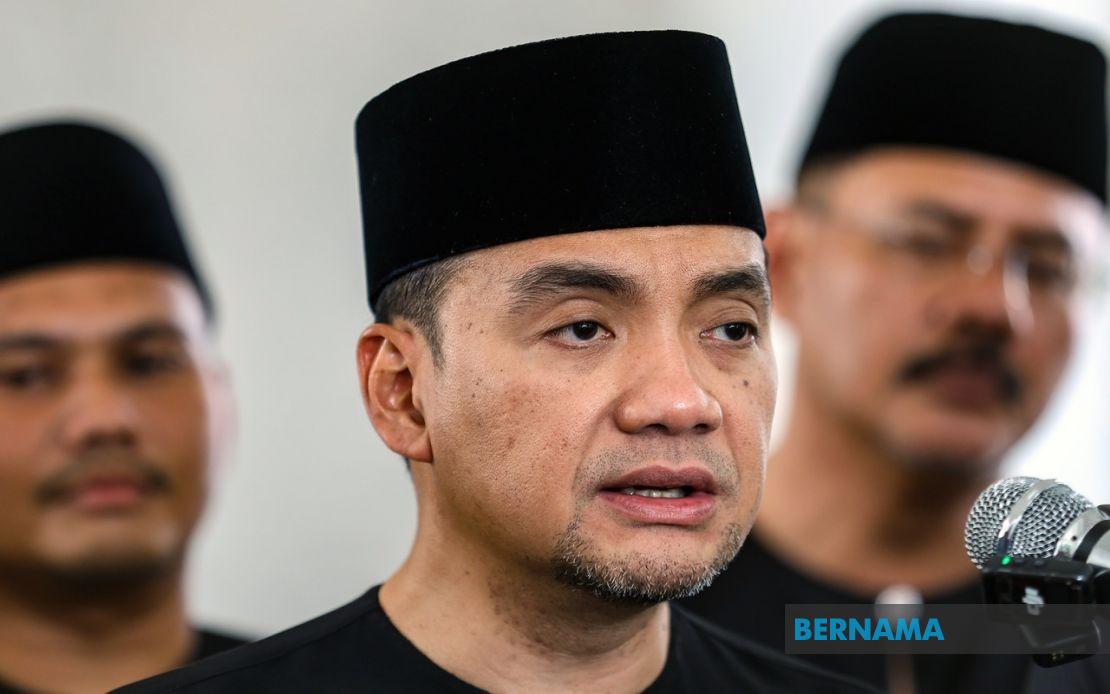
The Johor state government has rolled out a fresh religious initiative aimed at reinvigorating mosque participation and deepening Islamic observance across its communities. The Semarak Maghrib and Isyak programme represents an attempt to widen the state's earlier efforts focused on dawn prayer attendance, extending the approach to evening and night-time congregational worship. By concentrating on these two prayer times—Maghrib immediately after sunset and Isyak before midnight—the scheme targets a critical window in the daily devotional calendar when mosque engagement has traditionally been lower than morning prayers.
Menteri Besar Datuk Onn Hafiz Ghazi positioned the initiative as a direct manifestation of the state government's broader religious vision. The programme embodies what Johor frames as a mosaic of commitments: strengthening the foundational role of mosques as spiritual anchors, creating platforms for Islamic knowledge dissemination, and nurturing the concept of ukhuwah—the Islamic principle of brotherhood that underpins social cohesion within Muslim communities. This multifaceted approach reflects recognition that mosque vibrancy depends not merely on prayer attendance but on the richness of activities and the sense of belonging that congregants experience.
The timing of the announcement carries political significance, as the initiative forms part of the Barisan Nasional coalition's formal election manifesto pledges for Johor's 16th state election cycle. By materialising such commitments relatively quickly after electoral contests, state governments seek to demonstrate responsiveness to voter expectations and maintain momentum with their political base. In Malaysia's context, where religious affairs and mosque development carry considerable political weight, fulfilling such promises becomes essential to sustaining coalition credibility and legitimacy.
The inaugural session took place at Masjid Jamek As-Syakirin located in the Bukit Saujana neighbourhood, a strategic venue choice that places the programme visibly within an established mosque community. The event incorporated substantive religious content designed to elevate the experience beyond simple attendance. A sharing session explored the 40 Hadith with the theme 'Niat Penentu Perbuatan Hamba' (Intention Determines the Deed)—a foundational Islamic concept addressing the spiritual motivation underlying human conduct. This choice of subject matter suggests the programme designers intend to blend spiritual aspiration with practical devotion, helping participants connect everyday actions to deeper religious purpose.
The recitation of Surah Al-Mulk, one of the Quran's most frequently recited chapters during evening prayers, underscores the integration of established Islamic practice with the new initiative. Rather than introducing entirely novel elements, the programme piggybacks on familiar devotional patterns, lowering the barriers to participation while enhancing the quality of collective worship. Such an approach recognises that for many Muslims, evening prayers present scheduling challenges after work commitments, necessitating structured encouragement and compelling religious content to sustain attendance.
Onn Hafiz's framing of the scheme reflects broader Malaysian discourse around syiar Islam—the propagation and visible demonstration of Islamic values. The language employed positions mosque development not as parochial religious concern but as foundational to Johor's vision of a progressive Islamic state guided by Quranic principles and the Sunnah (teachings and practices of Prophet Muhammad). This rhetorical positioning attempts to dissolve perceived tensions between modernity and Islamic commitment, presenting them as complementary rather than opposed dimensions of governance.
The extension from previous Subuh-focused initiatives to encompassing Maghrib and Isyak prayers represents strategic programme expansion. Subuh prayers require congregation members to arrive before dawn, demanding genuine commitment and establishing a dedicated core of regular worshippers. Extending to evening prayers potentially captures a broader demographic, including those working conventional daytime hours and families who might attend together after work. The sequential expansion suggests a methodical approach to building sustainable patterns of mosque engagement rather than pursuing dramatic but unsustainable initiatives.
For Malaysian observers beyond Johor, the programme offers insights into how state governments are leveraging religious policy as a governance tool. Similar initiatives exist in other states, yet Johor's prominence as the second-most-populous state and its historical significance in Malaysian politics means its religious programmes attract wider attention and potentially serve as models for neighbouring jurisdictions. The initiative also reflects broader trends across Southeast Asia, where governments seek to strengthen institutional Islamic structures while simultaneously appearing progressive and administratively competent.
The call for Muslim participation articulates an implicit social contract: the state provides platforms and resources, while citizens reciprocate through active engagement and support. This reflects deeper assumptions about the partnership between governmental authorities and religious communities in promoting values aligned with state interests. By framing mosque attendance as a form of civic participation and spiritual obligation simultaneously, the government attempts to mobilise social enthusiasm for its religious agenda.
For the broader Malaysian context, the Semarak Maghrib and Isyak programme exemplifies how electoral politics and religious administration intersect. While the initiative genuinely addresses religious practice questions—how to sustain mosque engagement in contemporary lifestyles—it simultaneously functions as political implementation of coalition promises and demonstration of governmental effectiveness in religious domains. Success metrics remain ambiguous: whether measured through attendance figures, participant feedback, or perceived spiritual outcomes, the programme's ultimate impact will depend on sustained implementation and community receptiveness across Johor's diverse municipalities and demographic groups.

