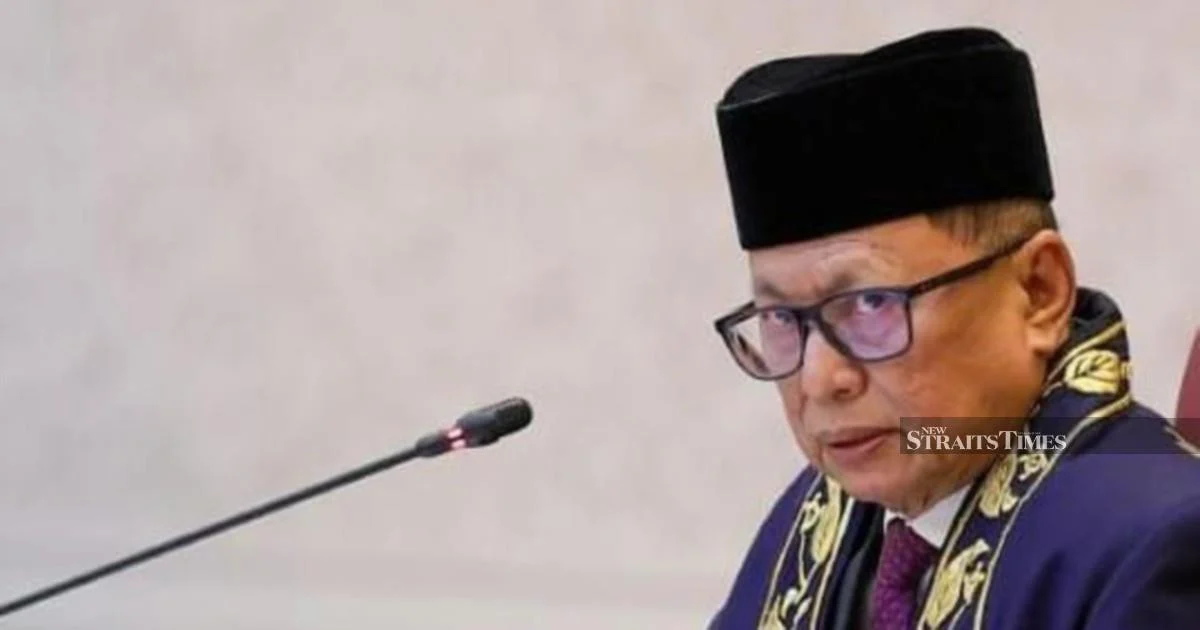
Johor PKR has mounted a direct challenge to former Umno supreme council member Datuk Dr Mohd Puad Zarkashi, demanding he provide concrete evidence to back up his assertions concerning alleged interference by palace institutions in state politics. The party made its position clear during a gathering in Pontian, signalling that such serious accusations levelled at the Johor royal establishment cannot be permitted to circulate without factual foundation.
The move reflects growing tensions within Johor's political landscape as competing interests jostle for influence and credibility ahead of potential electoral contests. By calling for tangible proof rather than engaging in rhetorical exchanges, PKR is attempting to shift the debate onto firmer ground—one where claims must be substantiated rather than merely asserted. This approach carries strategic implications for how political discourse is conducted in Malaysia's most developed state, where institutional integrity is closely guarded.
Puad, who previously held senior positions within Umno's leadership structure, has made various pronouncements regarding the role of palace officials in shaping state policy decisions. His assertions touch on sensitive terrain in Malaysian politics, where the constitutional position of the monarchy is simultaneously revered and subject to legitimate scrutiny regarding its political dimensions. The former Umno figure's willingness to make such claims publicly suggests he believes there is a receptive audience for his narrative, particularly among those concerned about institutional boundaries.
The tension between PKR and Puad occurs within a broader context of Johor's complex political dynamics. The state has long been a bastion of Umno power, but recent years have witnessed shifting coalitions and changing power balances. PKR's emergence as a significant political force in the state represents a challenge to entrenched interests, and disputes over institutional interference may be symptomatic of deeper struggles over who wields effective authority in Johor's government and administrative structures.
Palace-related political matters occupy a peculiar position in Malaysian public discourse. The monarchy's constitutional role is well-defined on paper, yet in practice the boundaries between ceremonial functions and political influence can become blurred, particularly at the state level where the Sultan wielding significant formal powers. Allegations of palace interference therefore carry weight not merely as political accusations but as challenges to understood constitutional conventions. This is why PKR's demand for evidence is not merely partisan posturing but also an assertion that such serious claims warrant proper substantiation.
Datuk Dr Mohd Puad Zarkashi's background as an Umno supreme council member lends his statements particular significance. His previous position within the party hierarchy suggests he possesses institutional knowledge and potentially insider perspectives on high-level political decision-making. However, this same background also raises questions about motivation—whether his current accusations reflect genuine concerns about institutional overreach or represent internal party disputes articulated through claims about palace interference. PKR's challenge implicitly highlights this ambiguity.
The demand for proof also serves a strategic function in Malaysian politics where narratives can calcify quickly into accepted wisdom without rigorous examination. By forcing Puad to either produce evidence or retract his claims, PKR is protecting not only its own institutional standing but also establishing a precedent that political allegations require substantiation. This matters beyond this particular dispute, as it potentially raises the bar for public discourse regarding sensitive institutional matters.
For readers and observers following Johor politics, this confrontation underscores how political conflicts in Malaysia increasingly involve questions about institutional boundaries and the proper exercise of authority. The stakes extend beyond electoral competition to encompass fundamental questions about how different institutions—political parties, government bureaucracies, royal establishments—should interact and who should exercise final decision-making authority on various matters. Puad's claims, if substantiated, would suggest that established constitutional understandings require reassessment. Conversely, if he cannot provide evidence, his accusations risk being dismissed as mere political rhetoric without substance.
The situation also reflects broader regional patterns whereby questions about palace influence periodically surface in Southeast Asian monarchies. Malaysia's approach to managing such sensitive topics typically emphasizes institutional respect while simultaneously preserving space for legitimate political debate. How this particular dispute is resolved may influence how similar questions are addressed in future, establishing important precedents for institutional accountability.
Moving forward, the focus rests on whether Datuk Dr Mohd Puad Zarkashi responds to PKR's challenge with substantive evidence or allows the accusations to fade through lack of support. His response will likely shape perceptions regarding both his credibility and the broader question of palace interference in Johor governance. For PKR, maintaining pressure on evidentiary standards serves to protect its own position while advancing arguments about institutional transparency and accountability in Malaysian politics.

