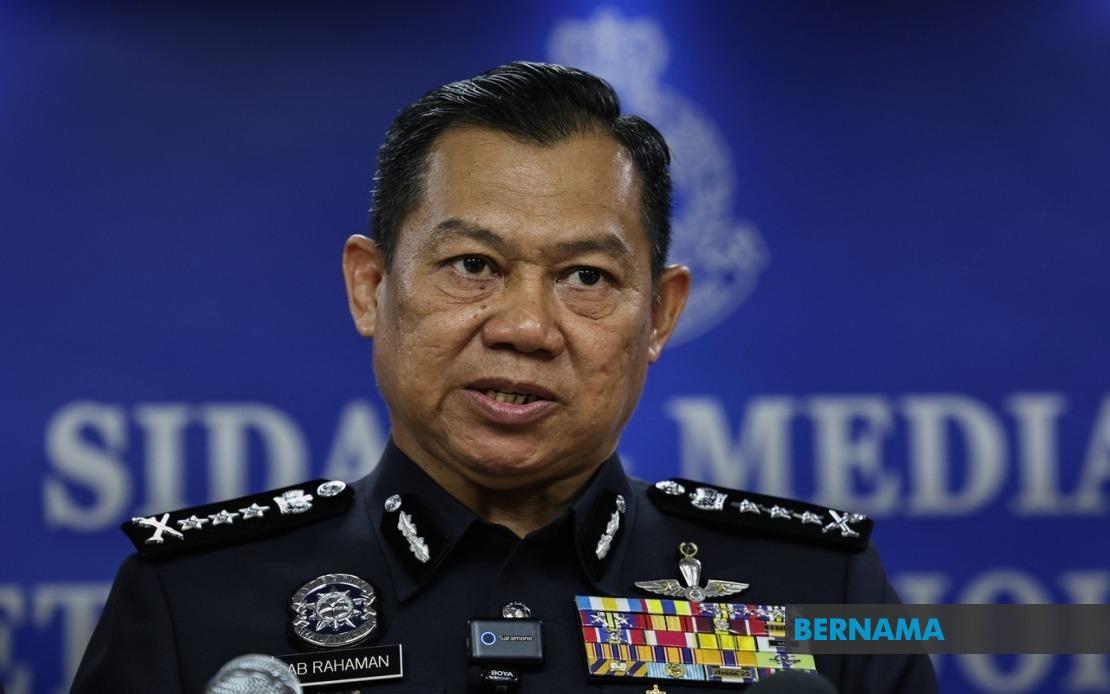
The Johor police force has cleared the overwhelming majority of permit applications submitted by political parties and candidates seeking to conduct campaign events for the 16th state election, demonstrating efficient administrative processing during the high-pressure election period. Between June 27 and July 8, police approved 4,053 applications out of 4,368 total submissions, representing a clearance rate of approximately 92.8 percent. This substantial volume of approvals, coordinated by Johor police chief Datuk Ab Rahaman Arsad, reflects the considerable grassroots political activity mobilised across the state during the lead-up to polling day.
The final 48 hours of this reporting period proved particularly busy for law enforcement administrators. Between July 7 and 8 alone, police received an additional 884 permit applications, of which 838 were approved following verification against the established requirements for political gatherings. This surge in last-minute submissions underscores the intensity of campaign schedules during the final stretch of an election cycle, as parties compete to maximise voter contact before the electoral window closes. The police's capacity to process such volumes while maintaining administrative standards suggests adequate resourcing within the relevant departments, though the high proportion of approvals also indicates that most organisers understood and complied with application protocols.
Despite the substantial approval rate, authorities documented multiple breaches of electoral law during the same period, signalling that police remained vigilant in monitoring campaign conduct. Between July 7 and 8, officers received 17 separate reports concerning potential election offences and initiated four formal investigation papers. Cumulatively, from June 27 through July 8, police logged 73 reports and opened 22 investigation papers, representing a more granular enforcement approach than the simple approval or rejection of permits would suggest. This dual-track strategy—facilitating legitimate campaign activity while investigating alleged violations—reflects the police's stated commitment to enabling political expression within a framework of legal compliance.
The nature of alleged offences provides insight into the sorts of conduct that authorities considered problematic. One investigation centred on allegations of promoting ill will or hostility, pursued under Section 4A(1) of the Election Offences Act 1954. This provision reflects concern about inflammatory speech that might undermine communal harmony, a perennial priority in Malaysia's multiethnic electoral environment. Another inquiry involved defamation allegations alongside improper use of communications platforms, indicating that police targeted both traditional campaign conduct and the increasingly significant realm of digital and social media activity during elections.
Property-related incidents featured prominently in the enforcement tally, with two investigation papers opened under Section 427 of the Penal Code for alleged mischief resulting in damage or loss. These cases suggest that some campaign activities or counter-campaign activities extended into physical confrontation or vandalism, though the source material provides no detail on the specific incidents or their political context. The invocation of the Communications and Multimedia Act 1998 alongside Penal Code provisions demonstrates a contemporary enforcement approach that acknowledges how modern campaigns blur boundaries between in-person and online conduct, requiring police to marshal multiple legal instruments.
Datuk Ab Rahaman's statement emphasised that security and public order had been maintained throughout the election process, a critical claim in the context of Malaysia's recent electoral history. The assertion that all political activities had been continuously monitored suggests a proactive policing posture, though the distinction between monitoring and intervention remains important to civil liberties. Malaysian observers have historically paid close attention to police neutrality during elections, and statements affirming both the approval of legitimate permits and the investigation of violations attempt to demonstrate even-handed conduct that neither suppresses opposition activity nor tolerates misconduct.
The regulatory framework within which this enforcement occurred reflects Malaysia's approach to balancing electoral participation with public order concerns. The requirement for campaign permits itself, while standard in many democracies, requires political actors to provide advance notice of their activities—information that allows police to resource appropriately but also creates a record of campaign movements. The high approval rate suggests that police are not using the permit system as a covert tool for suppressing opposition activity, a consideration particularly relevant given Malaysia's competitive electoral environment and the history of tension between government and opposition parties.
For Malaysian voters and international observers monitoring the electoral process, the Johor data points toward a functional, if heavily regulated, campaign environment. The substantial volume of approved permits indicates that multiple political parties possessed the capacity to conduct extensive ground-level campaigning, while the investigation papers suggest that boundaries existed and were enforced. The specific investigation papers opened—involving alleged defamation, hostile speech, and property damage—fell into categories that most democracies would consider legitimate enforcement priorities, though critics might note that definitions of hostility or inflammatory speech can become contested in polarised contexts.
The timing of the data release, immediately prior to polling day, served to demonstrate police readiness and administrative capability. By publicising approval figures and investigation statistics, authorities signalled both competence and commitment to law enforcement. However, the strategic timing also allowed police to shape the narrative around campaign conduct, potentially emphasising the high approval rate to suggest permissiveness while downplaying the number and seriousness of investigations.
Forward-looking considerations about Malaysia's electoral administration emerge from this Johor snapshot. The police's apparent capacity to process thousands of permits efficiently, combined with parallel investigation capabilities, reflects institutional development and resource allocation. Yet questions persist about whether permit systems, even when administered fairly, create unnecessary friction for campaign activity. The reliance on police to manage both facilitation and enforcement of election law also raises structural questions about whether law enforcement agencies are the optimal venue for making judgments about acceptable political speech, particularly when definitions of offences like promoting hostility depend partly on subjective interpretation.
The Johor election results will ultimately reflect not only these regulatory mechanics but also the broader political currents flowing through the state. However, the permit statistics and enforcement data constitute the visible scaffolding within which the campaign took place. For political parties, the high approval rate likely validated their campaign planning and resource allocation, while the investigation papers served as a cautionary signal that certain conduct would attract official attention. For voters, the regulatory environment largely remained in the background, though it shaped what forms of political messaging and mobilisation they encountered.

