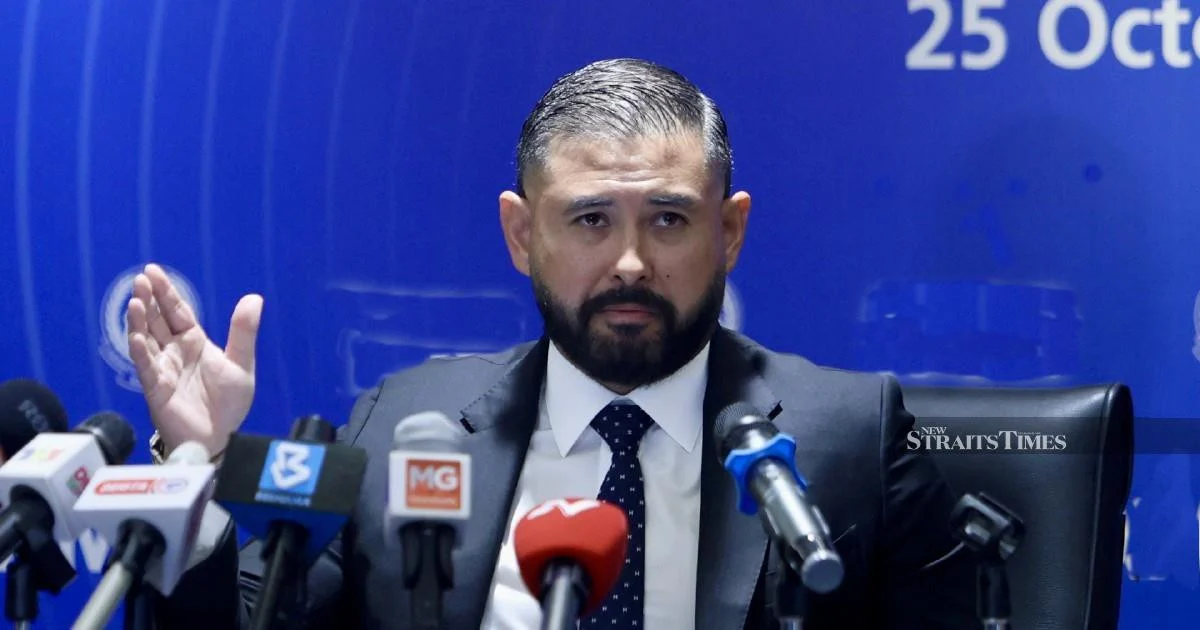
Johor's regent Tunku Ismail Sultan Ibrahim has directly challenged the prime minister's recent characterisation of the state as wealthy but burdened by substantial financial leakages. Speaking in Johor Baru, the regent presented a contrasting analysis: rather than internal mismanagement draining Johor's coffers, he contended that the federal government's revenue-sharing arrangements are fundamentally inequitable and deprive the state of money that rightfully belongs to it.
The regent's intervention marks an escalation in what has become an increasingly public disagreement over Johor's fiscal health and the mechanisms that govern how money flows between Kuala Lumpur and the state. The prime minister's leakage assertion had implicitly suggested that Johor's administration bears responsibility for inefficient spending or resource loss, a framing that the regent clearly found unacceptable. By reframing the issue as one of federal retention rather than state mismanagement, Tunku Ismail Sultan Ibrahim has shifted the conversation onto more politically contentious ground.
Johor's position within Malaysia's fiscal federalism framework has long been complicated. As one of the nation's more economically developed states, Johor generates substantial revenue through port operations, industrial activity, and commerce. The port of Tanjung Pelepas alone is among Malaysia's busiest and most productive facilities. Yet the mechanisms by which the federal government collects, pools, and redistributes tax revenue have historically been opaque to public scrutiny. The regent's complaint touches on a deeper structural tension: whether wealthy states receive an equitable return on the taxes their citizens and businesses contribute to the federal purse.
The timing of this exchange is significant within Malaysia's current political context. The Johor state government remains a crucial political power base, and tensions between state and federal authorities carry ramifications beyond fiscal accounting. They signal deeper divisions within the ruling coalition about development priorities, resource allocation, and the balance of power between Putrajaya and the states. For Malaysian observers, particularly those in other states wondering how their own revenues are managed, the Johor dispute serves as a window into how the federal system actually operates in practice.
Johor's regent has previously been outspoken on matters of state autonomy and development. His willingness to publicly contradict the prime minister suggests confidence in his political standing and possibly frustration that quieter representations to federal authorities have yielded insufficient results. The regent's comments reflect a perspective increasingly heard in state capitals nationwide: that federal revenue-sharing formulas disadvantage developed states and that greater transparency is needed in how federal finances are distributed and why certain allocations are made.
The concept of "leakage" that the prime minister invoked typically refers to inefficiency, corruption, or wasteful expenditure within government systems. By accepting that framing, a state leader would essentially be conceding that poor governance within the state is responsible for financial shortfalls. The regent's rebuttal—that the problem lies with how much money the state never receives in the first place—is strategically more advantageous and harder to refute without detailed financial disclosure. It forces a conversation about federal-level transparency and accountability rather than state-level performance.
For Malaysian taxpayers and businesses, particularly those in Johor, the regent's comments raise important questions about fiscal accountability at both state and federal levels. If Johor's assertion is correct that the state is not receiving its fair share of centrally collected revenue, then taxpayers in the state are effectively subsidising other parts of Malaysia while their own needs go underfunded. This has practical implications for infrastructure investment, education spending, healthcare delivery, and public services across Johor's 1.86 million population.
The federal government's response to the regent's claims will be closely watched. Officials may argue that central revenue retention is necessary for national development priorities, defence, and the functioning of federal institutions. They may also contend that Johor already receives substantial federal investment. However, without publishing detailed breakdowns of how Johor's tax contributions compare to its federal allocations, such arguments remain essentially opaque and difficult for citizens to evaluate independently.
This dispute also carries implications for Malaysia's broader development agenda. If states like Johor—which have demonstrated capacity for economic growth and industrialisation—feel constrained by inadequate federal funding, they may be unable to maximise their potential or attract the investment needed for continued prosperity. Conversely, federal authorities may argue that concentrated investment in already-developed areas would widen regional inequality. These competing perspectives require evidence-based resolution, not political rhetoric.
The regent's intervention has ensured that questions about Johor's fiscal treatment will not quietly disappear from public discourse. Whether this translates into concrete changes to revenue-sharing arrangements or greater financial transparency remains uncertain. What is clear is that the conversation about how Malaysia's federal system distributes resources has moved from backroom negotiations into public debate. For a state that contributes significantly to Malaysia's economy, such public assertion of grievances suggests dissatisfaction with existing arrangements and a determination to challenge the status quo.