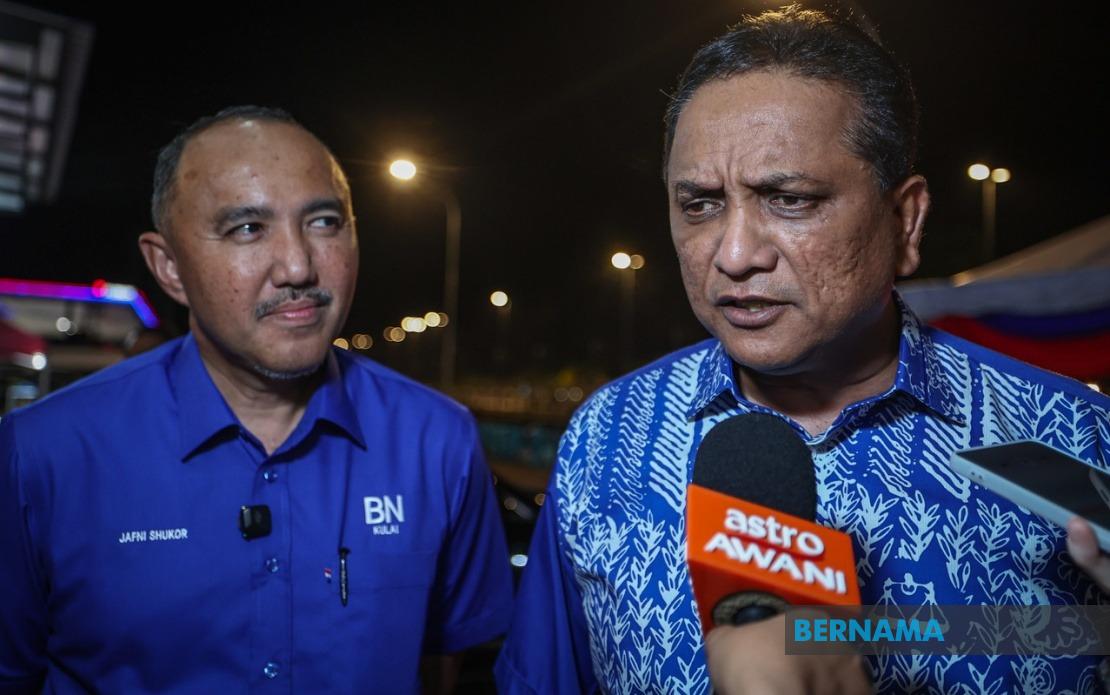
A senior UMNO politician has firmly rejected allegations that the Regent of Johor, Tunku Mahkota Ismail, wields inappropriate influence over the state administration, characterizing the assertions as unfounded and greatly overstated. Datuk Seri Reezal Merican Naina Merican, a member of UMNO's Supreme Council, made the remarks while addressing speculation that has surfaced in political circles regarding the constitutional role and authority of the Johor Regent in relation to state governance.
Reezal Merican's comments came after Datuk Dr Mohd Puad Zarkashi, a former Speaker of the Johor State Legislative Assembly, announced his departure from UMNO and made declarations about the relationship between the Regent and Menteri Besar Datuk Onn Hafiz Ghazi. The timing of this political development has drawn particular attention as Johor prepares for a state election, with nomination day scheduled for June 27 and polling set for July 11, according to the Election Commission.
The UMNO figure emphasized that any pronouncements or decisions made by Tunku Mahkota Ismail are consistent with his constitutional powers and duties as Regent, undertaken in service to Johor's population. Rather than representing an overreach of authority, Reezal Merican framed the Regent's involvement in state affairs as a legitimate expression of his role within the constitutional framework. He argued that the Regent's vocal engagement with matters of state development reflects his commitment to protecting the interests of Johor's citizens, not an attempt to subordinate elected officials to palace authority.
Crucially, Reezal Merican positioned the Regent's oversight as a necessary check and balance mechanism within the state's governance structure. He contended that the constitutional arrangement providing the Regent with certain powers over the Menteri Besar and State Secretary represents a deliberate institutional design, not an aberration or abuse of position. This constitutional check-and-balance system, he argued, should be understood as foundational to how Johor's government operates rather than misconstrued as evidence of puppet rule.
The UMNO Supreme Council member further strengthened his position by citing his own institutional proximity to Johor's political leadership. He stated that throughout his involvement with UMNO's highest decision-making body, there has never been any suggestion or discussion that Johor's UMNO organization functions as a palace puppet. This assertion carries weight given his direct access to conversations within the party's elite circles and his ability to observe firsthand how the state branch operates.
Reezal Merican also questioned the underlying motivations of Mohd Puad, suggesting that the former Speaker's decision to leave UMNO and make these allegations represents an attempt to inject royal institutions into partisan electoral competition. By raising questions about Mohd Puad's intentions, Reezal Merican shifted focus from the substance of the allegations toward the political circumstances surrounding their airing. This rhetorical strategy seeks to frame the allegations as opportunistic positioning rather than genuine concerns about constitutional propriety.
The controversy reflects broader questions about federalism and constitutional monarchy that periodically surface across Malaysia. The role of state Regents in relation to elected administrations has long existed in a complex constitutional space, and different political actors sometimes interpret these relationships differently depending on their immediate interests. What one observer might describe as appropriate exercise of constitutional authority, another might characterize as undue influence, particularly during politically charged periods.
For Malaysian observers and regional analysts, this dispute underscores the delicate balance required in systems combining constitutional monarchy with democratic governance. The Johor situation demonstrates how disagreements about institutional roles can become flashpoints for political opposition, especially when leadership transitions or electoral contests create uncertainty. The Regent's constitutional position, while established in law, operates within a space where political actors may contest its practical boundaries during times of partisan tension.
The timing of these allegations is particularly significant given Johor's electoral schedule. With nomination day imminent and polling less than three weeks away, the controversy enters the campaign environment when such claims gain amplified political resonance. Opposition figures and dissidents may leverage questions about governance legitimacy as electoral messaging, regardless of their legal foundation. Reezal Merican's defense of the current arrangement thus serves both to address the immediate allegations and to protect the governing coalition's electoral position.
Looking at the broader Southeast Asian context, Malaysia's constitutional monarchy arrangements remain distinctive within the region, and how these arrangements function in states like Johor continues to shape political dynamics. The willingness of state-level officials to publicly defend their arrangements against allegations of improper royal influence reflects how seriously these matters are treated within Malaysia's political culture. Whether measured by institutional practice or constitutional letter, such disputes ultimately matter because they affect public confidence in governance legitimacy.
The intersection of palace and government authority in Johor will likely remain an area of political contestation, particularly during electoral periods when opposition groups seek to mobilize criticism of incumbent administrations. How the Menteri Besar, the Regent, and party leadership continue to coordinate their efforts while managing public perceptions about who truly holds decision-making authority will significantly influence both the immediate electoral outcome and the broader trajectory of Johor's politics in the coming years.

