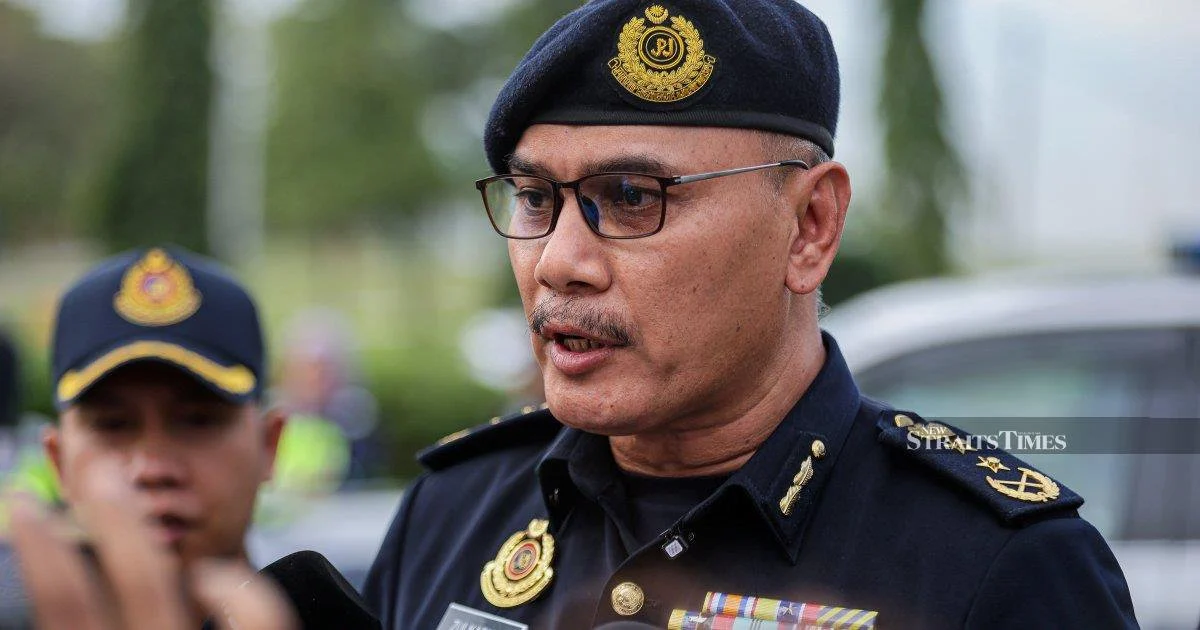
The Johor Road Transport Department (RTD) has initiated formal enforcement action against motorcycle riders who discarded basic safety protocols during the state's recent election campaign period, issuing investigation notices to those caught operating two-wheelers without protective headgear. The move reflects a renewed commitment to road safety standards even as political activities temporarily saturate public spaces and divert attention from routine regulatory matters.
Motorcycle helmet compliance has long remained a persistent challenge across Malaysia's highways and urban streets, with riders routinely flouting regulations despite well-documented consequences of head injuries in accident scenarios. The enforcement action during the election period captures a particular problem: campaign-related activities and motorcade movements sometimes create an atmosphere where traffic regulations appear negotiable or secondary to the immediate political objective. By issuing investigation notices rather than merely issuing fines on the spot, the RTD signalled an intent to document violations formally and potentially pursue escalated penalties.
Johor, as one of Malaysia's most populous states with extensive highway networks and significant traffic volume, has experienced persistent road safety challenges. The state's RTD operates within a complex enforcement landscape where political sensitivities occasionally complicate strict regulatory application. During election periods, when heightened political activity generates increased motorcycle usage for campaign purposes, the department faces particular pressure to maintain standards without appearing to target any particular group. The recent notices suggest a determined effort to transcend those pressures.
The investigation notice mechanism serves multiple regulatory functions. Beyond documenting individual violations, it creates an official record that can support civil or administrative proceedings. Riders receiving such notices must respond formally, typically within a specified period, providing their account of the violation or accepting responsibility. This process carries greater weight than an immediate roadside fine, potentially resulting in license demerit points, increased penalties, or mandatory safety education requirements. For repeat offenders, accumulating investigation notices can trigger license suspension or mandatory retraining courses.
Helmet usage statistics across Southeast Asia reveal a troubling compliance gap, particularly in motorcycle-dependent transportation markets like Malaysia where two-wheelers represent primary commute modes for millions. Studies consistently demonstrate that helmets reduce head injury risk by roughly seventy percent and fatal injury risk by approximately forty percent. Yet behavioural adoption remains stubbornly low during high-visibility periods when riders assume accident risk decreases amid increased public and enforcement attention, or when they prioritize perceived convenience over documented safety benefits.
The Johor RTD's initiative gains significance within Malaysia's broader road safety framework. The country has committed to reducing fatalities under the United Nations' Sustainable Development Goals, with specific targets for traffic-related deaths by 2030. State-level enforcement actions like Johor's contribute to this national objective by reinforcing that regulations apply uniformly regardless of circumstance or timing. Election periods, rather than triggering regulatory relaxation, become opportunities to demonstrate consistent commitment to public safety standards.
Campaign-related traffic violations extend beyond helmetless riding, encompassing speeding, improper lane usage, and vehicles operating without proper documentation. During intense political activity, enforcement resources sometimes become stretched across competing priorities, creating enforcement gaps that riders exploit. The RTD's focused response targeting helmet violations during the campaign demonstrates institutional capacity to maintain targeted enforcement despite operational complexity.
The investigation notice approach also serves an educational function. Riders receiving formal notices typically become more compliance-conscious in subsequent riding, both from awareness of enforcement capacity and from concern regarding potential penalties. When conducted systematically rather than randomly, such enforcement shapes broader community behaviour patterns, signalling that certain violations attract consistent official attention and carry real consequences. Word spreads within motorcycle-riding communities, particularly when enforcement remains visible and sustained.
Malaysia's motorcycle population continues expanding, driven by affordability, fuel efficiency, and suitability for urban congestion. This growing segment demands proportionate enforcement attention and safety infrastructure. Johor's proactive stance during the election campaign reflects recognition that high-visibility periods present teachable moments for broader behavioural change. By issuing investigation notices systematically rather than sporadically, the RTD documents patterns and justifies resource allocation toward helmet compliance specifically.
The timing of this enforcement initiative carries additional weight. Election periods generate heightened media attention, creating platforms for safety messaging that extend beyond the notices themselves. When enforcement actions receive media coverage, compliance behaviour often shifts as riders recognize that violations attract attention beyond formal penalties. The RTD's public communication regarding these notices therefore contributes to awareness-building functions beyond the immediate enforcement mechanism.
Looking forward, sustained enforcement rather than campaign-period bursts would maximise impact on safety outcomes. However, the recent Johor action demonstrates institutional recognition that motorcyclists constitute a vulnerable road user category requiring consistent regulatory attention. As Malaysia continues urbanising and motorcycle usage proliferates, state-level agencies must balance enforcement stringency against feasibility while maintaining public confidence in regulatory systems. The Johor RTD's investigation notice approach represents a calibrated response that documents violations formally without creating perception of arbitrary or politically motivated enforcement.
The investigation notices issued during Johor's election campaign ultimately reflect deeper conversations about public safety prioritisation, regulatory consistency, and institutional capacity to maintain standards across varying operational contexts. Whether this action generates sustained compliance improvement or merely captures a campaign-period enforcement spike will depend on whether RTD maintains similar rigour beyond the immediate electoral environment.

