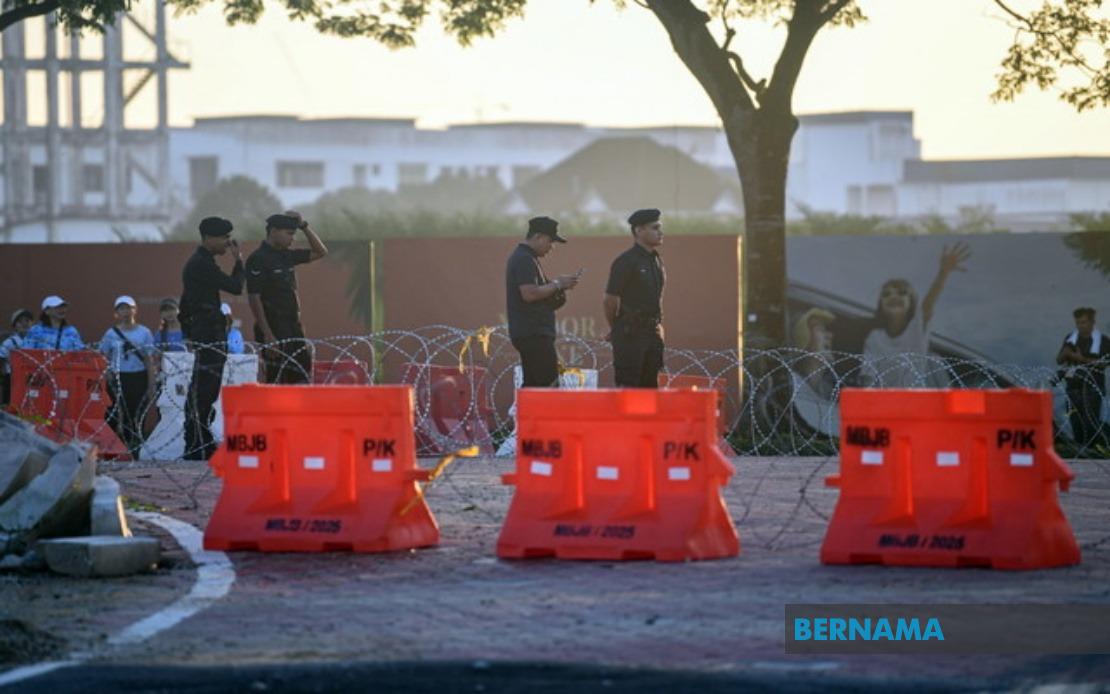
The 16th Johor State Election moved into its formal candidate registration phase on June 27 as nomination centres across all 56 constituencies opened their doors to receive candidacy papers from political parties contesting the state assembly polls. Benefiting from clement weather conditions, the process proceeded in an orderly fashion throughout the morning and early afternoon, with the Election Commission implementing comprehensive security measures and administrative protocols to ensure the integrity of the registration period.
Fifty-six nomination and polling centres (PPC) distributed across Johor received nomination documents between 9am and 10am, with Election Commission officers completing final preparations before the official submission window began. The staggered timing allowed the EC to process each nomination systematically, reducing congestion and permitting detailed verification of candidate eligibility and documentation. This administrative approach reflected lessons learned from previous electoral cycles and demonstrated institutional refinement in managing large-scale polling exercises across geographically dispersed constituencies.
Security arrangements remained prominent throughout the nomination day, with uniformed and plainclothes personnel stationed at all designated centres to prevent disruptions and maintain public order. The presence of these officers served both practical and symbolic functions—ensuring that the electoral process remained protected from interference whilst also reassuring voters and party representatives of the state apparatus's commitment to fair conduct. Such measures have become standard practice in Malaysian elections, reflecting the heightened attention given to security considerations during sensitive political processes.
Political enthusiasm was evident from early morning hours, as party supporters began arriving at nomination centres from 7.30am onwards to demonstrate backing for their respective candidates. This grassroots mobilisation underscored the competitive intensity characterising the Johor contest, with various political factions preparing for what many observers anticipated would be a fiercely contested campaign. The early gatherings suggested high engagement among party structures and their membership bases, signalling expectations of a hard-fought electoral battle across multiple constituencies.
Weather conditions proved favourable for the nomination process, with the Malaysian Meteorological Department forecasting dry conditions across most Johor districts during morning hours. However, the forecasting agency warned that afternoon thunderstorms would likely develop in several areas as the day progressed, a typical pattern for Johor during this seasonal period. Such meteorological considerations, whilst seemingly routine, remain important for election logistics, as heavy rain can impede voter movement and necessitate contingency arrangements at polling centres.
The Johor State Legislative Assembly comprises 56 seats distributed across the state, representing a substantial electoral arena requiring significant organisational resources from the Election Commission and participating political parties. The state assembly's dissolution on June 1 triggered the constitutional framework for conducting elections, with the EC subsequently announcing July 7 as the early voting date for eligible service personnel and their spouses, with the main election scheduled for July 11. This timeline provided approximately two weeks for campaigning, a compressed period that intensified the competitive environment and demanded efficient campaign operations from all contesting parties.
Election Commission statistics revealed the substantial electoral constituency involved in the Johor contest. The registered voter rolls encompassed 2,727,926 individuals, comprising 2,703,175 ordinary citizens eligible to vote, alongside 12,041 military personnel and their spouses and 12,710 police personnel and their spouses. These figures underscore the logistical complexity of administering the election and the democratic breadth of the electorate whose preferences would ultimately determine the state government's composition. The inclusion of service personnel as distinct categories reflects Malaysia's specific provisions accommodating the voting rights of armed forces and law enforcement members.
For Malaysian political observers and regional analysts monitoring Johor developments, the successful completion of nomination procedures represented a crucial milestone. The state election attracted significant attention nationally given Johor's economic importance, demographic scale, and historical significance in Malaysian politics. Any electoral shifts in Johor would carry implications for national political configurations and the interplay between federal and state-level governance structures.
The smooth progression of the nomination phase indicated that administrative and security preparations had been adequate and well-coordinated across multiple government agencies and the Election Commission. Such procedural soundness, whilst important for immediate electoral credibility, also contributes to broader public confidence in democratic institutions and Malaysia's electoral architecture. The absence of major disruptions on nomination day suggested that the campaign period ahead would likely proceed without significant logistical impediments, though this provided no indication of the political dynamics that would characterise the subsequent two-week campaign phase.
With nomination procedures concluded, attention shifted toward the campaign period leading to July 11. Political parties would intensify ground operations, conduct public rallies, and engage voters across constituencies. The competitive environment in Johor has historically attracted participation from multiple political coalitions, and the 2024 nomination day's orderly conduct suggested that this electoral exercise would maintain the procedural standards expected of Malaysian elections, notwithstanding the vigorous political contestation that would unfold during the campaign itself.

