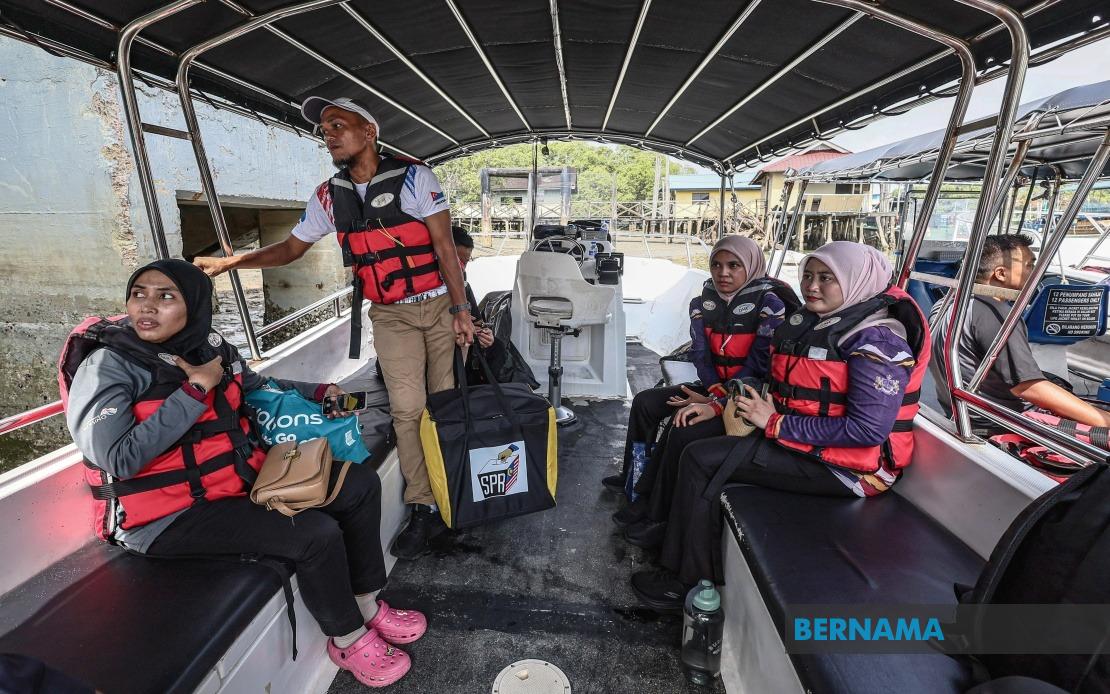
Beyond its political significance, the 16th Johor State Election has delivered tangible economic benefits to independent business operators across the state, demonstrating how major electoral events can provide temporary but meaningful financial relief for Malaysia's small and medium enterprises. As over 2.6 million registered voters participated in the democratic process on July 11, maritime transport companies and food retailers found themselves at the centre of unexpected commercial activity, highlighting the broader economic ripple effects of electoral mobilisation in the region.
Island Eagle Boat Services & Island Hopping, helmed by 35-year-old entrepreneur Mustakim Shafie, exemplifies how election-related logistics created fresh business opportunities. Beyond its primary function of shuttling Election Commission personnel and essential supplies to outlying islands, the company pivoted seamlessly to accommodate nearly 50 voters determined to participate from their island homes. This dual mandate transformed what might have been an ordinary Tuesday into a significantly busier operational day, with Mustakim reporting that booking volumes had effectively doubled compared to routine business traffic.
The financial implications prove particularly noteworthy given the maritime transport sector's vulnerability to seasonal and economic fluctuations. Mustakim's fleet of six speedboats operates under pricing structures that reflect operational complexity: three-day, two-night charter packages range from RM4,000 to RM4,500, while single-journey transportation for up to 18 passengers costs approximately RM2,500. For an operator juggling weather uncertainties and maintenance costs, such booking surges represent crucial revenue windows. The temporary influx of election-related demand thus provides welcome cash flow during what might otherwise be slower trading periods.
Veterans in the island-hopping business recognised similar opportunities. Hasrul Azmin Jumaat, a 39-year-old skipper with more than two decades navigating local waters, leveraged his extensive experience to transport voters on lengthy journeys, including the more than two-hour, 76-kilometre expedition to Pulau Aur. Such experiences underscore how established operators possess not merely technical expertise but deep institutional knowledge that becomes invaluable during periods of increased passenger traffic and heightened safety expectations.
Weather dependency remains an ever-present operational hazard in this sector. Both maritime operators acknowledged that unpredictable atmospheric and oceanic conditions pose the principal challenge to ensuring safe passage during election cycles when schedules become compressed and passenger expectations heighten. The coordination between safety imperatives and electoral timelines creates genuine operational complexity that experienced professionals must navigate with precision.
On land, the retail food sector similarly capitalised on election-day foot traffic. Ismail Mad Hasim, 55, and his wife Faradila Fairuz Mohd Affandi, 45, operated a stall positioned strategically near Sekolah Kebangsaan Taman Sutera, positioning themselves to serve the continuous flow of early voters beginning their day at 8 am. The location's accessibility to a major polling centre transformed what might be viewed as prime real estate in electoral contexts, driving customer volumes that justified extended operating hours and intensive preparation.
The couple's previous experience during a national election provided valuable operational templates. Having already tested their model during earlier electoral exercises, they possessed institutional knowledge about timing, menu composition, and inventory management that maximised profitability during concentrated periods of high foot traffic. This accumulated expertise distinguishes successful temporary vendors from those who approach election-day commerce reactively rather than strategically.
Despite obvious commercial appeal, Ismail and Faradila maintained their civic commitment by casting their own votes at the same polling centre once their inventory depleted. This balance between commercial opportunism and electoral participation illustrates how Malaysian voters across sectors remain fundamentally connected to the democratic process even whilst capitalising on its economic byproducts. Their willingness to temporarily suspend business operations for voting demonstrates that profit maximisation does not override citizenship responsibilities.
The broader context reveals how electoral events throughout Southeast Asia function as economic stimulants beyond their political significance. Elections concentrate human movement, institutional activity, and logistical operations within compressed timeframes, creating temporary but measurable demand spikes for transport, hospitality, and food service sectors. For Malaysia's substantial population of independent operators and small business proprietors, these periodic opportunities provide disproportionately important revenue contributions relative to their share of overall economic activity.
For maritime communities particularly, election-related transport demand addresses a sector characterised by structural vulnerability to globalisation and tourism fluctuations. Island populations require reliable transport infrastructure, and elections represent one of the few events guaranteed to generate substantial, predictable demand. That professional operators like Mustakim and Hasrul can double their revenues on such occasions underscores why electoral participation carries economic significance extending well beyond political symbolism.
The food retail sector similarly benefits from the concentration of human activity. Stalls positioned near major polling centres effectively function as convenience retailers serving a captive market of voters motivated to vote early and return to normal routines. Unlike standard commercial locations dependent on habitual consumer behaviour, polling-adjacent positions generate organic foot traffic that requires minimal marketing investment yet yields substantial transaction volumes across brief operational windows.
Looking forward, the pattern established during this election likely repeats across future electoral cycles throughout the region. Small business operators increasingly view major elections as anticipated commercial opportunities worthy of investment and planning. This transformation of political events into economic opportunities reflects broader Southeast Asian patterns where informal economic sectors prove remarkably adaptive to circumstantial demand fluctuations. The maritime and food retail operators participating in Johor's electoral process demonstrate how democratic institutions simultaneously drive economic activity, validating the proposition that elections matter not merely for governance but for tangible material outcomes affecting everyday business operators and their livelihoods.

