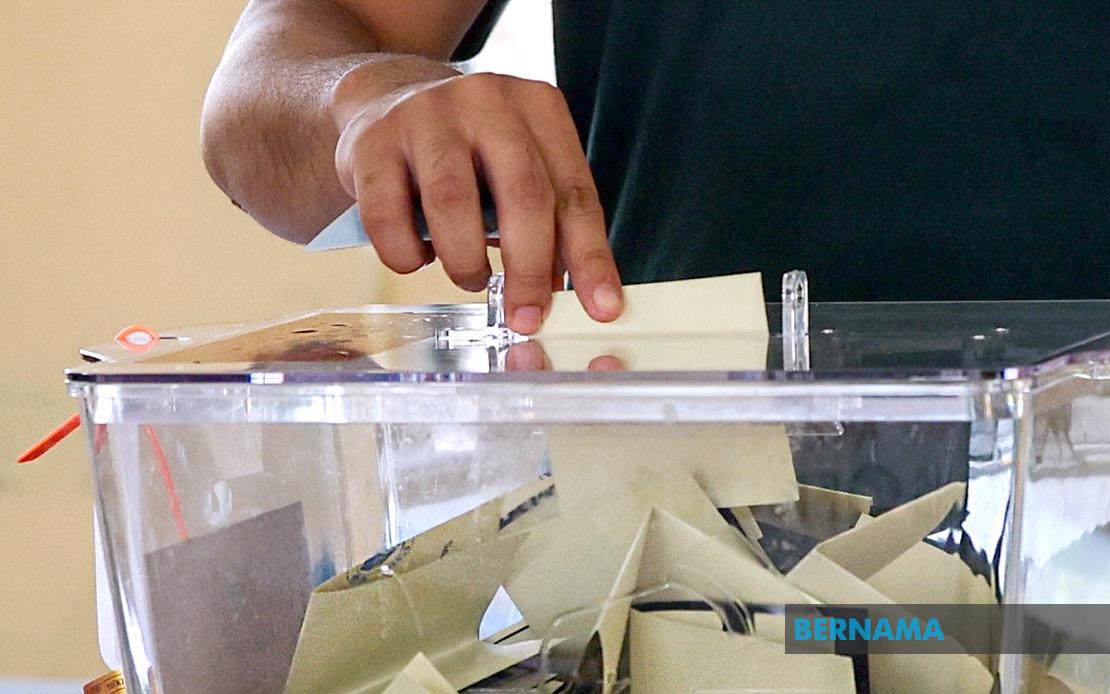
The 16th Johor state election concluded with a poignant reminder of the challenges voters face in reaching polling stations across Malaysia's sprawling constituencies. Rahmat Shukor, a 57-year-old self-employed businessman, became an unintended symbol of those struggles after his lengthy journey from Batu Pahat to Johor Bahru ended in bitter disappointment when he arrived at SJK (C) Foon Yew 4 precisely one minute after the official 6 pm closing time. The incident underscores the friction that can occur between voter intent and the rigid procedural requirements that govern electoral participation in Malaysia.
Rahmat's ordeal began the previous evening when he decided, against his original plan, to remain at his late mother's house in Sri Medan, Batu Pahat, after exhausting himself with plantation and contract work. Rather than returning immediately to Johor Bahru where his family resided, he spent the night and set out early on polling day with every intention of casting his vote. The 120-kilometre route from Batu Pahat to the polling centre in Johor Bahru represents a significant commitment, particularly for someone with demanding work obligations, yet Rahmat drove the entire distance without stopping.
His misfortune stemmed from factors largely beyond his control. Beginning from the Simpang Renggam Rest and Recreation Area onwards, and extending through Sedenak, Rahmat encountered unexpectedly severe traffic congestion along the main highway corridor. The gridlock, far heavier than typical conditions, consumed time that he could ill afford to lose. Although Rahmat attempted to navigate alternative routes along the Skudai road to circumvent the worst of the congestion, these diversions proved insufficient to overcome the cumulative delays. By the time he reached the polling centre, the clock had already turned 6:01 pm.
Electoral rules, while necessary for maintaining orderly administration and public confidence in the voting process, make no provision for circumstantial delays or the sympathetic circumstances that may surround a voter's late arrival. Poll closures are intentionally enforced with precision, ensuring that enumerators can complete their duties and results can be tabulated within planned timeframes. Rahmat's case illustrates the tension that exists between the practical realities of voter mobilisation and the absolute nature of electoral deadlines. He carried documentation and photographic evidence of the traffic situation, hoping that such proof might sway officials to extend some consideration, yet the rules ultimately permitted no flexibility.
The timing was particularly irksome because Rahmat's entire family unit had succeeded in voting. His wife and other family members had returned to Johor Bahru on Friday and cast their ballots without incident, leaving Rahmat isolated as the sole family member unable to participate. The contrast between their smooth experience and his thwarted attempt highlights how outcomes can diverge substantially based on decisions about when to travel and the unpredictable traffic variables that materialise on election day. Had he returned with his wife two days earlier, or had the traffic cooperated, his story would have been unremarkable.
Despite his evident frustration and sadness, Rahmat displayed a philosophical acceptance of the situation that reflects a deep respect for democratic institutions in Malaysia. Rather than demanding redress or expressing anger at officials, he acknowledged the reality of his circumstances and voiced hope that the election process would unfold smoothly for other voters. Such grace under disappointment speaks to the maturity of electoral culture among ordinary Malaysians, even when individual circumstances produce genuine hardship.
The incident raises practical questions about voter accessibility in Malaysia's dispersed geography. Johor, the country's second-largest state by area, encompasses communities spread across considerable distances. The 1,076 polling centres distributed across the state represent a substantial logistical achievement, yet they cannot always be perfectly convenient for every registered voter. Rahmat's journey from Batu Pahat to Johor Bahru suggests he may have been voting outside his immediate constituency, perhaps due to work relocation or family circumstances, a common situation in modern Malaysia where internal migration and employment mobility have reshaped voting patterns.
Traffic congestion on Malaysian highways during major events has become a recognised phenomenon, particularly on routes connecting major economic centres. The Simpang Renggam to Sedenak corridor serves both commuter and long-distance traffic, and election days may generate additional volume as voters travel to polling stations. Election officials and transportation authorities might consider whether staggered polling hours or advanced traffic management strategies could mitigate such bottlenecks during future elections, though such changes would require careful consideration of administrative capacity and public health factors.
The broader significance of Rahmat's experience extends beyond his personal disappointment. It illustrates that democratic participation, while fundamentally a right, remains practically contingent on numerous factors beyond voters' control—reliable transportation, predictable travel times, workplace flexibility, and geographical proximity to voting locations. While Malaysia's electoral system has achieved high participation rates in many contests, individual stories like Rahmat's suggest that comprehensive accessibility remains an aspiration rather than a universal reality. Future electoral reforms might examine whether more flexible deadlines, extended voting periods, or alternative voting mechanisms could accommodate citizens facing genuine obstacles without compromising electoral integrity.
As the 16th Johor state election concluded with all polling centres closing simultaneously across the state, Rahmat's single missed vote represented a minuscule fraction of the overall result. Yet individual stories carry weight in public discourse about electoral systems. His experience, shared openly with media representatives outside the polling centre, became a modest commentary on the friction points that persist within Malaysia's otherwise well-administered electoral machinery. Whether that commentary catalyses any institutional reflection remains to be seen, but it certainly resonated with countless Malaysians who have themselves navigated the logistical challenges of reaching polling stations in a geographically expansive nation.

