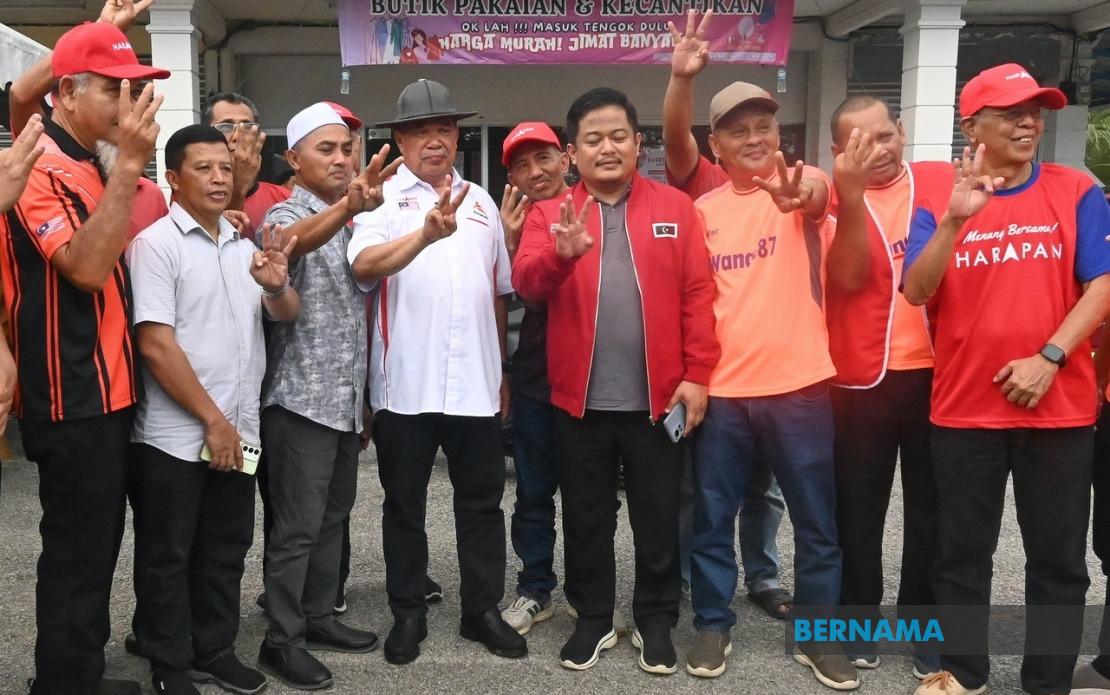
Pakatan Harapan is making a direct appeal to Johor voters ahead of this Saturday's state election, with the coalition's leadership insisting that supporting their candidates is essential to turning campaign promises into concrete policy outcomes. Amanah president Datuk Seri Mohamad Sabu, speaking in Batu Pahat after the Johor Tour with Bang Mat roadshow, framed the ballot as a referendum on whether voters believe PH can deliver beyond rhetoric. He dismissed opposition claims that the manifesto represents mere political theatre, instead positioning it as a document born from extensive grassroots consultation and reflective of genuine community concerns.
The timing of Sabu's remarks underscores the competitive nature of Johor politics, where the coalition faces the familiar challenge of converting campaign momentum into electoral gains. As Minister of Agriculture and Food Security, Sabu carries credibility in these discussions, having served in a previous PH federal government. His presence at campaign events signals the coalition's commitment to reclaiming ground in a state that has remained largely resistant to PH's previous electoral pushes. The manifesto itself represents a calculated strategy—offering specific commitments across multiple policy areas rather than abstract ideological appeals, which has traditionally resonated more strongly with swing voters in the state's more rural constituencies.
What distinguishes Sabu's messaging is his emphasis on implementation rather than mere promises. He acknowledged that manifestos are written frequently by multiple political organisations, but he contended that the ultimate test lies in execution following electoral victory. This argument attempts to pivot away from the familiar criticism that Malaysian politicians make grandiose pledges without follow-through. By suggesting that implementation would begin almost immediately upon a PH victory, with actions commencing on July 12 itself, Sabu seeks to establish accountability and demonstrate seriousness of purpose to an electorate increasingly sceptical of political commitments.
The coalition's confidence in gaining traction in Johor's rural areas marks a notable shift from previous election cycles. Sabu observed that whereas PH struggled with name recognition and grassroots presence in villages and rural markets during the 2018 election, the situation has evolved considerably. The reception received by party candidates and leaders on campaign trails has reportedly intensified, with voters approaching PH figures for photographs and interactions in settings where such engagement was previously uncommon. This anecdotal evidence, while subjective, suggests that demographic changes, increased political maturation among voters, and potentially improved messaging have combined to create more fertile ground for PH's outreach efforts.
The geographic distribution of support remains crucial in Johor politics, where urban-rural divides often determine electoral outcomes. Rural constituencies in the state have historically favoured more conservative political forces, yet the coalition's field observations suggest a meaningful shift in voter receptiveness. This transformation may reflect multiple factors: accumulating frustrations with incumbent governance, improved PH organisational capacity, or genuine resonance with specific manifesto planks addressing agricultural, economic, or social concerns prevalent in these communities. Sabu's emphasis on having listened to rural voices during the manifesto construction phase attempts to position PH as genuinely responsive rather than imposing externally-derived policies.
The early voting arrangements for security forces, scheduled for tomorrow, signal administrative preparation for the formal polling day on July 11. These procedural details matter because military and police personnel often constitute significant voter blocs in Malaysian elections, and their electoral behaviour can influence overall outcomes. By ensuring smooth voting mechanisms for uniformed personnel, election authorities enable a substantial segment of the electorate to participate without disruption to security operations.
PH's strategic positioning in this Johor contest reflects broader calculations about the coalition's viability as a political force. Since their 2022 return to federal power through the Anwar Ibrahim administration, PH has pursued state-level victories to consolidate political dominance and demonstrate electoral resilience. Johor represents a particularly valuable prize given its size, economic significance, and strategic location within Malaysia's political geography. A successful outcome would strengthen PH's negotiating position within the broader federal coalition and potentially catalyse political reorganisation in other states where the bloc currently faces opposition dominance.
For Malaysian voters contemplating their choices in this election, Sabu's messaging encapsulates the fundamental bargain offered by Pakatan Harapan: granting the coalition sufficient electoral support to govern allows for policy translation and programme implementation that would otherwise remain unrealised. This framing shifts the evaluation criteria from candidate personality or party reputation toward tangible outcomes and delivery capacity. Whether such messaging proves persuasive to Johor's electorate will become apparent when voters cast their ballots on July 11, determining not only the state government composition but also the political trajectory of one of Malaysia's most electorally significant territories.

