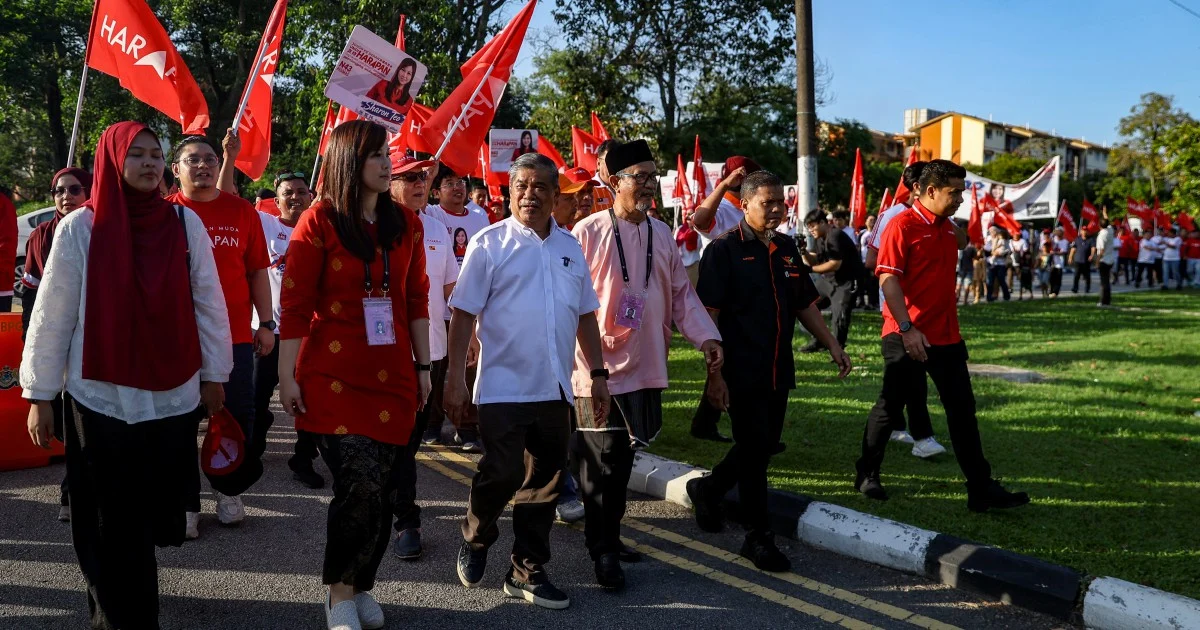
Sharon Teo's arrival at the Permas state constituency nomination centre in Pasir Gudang on Tuesday marked an energetic start to her campaign as Pakatan Harapan's chosen representative for the Johor election. The atmosphere at Dewan Muafakat Taman Mawar grew charged as supporters gathered to welcome the candidate, with repeated chants of "Johor undi Pakatan Harapan" resonating through the venue. The vocal backing underscored the coalition's determination to make inroads in a state where electoral fortunes have shifted considerably in recent years.
The Permas constituency represents one of the battlegrounds where opposition forces hope to expand their footprint in Johor's political landscape. The state assembly seat has long been contested between rival coalitions, and Pakatan Harapan's nomination of Teo signals the coalition's strategic focus on urban and semi-urban centres where younger, more diverse voter demographics hold sway. The enthusiastic reception suggests that grassroots momentum may be building for the opposition alliance as campaigning intensifies across the state.
Teo's candidacy reflects broader patterns in Malaysian politics where political coalitions increasingly field candidates with diverse backgrounds and appeal beyond traditional party strongholds. Her nomination was clearly designed to resonate with constituents in Permas, a constituency that encompasses parts of Pasir Gudang and surrounding areas with mixed urban and residential development. The voter enthusiasm displayed at the nomination centre indicates that Pakatan Harapan's ground organization has been actively mobilizing support ahead of the election.
Johor remains strategically important for any coalition seeking to govern Malaysia, given the state's substantial representation in parliament and its historical significance as the political stronghold of the Umno-led Barisan Nasional. Recent electoral contests in the state have demonstrated growing electoral volatility, with different areas showing shifting preferences depending on local issues, candidate quality, and broader national political currents. The cheering crowds at Teo's nomination event may suggest that Pakatan Harapan has identified pockets of receptiveness worth contesting aggressively.
The chanting crowds also reflect the role of grassroots mobilization in contemporary Malaysian electoral politics, where physical campaign events and crowd energy can generate momentum and media coverage. Street-level organization through supporters' groups and volunteer networks remains crucial for political coalitions seeking to overcome any structural or institutional disadvantages they might face. The vocal support demonstrated at the Permas nomination venue provides Teo with visible legitimacy as her campaign formally launches.
Packatan Harapan's strategy in Johor appears to combine focus on specific constituencies where the coalition believes it can compete effectively, paired with emphasis on contrasting narratives with the Barisan Nasional government. Constituencies like Permas, with their mix of resident communities and swing voters, offer opportunities for opposition advances if the campaign successfully mobilizes voters around local grievances or national policy concerns that resonate with the electorate.
The constituency itself has witnessed various electoral contests over recent election cycles, with outcomes reflecting both national trends and local factors unique to the Pasir Gudang area. Voters in this region contend with issues ranging from industrial development and environmental concerns to infrastructure adequacy and urban services. A successful Pakatan Harapan campaign would need to address these constituency-specific concerns while tying them to broader coalition messaging about governance and accountability.
Teo's nomination and the accompanying show of support from gathered voters underscores how coalition politics in Malaysia increasingly depends on presenting credible local candidates who can command genuine community backing. The volume of support visible at the nomination centre suggests that Pakatan Harapan believes it has found such a candidate in Teo for the Permas seat. Whether this initial enthusiasm translates into actual votes during the election proper remains to be determined, but the opening chapter of her campaign appears promising for the coalition.
As the Johor election campaign unfolds, contests in constituencies like Permas will likely determine whether Pakatan Harapan can strengthen its position in the state or whether Barisan Nasional's traditional dominance will reassert itself. The engaged crowd at the nomination event provides at least preliminary evidence that the opposition coalition's organizational capacity and candidate selection have resonated with at least one segment of the Johor electorate. The coming weeks will reveal whether this enthusiasm extends more broadly across the state's voting population.

