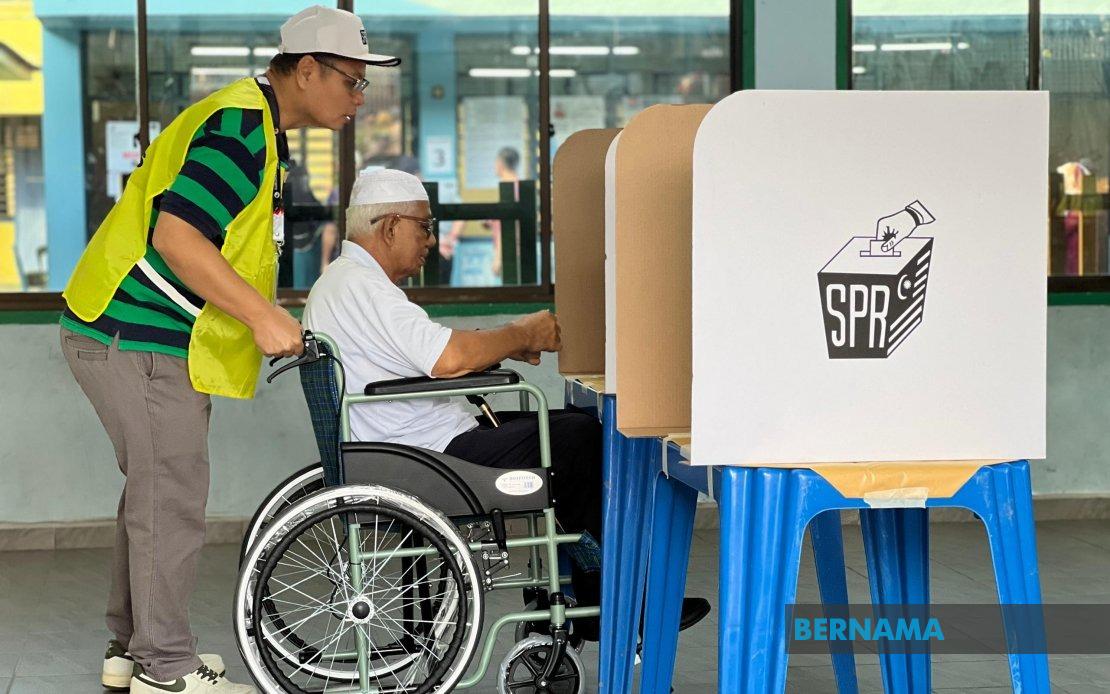
Polling stations across Johor swung open at 8 am today in a coordinated nationwide effort, marking the start of voting in the state's 16th legislative election. The Election Commission deployed all 1,076 polling centres simultaneously, each operating multiple streams to manage the anticipated turnout among the state's 2.7 million eligible voters. By day's end, officials expect to tally votes across 4,889 separate polling streams before announcing results as early as 10 pm, provided the count proceeds without significant delays.
The electoral contest spans 56 State Legislative Assembly seats, with 172 candidates seeking representation through a varied field of contests. Twelve constituencies will feature four-way races between rival candidates, while 27 seats see three-cornered battles involving multiple political camps. The remaining 14 seats are straight fights between two contenders, reflecting the diverse political landscape across the state. This configuration offers voters in different regions markedly different electoral choices, from consolidated two-candidate races to crowded fields requiring careful ballot navigation.
Voting continues until 6 pm at most polling centres, though certain constituencies with smaller electorates will close their doors progressively from as early as 11 am, when officials determine sufficient ballots have been cast to allow early closure. The Election Commission targets a voter participation rate of approximately 70 per cent, a benchmark that would indicate healthy civic engagement after the 14-day campaign period concluded at midnight last night. The specific turnout figure will prove significant, as election analysts across Malaysia and Southeast Asia increasingly scrutinise voting patterns to assess public confidence in electoral institutions.
Weather conditions remained largely favourable across Johor throughout the morning, with clear skies reported in most regions. Muar district experienced rainfall, though authorities provided no indication that wet weather would substantially impede voting operations or deter voter participation in that area. Such meteorological factors, while seemingly minor, can meaningfully influence turnout, particularly among elderly voters and those in rural constituencies where transport options are limited.
Security deployments were evident at polling stations visited by Bernama correspondents, with personnel stationed to maintain order and prevent disruptions during the voting process. This visible presence typically reassures voters about the integrity of proceedings while serving as a deterrent to those contemplating electoral interference. Media representatives began congregating outside voting venues as early as 7 am, establishing positions to cover developments throughout the day and capture the immediate aftermath when early results from smaller constituencies begin circulating.
The timing of this election within Malaysia's broader political context carries implications beyond Johor's borders. State elections influence momentum for federal politics, offering early indicators of voter sentiment toward governing coalitions and opposition alliances. How constituents in Johor respond today—particularly regarding incumbent administration performance on economic development, infrastructure delivery, and fiscal management—will resonate through subsequent electoral cycles affecting Kuala Lumpur and Putrajaya politics.
The scale of this electoral exercise underscores the organisational complexity modern elections demand. Coordinating voting across 4,889 separate streams requires substantial preparation, staff training, and logistical planning. The Election Commission's ability to execute simultaneously across numerous centres without significant mishaps reflects institutional competence that supports Malaysia's broader democratic credibility within the region, where electoral administration remains variable across Southeast Asian democracies.
For Malaysian observers and international watchers alike, the composition of constituencies contesting today illustrates evolving political fragmentation. The prevalence of three-way and four-way contests suggests that Malaysia's traditional two-coalition binary system faces increasing pressure from new political entrants and emerging factional divisions within established parties. Results will clarify whether this fragmentation reflects temporary volatility or signals lasting structural change in the electoral marketplace.
The announcement that full results could emerge by 10 pm depends partly on the actual turnout materialising and whether any constituencies require recounts. Early partial results from smaller constituencies closing at 11 am onwards will provide exit-poll calibration and directional indicators well before the final official declaration, allowing political actors and media commentators to begin analysing patterns while voting continues elsewhere.

