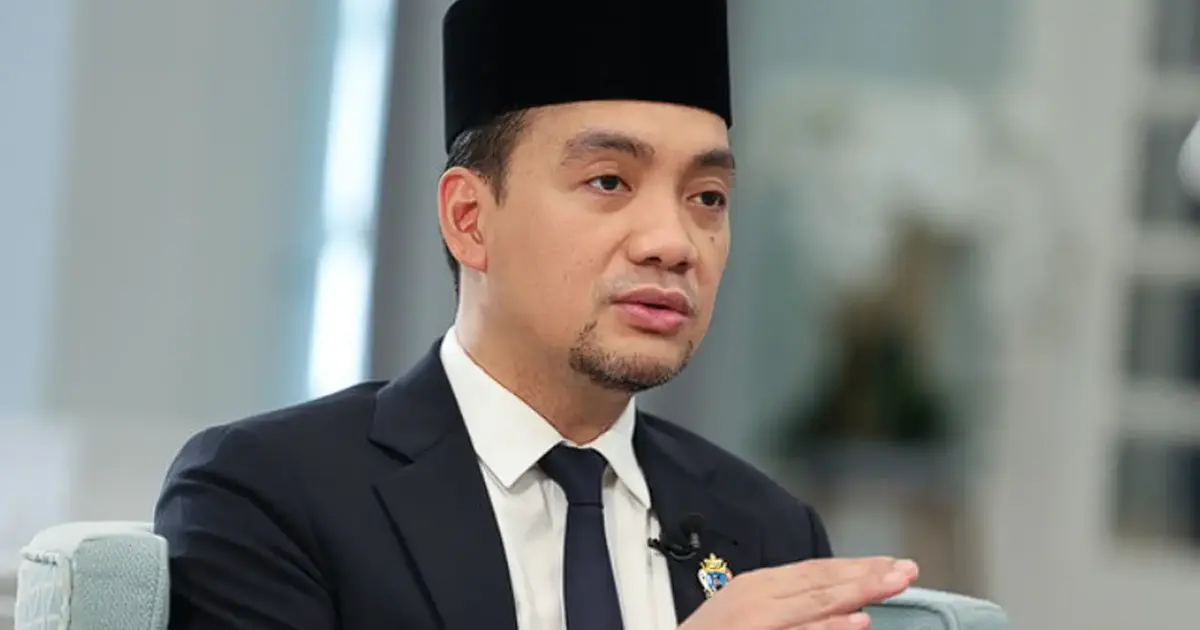
Johor's caretaker menteri besar Onn Hafiz has pushed back against suggestions that the palace overstepped its constitutional boundaries in approving the dissolution of the state assembly, insisting instead that royal assent represents a straightforward procedural requirement embedded within Malaysia's constitutional framework.
The clarification arrives amid the swirling political dynamics surrounding Johor's recent developments, where questions have surfaced regarding the extent of palace involvement in triggering fresh elections. Onn Hafiz's statement seeks to draw a clear distinction between the ceremonial and formal role of the Sultan in constitutional matters and any direct political decision-making that might be attributed to the monarchy.
Under Malaysia's constitutional architecture, state assemblies require the formal approval of the reigning monarch before they can be formally dissolved. This requirement exists across all Malaysian states, reflecting the constitutional position of the rulers within the federal system. The process is designed as a safeguard, ensuring that the dissolution of a legislative body cannot occur through executive action alone, but must receive formal sanction from the head of state. For Johor, this means the Sultan's consent is a mandatory step that precedes any election campaign.
Onn Hafiz's position underscores an important constitutional principle that distinguishes between procedural formality and substantive political decision-making. The menteri besar argues that by granting assent, the Sultan is neither directing the course of state politics nor imposing a political preference, but rather executing a constitutional duty that falls to the monarch by law. This distinction matters significantly in Malaysia's constitutional monarchy system, where the rulers are meant to operate within defined constitutional parameters rather than as active political protagonists.
The distinction becomes particularly relevant given Malaysia's federal structure and the ongoing evolution of state-level politics. Johor, as the second-largest state by population and a historically significant political territory, has frequently been at the centre of national political attention. The state has long wielded influence over national coalition-building and has produced several figures who ascended to federal positions. Current developments in Johor therefore carry implications that extend beyond the state's borders, making clarity about institutional roles more important than usual.
The caretaker menteri besar's remarks also reflect a broader conversation about institutional boundaries in Malaysian democracy. The monarchy occupies a unique constitutional position, holding ceremonial powers while theoretically remaining above partisan competition. However, in practice, the line between ceremonial duty and political implication can appear blurred to observers, particularly when state-level crises trigger assembly dissolutions or when palace decisions occur during periods of political flux.
Onn Hafiz's framing attempts to reassure stakeholders that the palace has remained within its constitutional remit. By emphasising that royal assent is a mandatory procedural step rather than a discretionary political choice, the statement seeks to neutralise criticism that the monarchy has become entangled in partisan state politics. This messaging is particularly important in Johor, where the ruler commands substantial respect and where perceptions of palace neutrality carry weight among voters and political actors alike.
The context matters too. Johor has experienced significant political turbulence in recent years, with coalitions fragmenting and reforming as national political alignments have shifted. The state's political landscape remains fluid, with multiple factions vying for dominance. In such circumstances, any action involving state institutions—whether legislative, executive, or constitutional—becomes subject to heightened scrutiny and competing interpretations. A caretaker menteri besar must therefore be especially attentive to explaining the rationale and constitutional basis for major decisions.
The royal assent process itself is rarely controversial in Malaysian practice, as it typically involves a routine application of constitutional requirements. Disputes are far more likely to centre on whether an assembly dissolution was necessary or appropriately timed, rather than on whether the Sultan should have granted assent once a dissolution was formally requested. By reframing the discussion around the constitutional nature of assent, Onn Hafiz is attempting to move the debate away from whether the palace should have intervened at all, toward recognition that assent, when requested, is constitutionally obligatory.
This explanation also carries implications for how Malaysians should understand the relationship between executive power and constitutional authority at the state level. The menteri besar's role is to execute government policy and manage state affairs, while constitutional processes like assembly dissolution require formal validation through the monarchy. This separation reflects the principle of constitutional governance, where no single branch of government possesses absolute power over fundamental constitutional procedures.
For Malaysian readers and observers of state politics, Onn Hafiz's clarification serves as a reminder of how Malaysia's constitutional monarchy functions in practice. Rather than a rubber-stamp institution, the Sultan's position includes genuine constitutional powers; yet those powers are meant to operate within defined limits. The question of whether those limits have been respected in Johor's recent developments may continue to generate discussion among legal scholars and political commentators, but the caretaker menteri besar's statement clearly articulates the official position: that royal assent for assembly dissolution is constitutional process, not political interference.

