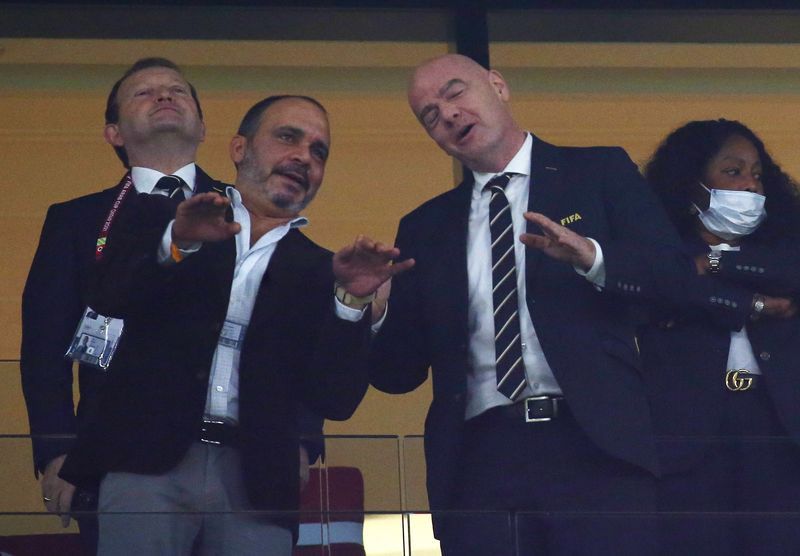
Jordan's national football team and its coaching staff have finally secured outstanding payments for their participation in the 2025 Arab Cup, according to an announcement on Thursday from Jordan Football Association President Prince Ali bin Hussein. The resolution comes just two days after the Jordanian official levelled serious accusations against FIFA, claiming the world governing body had attempted to leverage financial assistance as a bargaining chip for his organisational support.
The dispute centred on funds that should have arrived in December following Jordan's run to the Arab Cup final in Qatar. Instead, the Jordanian Football Association had been left waiting eight months for compensation that the confederation viewed as a contractual obligation. Prince Ali's frustration appeared justified given the extended delay, which represented a significant administrative failure on FIFA's part to honour its financial commitments to member associations.
Prince Ali's public criticism targeted FIFA President Gianni Infantino, particularly after the latter abandoned a controversial proposal to monetise World Cup commercial rights following widespread pushback from confederations and national associations worldwide. The Jordanian leader alleged that FIFA had verbally communicated during the World Cup that backing Infantino's leadership "would go a long way to helping our FA out", suggesting a quid pro quo arrangement linking governance support to institutional assistance.
This accusation of what Prince Ali described as "blackmail" reflects broader tensions within international football governance. The timing of FIFA's sudden delivery of the overdue funds—immediately after public criticism—appears to have corroborated the underlying complaint about conditional assistance. For Southeast Asian observers, this incident underscores how FIFA's internal politics can directly impact member associations' operational capabilities, particularly smaller confederations that depend on timely financial flows to function effectively.
The Jordanian Football Association had identified the delayed Arab Cup payments as one of several problems affecting its operations, with the eight-month wait creating genuine cash flow difficulties for an organisation responsible for player welfare and national team development. Such delays can ripple through entire football ecosystems, affecting player salaries, coaching staff compensation, and investment in youth development programmes.
Prince Ali's statement on social media expressed gratitude for the eventual delivery while maintaining a conspicuously critical stance toward FIFA leadership. His acknowledgement that the funds represented "what was owed to our players and coaching staff" reframed the payment as a belated correction of an organisational injustice rather than a generous gesture. This rhetorical distinction matters significantly in demonstrating that the money was never discretionary but rather a fundamental obligation FIFA had failed to meet.
The Jordanian president explicitly connected the incident to FIFA's broader institutional challenges, linking the administrative failure and perceived pressure tactics to patterns typically associated with FIFA presidential electoral cycles. This observation suggests that governance concerns intensify before leadership contests, when member associations' support becomes a political currency and international football bodies allegedly deploy institutional resources to secure backing.
Despite receiving the disputed funds, Prince Ali reiterated his organisation's refusal to endorse Infantino or vote for his re-election. This unequivocal stance demonstrates that financial payments, however overdue and necessary, cannot retroactively legitimise governance practices that member association leaders view as inappropriate or coercive. The Jordanian position signals that some confederations prioritise institutional integrity over short-term financial relief.
FIFA chose not to respond to Prince Ali's allegations of leveraging assistance for political support, a silence that may itself be interpreted as tacit acknowledgement of uncomfortable truths within the organisation's administrative culture. The world body's lack of substantive denial stood in sharp contrast to its public relations efforts regarding the abandoned World Cup commercial rights proposal, for which FIFA offered an apology to member associations for mistakes made during the process.
At a crisis meeting in Morocco on Wednesday, FIFA's leadership had reaffirmed support for Infantino despite the controversies surrounding his administration. This institutional backing appears designed to project stability and unity ahead of upcoming elections, even as incidents like the Jordanian dispute expose cracks in FIFA's operational and ethical foundations.
For Malaysian and Southeast Asian football stakeholders, the Jordan case carries cautionary implications. Smaller confederations within Asian football must recognise that delayed or conditional financial assistance from international bodies can occur, and must therefore build institutional resilience through diversified funding sources and transparent governance frameworks. The incident also illustrates how FIFA's internal political struggles can have material consequences for member associations far beyond Europe's major football powers.
The resolution of the Jordanian dispute ultimately validates Prince Ali's public criticism strategy, which successfully forced FIFA to honour its obligations through transparency rather than quiet negotiation. This approach may encourage other member associations facing similar financial or administrative injustices to pursue comparable public accountability measures, potentially prompting broader institutional reforms within international football governance.

