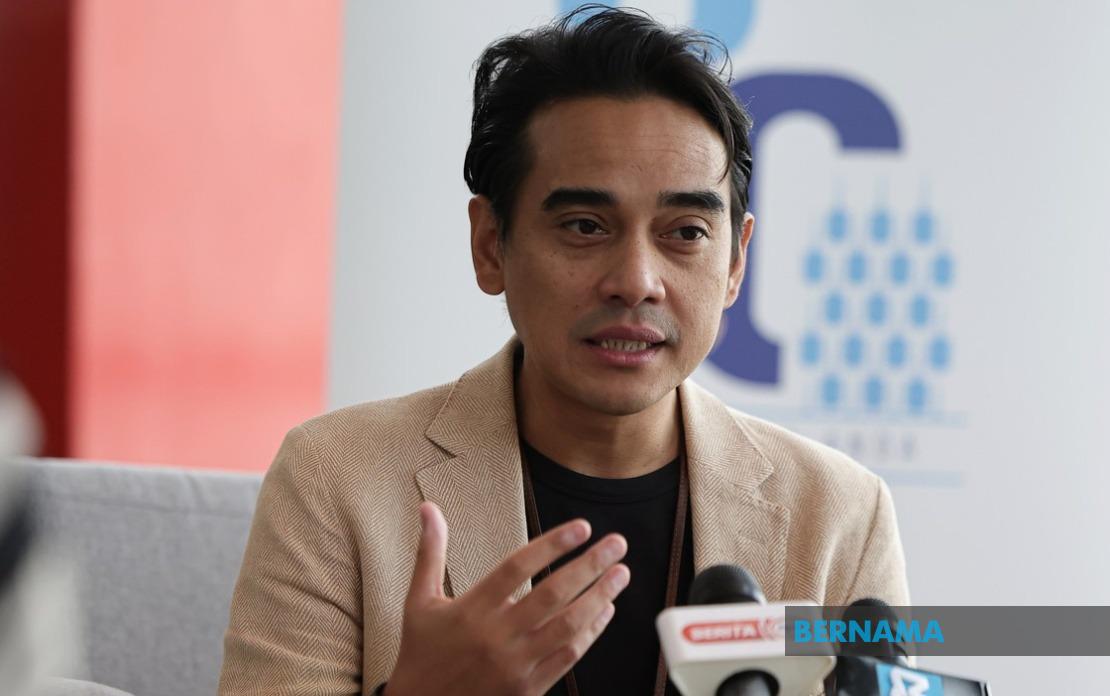
Journalists operating in Malaysia and across Southeast Asia face an urgent imperative to acquire and sharpen their artificial intelligence capabilities if they wish to maintain relevance in an increasingly digital media environment, according to Ashwad Ismail, the Director-General of Broadcasting. Speaking during an appearance on Bernama TV's The Nation programme in Kuala Lumpur on June 17, Ashwad articulated a nuanced perspective on the relationship between newsroom professionals and emerging technologies, framing AI not as an existential threat to journalism but as a powerful instrument that amplifies human expertise and elevates journalistic output.
The concern animating much discussion in media circles across the region centres on whether technological advancement will displace workers from the industry. Ashwad directly addressed this anxiety by reframing the challenge in professional rather than technological terms. The competitive pressure, he suggested, stems not from machines replacing humans but from skilled practitioners competing against less technically adept colleagues. In his formulation, a journalist who understands how to strategically deploy AI capabilities will naturally outcompete one who does not, creating a skills-based divide within the profession. This distinction matters significantly for newsroom managers and individual journalists contemplating their career trajectories in an evolving landscape.
Asian media organisations currently operate amid substantial uncertainty regarding how to integrate artificial intelligence responsibly into daily operations. Ashwad emphasised that the introduction of AI tools into newsrooms must proceed within a carefully constructed regulatory framework. Such guidelines serve multiple purposes: they establish ethical boundaries for technology deployment, ensure that AI applications genuinely enhance rather than compromise journalistic integrity, and protect human capacity building within news organisations. Without clear parameters, he cautioned, media institutions risk adopting technologies in reactive or haphazard ways that may ultimately undermine editorial standards or institutional values.
The fundamental premise underlying Ashwad's argument is that artificial intelligence represents a capability multiplier rather than a replacement mechanism. AI tools can accelerate research, identify patterns in data, assist in content structuring, and facilitate routine information processing—tasks that traditionally consumed significant journalistic labour. By automating such processes, newsroom professionals theoretically gain capacity to invest greater time and cognitive energy into investigative work, narrative development, analysis, and the human dimensions of reporting that distinguish quality journalism from commodity information dissemination. This reallocation of effort, properly managed, could strengthen rather than weaken the profession.
Yet the adoption of such technologies simultaneously raises structural questions about how media organisations will be configured in future decades. The broadcasting chief acknowledged that employment patterns within the industry face genuine disruption, reflecting broader economic shifts accompanying technological advancement. Some roles will inevitably transform or diminish as machines perform specific functions more efficiently. The responsibility falls upon news organisations to manage this transition thoughtfully, ensuring that workforce transitions align with human dignity and that the skills cultivated within organisations remain valuable in evolving contexts.
Beyond the technological dimension, Ashwad directed attention toward a separate but related crisis affecting media credibility throughout the region: the erosion of public trust in journalistic institutions. He argued persuasively that technological sophistication alone cannot remedy this deeper problem. News organisations must simultaneously recommit themselves to fundamental journalistic principles, with particular emphasis on strengthening hyperlocal reporting that directly serves community information needs. This hyperlocal emphasis represents a strategic differentiation from technology-dependent competitors, as it privileges the relationships, institutional knowledge, and community understanding that individual journalists uniquely possess.
The human dimension emerges as central to Ashwad's conception of sustainable journalism in an AI-inflected future. Personal connection between journalists and audiences, community engagement rooted in authentic relationship-building rather than algorithmic delivery, and editorial decision-making guided by principles rather than purely data-driven optimisation—these elements constitute what Ashwad termed the human touch. In an environment where artificial systems can generate content at scale, the irreplaceable value resides in journalism that reflects genuine understanding of community concerns, accessible reporting, and editorial judgment shaped by journalistic values rather than purely commercial metrics.
The integration of these perspectives—technological capability building on one hand and humanistic journalism on the other—suggests that the media profession's future depends upon simultaneous commitment to seemingly contradictory objectives. Newsrooms must become more technologically sophisticated while becoming more fundamentally human in their approach to reporting and audience relationship. This synthesis requires institutional leadership that understands both dimensions and can guide organisations toward equilibrium rather than falling into the trap of either technological determinism or nostalgic resistance to inevitable change.
The broadcasting chief's remarks arrive as Malaysia's media sector convenes for substantial institutional dialogue. The HAWANA 2026 conference, culminating with Prime Minister Datuk Seri Anwar Ibrahim's official address at PICCA Convention Centre @ Arena Butterworth, Penang on June 20, will attract more than 1,200 participants spanning media practitioners, ASEAN delegates, and other stakeholders. This gathering provides an opportune moment for the industry to deliberate upon the precise contours of AI integration, the skills development pathways journalists require, and the institutional commitments necessary to preserve editorial independence and journalistic quality amid technological transformation.
For Malaysian journalists and media organisations across Southeast Asia, Ashwad's message carries both urgency and implicit reassurance. The urgency stems from genuine competitive dynamics: professionals who develop AI literacy will have advantages over those who do not, and organisations that harness these tools strategically will outperform competitors who treat technology as external threat rather than integral capability. Yet the reassurance derives from his insistence that journalism itself—the core mission of serving communities through accurate, contextualised reporting—remains essential and irreplaceable. The profession transforms but does not disappear; it evolves toward configurations that value both technological competence and distinctly human attributes. For individual journalists, this trajectory demands investment in continuous learning and skill diversification. For media organisations, it requires commitments to staff development, ethical frameworks guiding technology adoption, and renewed investment in the community relationships that ultimately distinguish trustworthy journalism from mere information production.